
Why Are Titanium Multi Tools Expensive? The Real Cost Factors
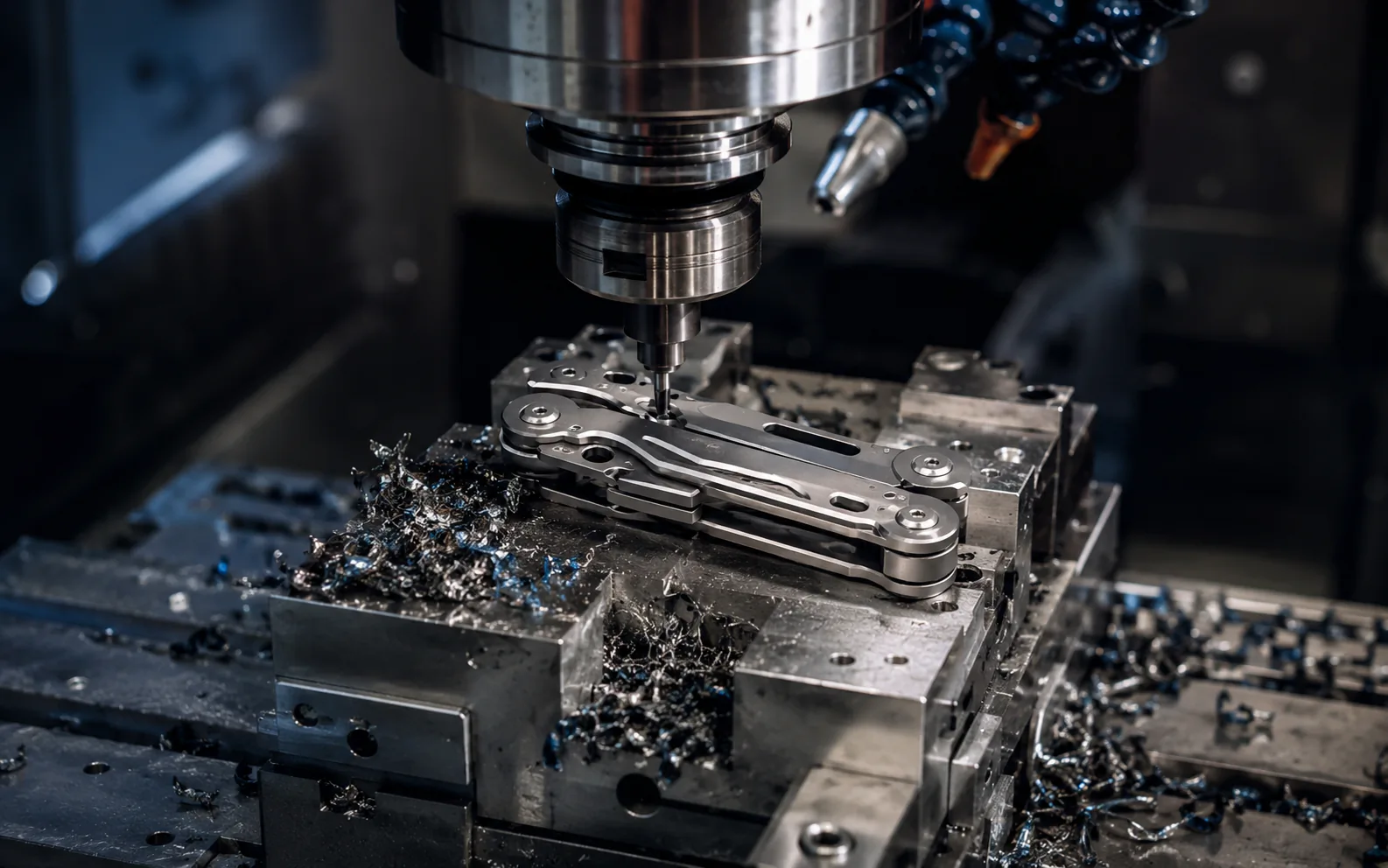
Titanium multi-tools carry a premium price tag primarily because of the extreme difficulty of refining raw titanium ore and the high cost of machining the metal into precise tool components. While titanium is abundant in the earth’s crust, converting it into a usable alloy requires massive amounts of energy, specialized vacuum environments, and complex chemical processes.
Once refined, titanium is notoriously difficult to shape. It is highly resistant to wear, which means it quickly dulls and damages the CNC milling bits used to cut it.
To make an informed purchase, it helps to understand that a titanium multi-tool is rarely made entirely of titanium. Instead, manufacturers strategically use titanium alloys for the outer handle scales to save weight, while keeping high-carbon steel for the high-friction pliers and blades.
The high cost of refining
- Titanium is abundant in the earth, but extracting and refining it requires immense energy and heat.
- Machining titanium requires specialized, slow CNC processes that wear out cutting tools rapidly.
- Most titanium multi-tools use the metal for handle scales to reduce pocket weight, not for the high-wear pliers or blades.
- Cheap alternatives often use a thin titanium coating over low-grade steel rather than solid titanium alloy.
| Topic | When it helps | What to keep in mind |
|---|---|---|
| Refining Complexity | Remember that you are paying for the massive electrical energy and chemical processing required to make the raw metal usable. | Titanium cannot be smelted like iron. It must be extracted using the Kroll process, which involves converting the ore into titanium tetrachloride and then reducing it with magnesiu |
| Machining Resistance | Look for clean, chamfered edges on the tool scales, which indicate high-quality, slow-pass CNC machining. | Titanium is a poor conductor of heat. When a CNC machine cuts it, the heat does not dissipate through the metal shavings; instead, it concentrates at the cutting edge of the tool b |
| Material Waste | Appreciate skeletonized or highly machined designs, as they require more machining time and generate more non-recyclable waste. | Multi-tool frames are often milled from solid blocks of titanium alloy. The shaving and milling process creates a large amount of scrap metal. |
The Raw Material: Why Refining Titanium Costs More Than Steel
Titanium is the ninth most abundant element in the Earth’s crust, commonly found in minerals like rutile and ilmenite. However, you cannot simply melt these minerals in a blast furnace to get pure metal.
To prevent this, refineries use the Kroll process. This multi-step chemical reaction requires sealing the materials in massive vacuum chambers filled with inert argon gas.
Think of aluminum, which was once more valuable than gold until efficient refining processes were invented.
Do not assume that a titanium tool is expensive simply because of brand markup; the raw alloy itself costs up to ten times more than standard stainless steel.
- Requires vacuum-sealed environments to prevent oxygen contamination.
- Consumes massive amounts of electrical energy during the reduction phase.
- Produces highly volatile magnesium chloride byproducts that must be recycled.
- Demands specialized safety protocols to manage high-temperature chemical reactions.
The Machining Challenge: Why Titanium Ruins Cutting Tools
Once a manufacturer has a sheet of Grade 5 titanium (the standard alloy used in high-end EDC gear), the next hurdle is shaping it. Titanium is incredibly tough but has a relatively low modulus of elasticity.
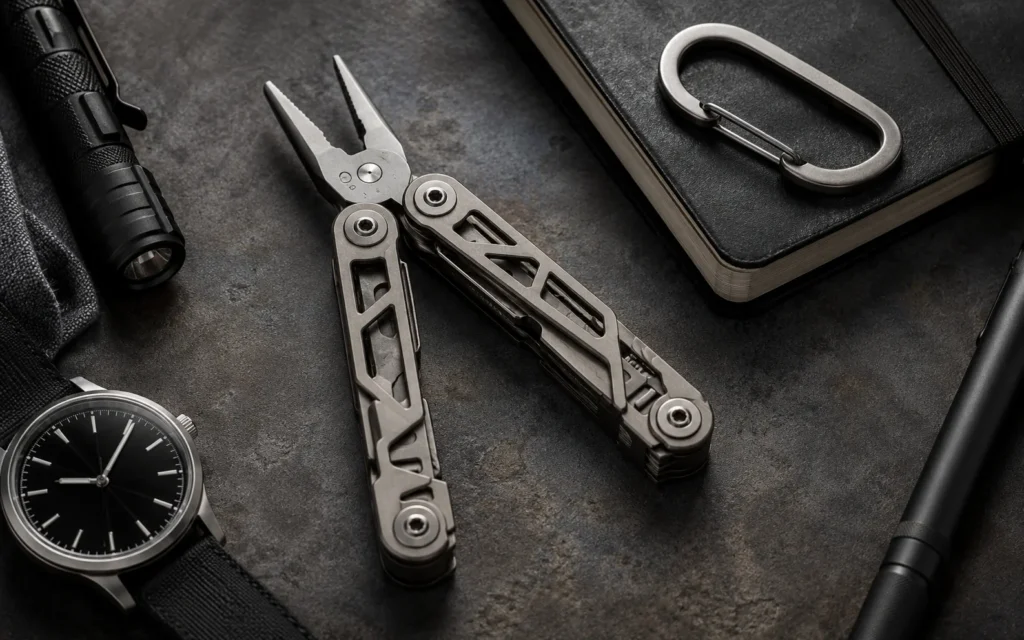
Furthermore, titanium does not conduct heat well. In steel machining, the heat generated by cutting is carried away by the flying metal chips.
Imagine trying to cut cold butter with a hot knife versus trying to cut a block of hard rubber.
Avoid thinking that titanium is easy to work with because it is lightweight.
- Low thermal conductivity concentrates heat at the cutting edge.
- Elasticity causes the metal to spring away from cutting tools, requiring rigid setups.
- Work hardening occurs rapidly, making the metal tougher as it is worked.
- Frequent tool replacement cycles add directly to the overhead cost of each multi-tool.
Anatomy of a Titanium Multi-Tool: What Are You Actually Buying?
A common misconception is that a titanium multi-tool is made entirely of titanium. In reality, titanium is a poor choice for the functional, high-wear parts of a multi-tool.
Instead, manufacturers use titanium for the frame plates and handle scales. This placement leverages titanium’s best properties: corrosion resistance, comfortable warmth in the hand, and significant weight savings.
A premium multi-tool like the Leatherman Charge TTi uses titanium for the outer handle scales, but the pliers, wire cutters, and knife blades are made of high-grade tool steels like S30V or 154CM.
Do not look for a multi-tool with titanium pliers or screwdriver bits.
- Handle Scales: Made of titanium alloy for weight reduction and corrosion resistance.
- Pliers and Wire Cutters: Made of hardened cast steel for crushing strength.
- Knife Blades: Made of high-carbon stainless steel for edge retention.
- Locking Mechanisms: Often steel-on-steel to prevent galling and wear.
Titanium vs. Stainless Steel: Is the Premium Worth It?
To decide if a titanium multi-tool is worth the investment, you must weigh the physical benefits against the financial cost. For daily pocket carry, every ounce matters.
Additionally, titanium forms a natural oxide layer that makes it virtually immune to rust from sweat, saltwater, or humid environments. If you work outdoors or near the ocean, this corrosion resistance can save you from having to constantly oil and clean your gear.
If you carry your multi-tool in a heavy backpack, a standard steel tool is fine.
Do not buy titanium if you are on a tight budget; standard stainless steel tools offer identical utility at a fraction of the price.
| Feature | Titanium Alloy (Grade 5) | Stainless Steel (3CR13 / 420HC) |
|---|---|---|
| Weight. | Approximately 45% lighter than steel. | Heavier, noticeable in thin pockets. |
| Corrosion Resistance. | Exceptional (immune to sweat and saltwater). | Good, but can rust if neglected. |
| Tensile Strength. | Comparable to high-strength steels. | High, but requires more mass for same strength. |
| Surface Feel. | Warm to the touch, textured grip. | Cold, can be slippery when wet. |
The extraction/refining process of titanium
Refining Complexity. High Energy Extraction Processes
Titanium cannot be smelted like iron. It must be extracted using the Kroll process, which involves converting the ore into titanium tetrachloride and then reducing it with magnesium in a sealed, argon-filled vacuum furnace at extreme temperatures.
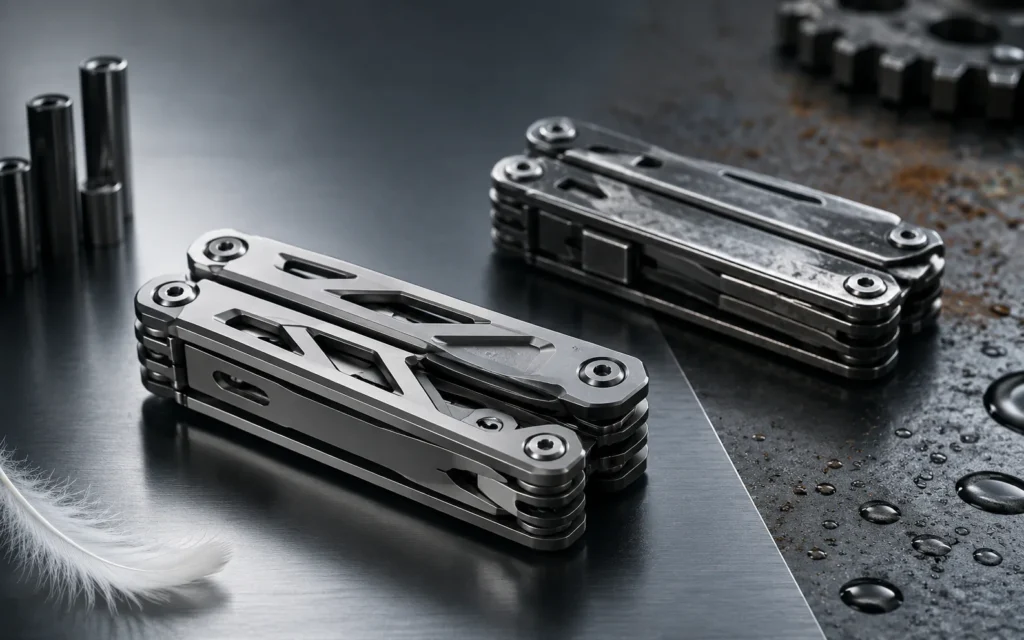
- Remember that you are paying for the massive electrical energy and chemical processing required to make the raw metal usable.
- Process Type – Kroll Process.
- Energy Demand – Extremely High.
- Atmosphere Required – Inert Gas (Argon).
Machining Resistance. Severe Tool Wear and Slow CNC Speeds
Titanium is a poor conductor of heat. When a CNC machine cuts it, the heat does not dissipate through the metal shavings; instead, it concentrates at the cutting edge of the tool bit.
- Look for clean, chamfered edges on the tool scales, which indicate high-quality, slow-pass CNC machining.
- Thermal Conductivity – Very Low.
- Cutting Speed – Slow and Controlled.
- Tool Replacement Rate – High.
Material Waste. High Scrap Rates and Low Recyclability
Multi-tool frames are often milled from solid blocks of titanium alloy. The shaving and milling process creates a large amount of scrap metal.
- Appreciate skeletonized or highly machined designs, as they require more machining time and generate more non-recyclable waste.
- Scrap Value – Low due to contamination risk.
- Machining Style – Subtractive milling.
- Material Yield – Often under 50 percent.
FAQs
Are cheap titanium multi-tools on budget sites actually titanium?
Many cheap tools advertised as titanium are actually made of low-grade stainless steel with a thin titanium nitride (TiN) coating. This gold or grey coating improves scratch resistance slightly but does not offer the weight savings or strength of solid titanium alloy.
What is the main downside of titanium for tools?
Titanium is more prone to scratching than hardened tool steel, and it can suffer from galling, where sliding titanium parts wear each other down through friction. It also lacks the hardness required to hold a fine cutting edge, which is why blades.
How can I tell if my multi-tool is real titanium?
Real titanium is non-magnetic, so a strong magnet will not stick to the titanium handle scales (though it will stick to the steel tools inside). Titanium is also significantly lighter than steel and produces brilliant white sparks if touched to a grinding.
Does titanium make a multi-tool stronger?
It makes the frame and handles stronger relative to their weight, meaning the tool can survive high impacts and bending forces without breaking. However, it does not make the individual blades, pliers, or screwdrivers stronger, as those remain steel.
Conclusion
Titanium multi-tools are expensive because they require a massive amount of energy to refine and specialized, slow-speed machining to shape. The physical properties that make titanium so desirable-its lightweight nature, extreme toughness, and resistance to rust-are the exact same properties that make it a nightmare to manufacture in a factory.
If you carry a multi-tool every day and value a lightweight pocket footprint, or if you work in wet, corrosive environments, the premium price of a titanium tool is often justified by its comfort and longevity. However, if the tool will live in a glovebox or a heavy toolbox, standard stainless steel will provide the.
Related posts
 Which Tool Kit Is Worth Buying? How to Choose the Right Set for Your Home
Wondering which tool kit is worth buying? Compare basic household sets, mechanic kits, and power tool combos to find the best tools for your budget and…
 Which Hand Tools Are Made in the USA? Reliable Brands and Buying Rules
Discover which hand tools are still made in the USA. Compare top domestic brands, tool categories, and learn how to verify origin labels before buying. Several…
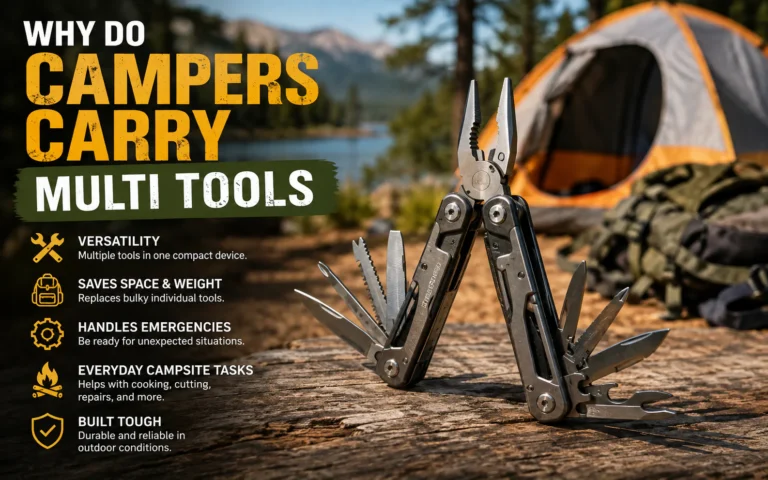 Why Do Campers Carry Multi Tools? Practical Uses in the Field
Why do Campers carry multi tools to handle gear repairs, campsite setup, food prep, and field fixes with minimal weight. Here is why one belongs in…