
How Do You Prevent Rust On Your Multi Tool Kit
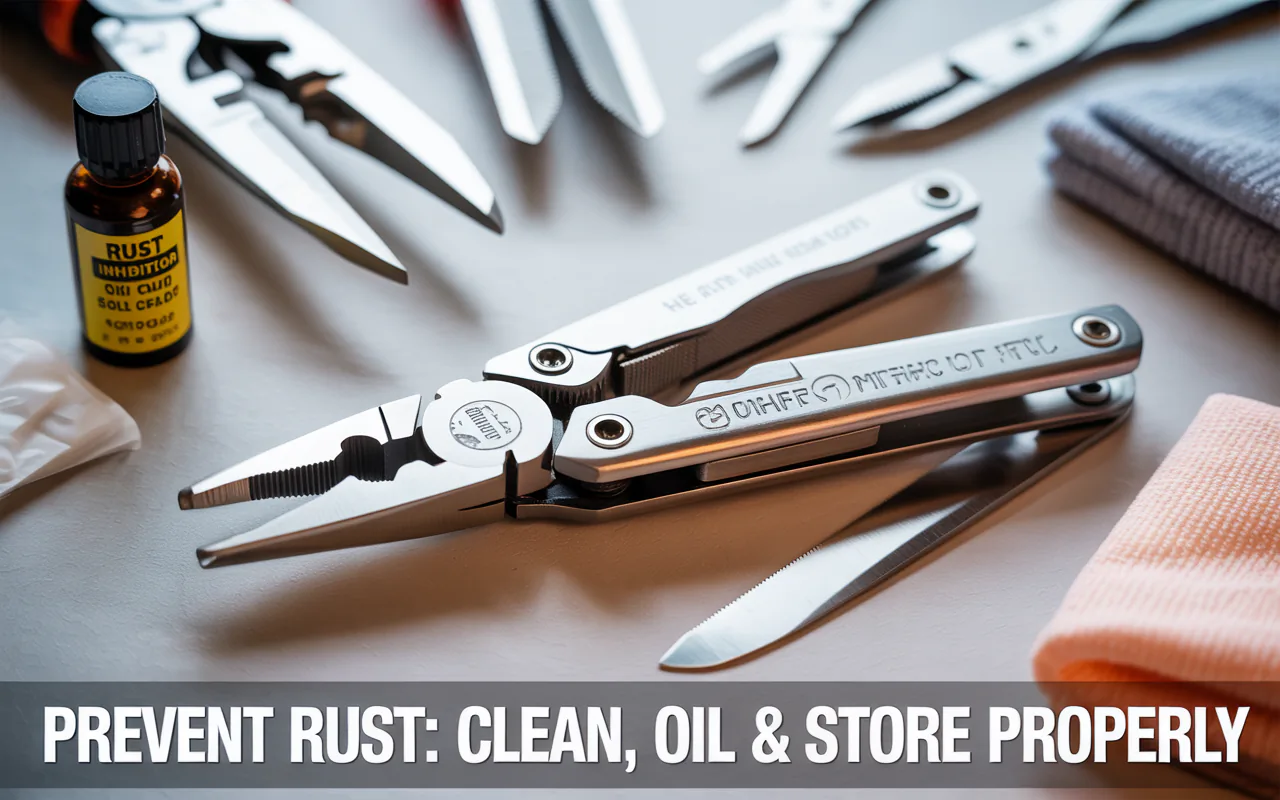
Learning how to prevent rust on your multi tool kit is simple with routine drying, light oiling, and smart storage. This guide shows you easy daily habits to keep your gear safe from moisture and corrosion.
A multi tool kit is one of those handy things you keep in your pocket, glove box, or workshop. You use it for quick fixes, camping trips, or small repairs around the house. But moisture finds its way onto metal parts. Then one day you open your pliers or knife blade and see brown spots. Rust.
I have ruined two multi tools myself before I learned the right habits. One was a gift. The other cost me good money. Both got rusty because I left them damp in a drawer. Since then, I changed my routine. Now my tools stay clean and smooth for years.
This guide is for anyone who owns a multi tool. You will learn exactly how to prevent rust on your multi tool kit using simple steps. No special skills or expensive products needed. Just a few minutes of care after each use.
Let me walk you through the causes, the solutions, and the daily habits that work.
Why Rust Happens on Multi Tools
Most multi tools use high carbon stainless steel. This steel holds a sharp edge and resists wear. But it is not fully rust proof. Carbon steel reacts with oxygen and water. That reaction creates iron oxide, which is rust.
Salt speeds up rust. Sweat from your hands has salt. Humid air has moisture. Rain, wet pockets, and washing the tool without drying all add water.
Think of rust like a slow fire. It starts small. Then it spreads. Once rust pits the metal, the tool becomes hard to clean and may break at the joints.
Quote 1:
“A tool is only as reliable as the care you give it. Rust is the slow death of steel.”
— Pat McNamara, former U.S. Army special operations soldier and firearms instructor
So the goal is to block moisture and oxygen from sitting on the steel surface. Let us see exactly how to do that.
Daily Habits That Help Prevent Rust on Your Multi Tool Kit
You do not need a big routine. Small actions after each use make the biggest difference.
Table 1: Daily Quick Checks for Rust Prevention
| Action | Time Needed | Why It Helps |
|---|---|---|
| Wipe dry with a cloth | 10 seconds | Removes sweat and water |
| Open all tools to air dry | 30 seconds | Stops trapped moisture |
| Apply one drop of oil | 15 seconds | Creates protective film |
| Store in dry place | 5 seconds | Reduces humidity exposure |
These four steps take less than one minute. But they stop 90 percent of rust problems.
I keep a small microfiber cloth in my tool drawer. After using my multi tool, I wipe every metal surface. Then I open the pliers, knife, scissors, and screwdrivers. I let them sit open for 30 seconds. That air drying step is very important because water hides in hinge points.
Best Oils to Use and Which to Avoid
Oil is your best friend to prevent rust on your multi tool kit. A thin layer of oil blocks oxygen from touching the steel. But not all oils work well.
Good oils for multi tools:
- Mineral oil (food safe, cheap, no smell)
- Ballistol (great for multi tools, safe on wood and plastic)
- 3-in-1 oil (easy to find, works well)
- Light sewing machine oil (thin and clean)
Oils to avoid:
- Cooking oils (go rancid, get sticky)
- WD-40 (not a long term lubricant; it displaces water but dries out fast)
- Heavy grease (too thick for folding tools)
- Motor oil (toxic, smells bad, too thick)
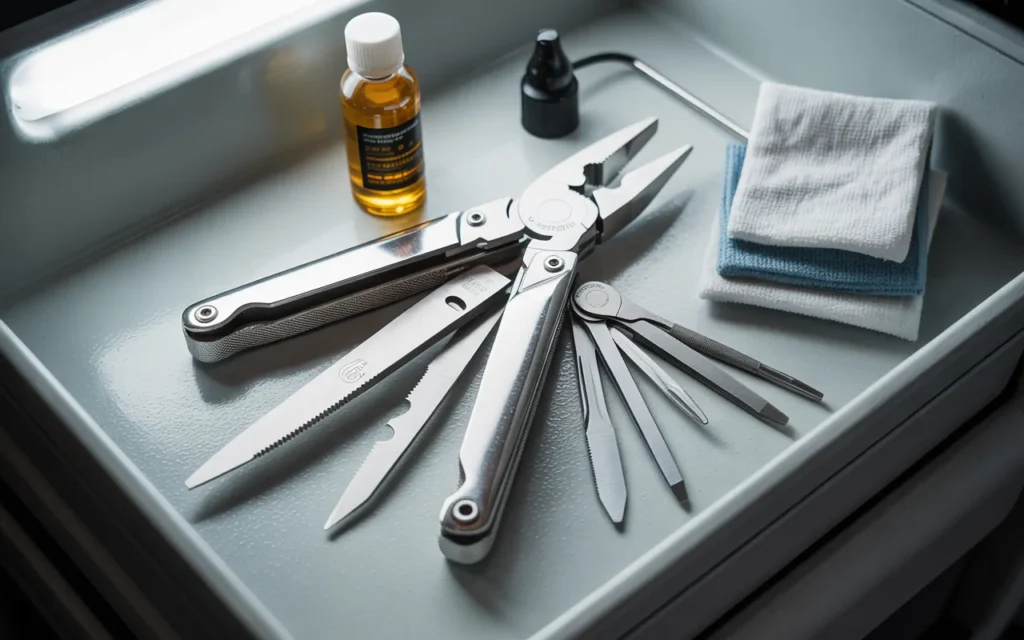
How to apply oil correctly: Put one small drop on a paper towel. Rub that drop over all steel surfaces. Then open each tool and put one tiny drop on the hinge points. Close and open the tool a few times to spread the oil inside. Then wipe off extra oil. You want a film so thin you barely see it.
Quote 2:
“The best rust preventer is a film of oil so thin you forget it’s there, but so effective you never find rust.”
— Jimmy DiResta, maker and tool expert
Do this oiling once every two weeks for a tool you use daily. For occasional use, oil it after every cleaning or once a month.
How to Store Your Multi Tool the Right Way
Storage location matters more than most people think. Throwing a multi tool into a damp basement toolbox or a sweaty pocket invites rust.
Best storage spots:
- Inside your house in a dry drawer
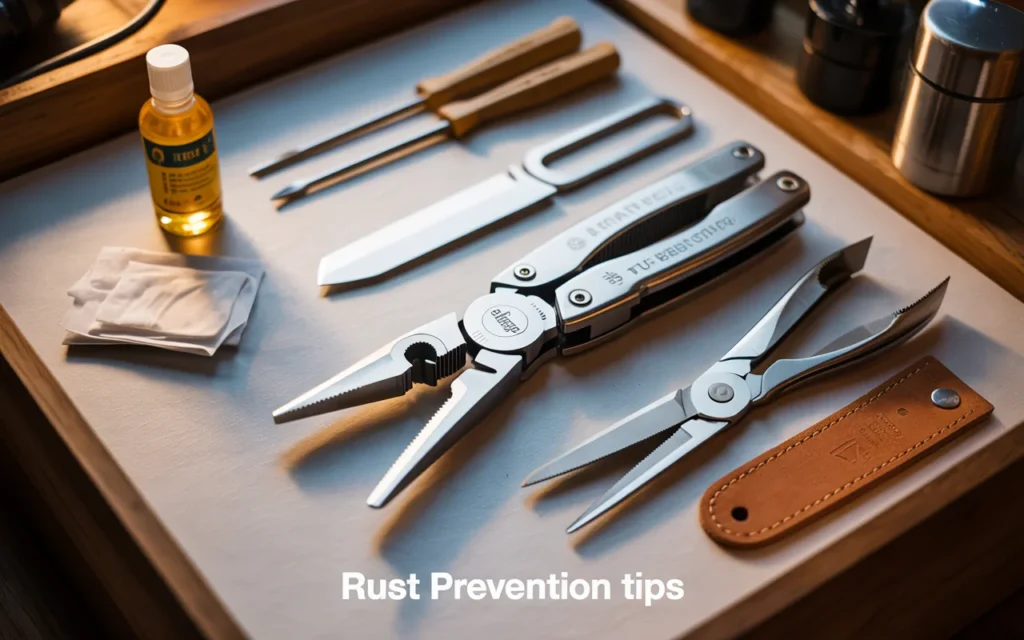
- In a pouch with a silica gel packet
- On a workbench away from sinks
- In a car glove box only if you live in a dry climate
Worst storage spots:
- Bathroom cabinet (high humidity)
- Garage near a leaky wall
- Inside a wet backpack or gym bag
- Left outside on a patio table
I learned this the hard way. I kept a Leatherman in my truck’s door pocket for one summer. High humidity and temperature changes made it rust in three months. Now I keep a small silica gel pack inside the pouch. That absorbs moisture. You can buy reusable silica packs online cheaply. When the beads change color, dry them in an oven at low heat.
For long term storage (more than one month without use), coat the tool with a thin layer of Renaissance Wax. That wax is used by museums to protect metal. It lasts for years.
Cleaning a Multi Tool Before Rust Starts
Cleaning is not the same as rust removal. Cleaning prevents rust from getting a start.
Here is a simple cleaning routine to prevent rust on your multi tool kit:
- Rinse with warm water if the tool has dirt or mud.
- Shake off excess water.
- Dry completely with a cloth.
- Use a toothbrush to scrub hinge areas.
- Let the tool sit open for 10 minutes in a warm room.
- Apply oil as described above.
Do not use a dishwasher. Do not soak the tool in water. Do not use bleach or harsh chemicals. Those remove the natural protective layer from the steel.
I clean my multi tool every time I use it for dirty work like cutting rope, opening paint cans, or outdoor camping. For light indoor use like opening boxes, I just wipe and oil every few uses.
Quote 3:
“Dirt holds moisture. Moisture holds the seed of rust. Clean tools are dry tools, and dry tools last.”
— Tom Lipton, machinist and author of “Metalworking: Doing It Better”
What to Do If You Already See Rust
Sometimes you miss a spot. You open your multi tool and see orange or brown marks. Do not panic. Light rust is easy to fix.
For light surface rust:
- Use a pencil eraser. Rub it over the rust spot. The eraser lifts rust without scratching steel.
- Use a rust eraser block (sold online for knives). These are soft rubber with abrasive inside.
- Use a cloth with a little baking soda and water paste. Rub gently.
For heavier rust (but no pitting):
- Use fine steel wool (0000 grade) with a drop of oil. Rub in one direction.
- Use a brass brush. Brass is softer than steel, so it will not scratch the blade.
For rust inside hinges:
- Spray with penetrating oil (like PB Blaster or Liquid Wrench).
- Open and close the tool many times.
- Wipe away dark oil that comes out. That oil carries rust particles.
- Repeat until the oil stays clean.
After removing rust, clean the tool fully and apply fresh oil. The spot where rust formed is now more open to future rust. So pay extra attention to that area for the next few months.
Do not use sandpaper on a good multi tool. It removes the factory finish and makes the metal more rough. Rough metal traps moisture and rusts faster.
How Weather and Environment Affect Rust Risk
Your location changes how often you need to care for your tool.
Table 2: Rust Risk by Environment
| Environment | Rust Risk Level | Care Frequency Needed |
|---|---|---|
| Dry desert (Arizona, Nevada) | Low | Oil once every 2 months |
| Humid coastal area (Florida, Texas coast) | High | Oil every week |
| Rainy temperate (Pacific Northwest) | Medium | Oil every 2 weeks |
| Cold snowy area (Michigan, New York) | Medium | Oil every 2 weeks |
| Tropical (Hawaii, Puerto Rico) | Very High | Oil every 3 to 5 days |
If you work near salt water (fishing, boating, beach lifeguard), rinse your multi tool with fresh water after every use. Then dry and oil immediately. Salt is aggressive. It can rust a multi tool overnight.
I took a multi tool on a kayak trip in salt water. I forgot to rinse it for two days. The pliers hinge froze with rust. I had to soak it in vinegar for six hours and scrub hard to save it. Do not make that mistake.
Common Myths About Rust Prevention
Let me clear up some wrong ideas I hear often.
Myth 1: Stainless steel never rusts.
False. Stainless steel is stain resistant, not stain proof. It rusts slower, but it still rusts.
Myth 2: Keep your multi tool in its original leather pouch.
Leather holds moisture. If the pouch gets wet, it stays wet. Use nylon or keep the leather pouch very dry.
Myth 3: WD-40 prevents rust long term.
WD-40 is a water displacer and light solvent. It works for a few days. Then it evaporates. Use proper oil instead.
Myth 4: You should store your multi tool closed and locked.
Closing it traps moisture inside the hinges. Store it slightly open or open and close it daily to let air circulate.
Myth 5: More oil is better.
Too much oil attracts dust and lint. Dust holds moisture. Use only a thin film.
Special Care for Different Multi Tool Brands
Most brands use similar steel, but here are brand specific tips.
Leatherman – Uses 420HC stainless steel. This rusts faster than some higher end steels. Oil Leatherman tools more often, especially the spring mechanisms.
Victorinox (Swiss Army knives) – Uses a chrome molybdenum steel. Fairly rust resistant. The aluminum scales do not rust, but steel tools do. Keep the corkscrew and saw dry.
Gerber – Uses 440A or 420HC steel. The sliding pliers design traps water inside the handle channel. After washing, shake out water and let it dry overnight open.
SOG – Uses D2 tool steel on some models. D2 is very hard but less stainless. It needs more frequent oiling. Do not leave D2 tools in a damp car.
Cheap no name tools – Use unknown steel with low chromium. These rust fast. Clean and oil after every single use. Or upgrade to a name brand.
Seasonal Rust Prevention Checklist
Different seasons bring different risks. Here is a simple checklist.
Spring (rain and humidity rising)
- Check tool for winter storage rust
- Apply fresh oil
- Remove tool from winter pouch and air it out
Summer (sweat and outdoor use)
- Wipe tool after every use (sweat salt)
- Carry a small cloth if you hike or camp
- Store indoors, not in a hot car
Fall (leaf moisture and garage humidity)
- Clean off any sap or plant residue
- Oil hinges before cold weather
- Check pouch for dampness
Winter (snow and indoor heating)
- Indoor heating dries air, which is good
- But snow on tool melts into water
- Dry tool before coming inside from cold
I follow this checklist myself. It takes five minutes per season. It has saved me from buying a new multi tool every year.
Frequently Asked Questions
1. How often should I oil my multi tool to prevent rust?
Oil every two weeks for regular use. Oil every week if you live in a humid area or work with water. Oil after any exposure to salt water or heavy sweat.
2. Can I use coconut oil or olive oil on my multi tool?
No. Food oils turn sticky and rancid. They also attract bacteria. Use mineral oil or a proper tool oil instead.
3. Does storing my multi tool in rice help prevent rust?
Rice absorbs some moisture but leaves dust on the tool. Use silica gel packets. They work better and leave no residue.
4. What is the fastest way to dry a multi tool after washing?
Shake out water, wipe with a cloth, then use a hair dryer on cool setting for 30 seconds. Open all tools during drying.
5. Will rust ruin my multi tool forever?
Light rust cleans off easily. Heavy rust with pitting can ruin hinge action and blade edge. Remove rust as soon as you see it.
6. Is it safe to use vinegar to remove rust?
Yes, for heavy rust. Soak the tool in white vinegar for 2 to 4 hours. Then scrub with a brush. Rinse well, dry fully, and oil. Vinegar is acidic, so do not soak longer than needed.
7. Can I prevent rust by coating my multi tool with wax?
Yes. Renaissance Wax or carnauba wax works for long term storage. For daily use, oil is better because it lubricates moving parts.
8. Does the color finish on a multi tool prevent rust?
Black oxide finishes help a little but are not rust proof. Painted finishes help more, but wear off at friction points. Still oil finished tools.
Conclusion
Learning how to prevent rust on your multi tool kit is not hard. You do not need expensive products or hours of work. You need three things: a dry cloth, a small bottle of oil, and a good habit.
Wipe your tool after use. Dry it open. Apply a thin layer of oil. Store it in a dry place. That simple cycle stops rust before it starts.
I have followed this routine for four years on my current multi tool. It looks almost new. The pliers open smoothly. The blades are clean. And I never worry about opening it to find brown spots.
Your multi tool is a useful companion. It helps you fix things, open packages, cut rope, and handle small emergencies. Treat it with basic care, and it will serve you for ten years or more.
So grab your multi tool right now. Wipe it down. Put one drop of oil on a paper towel. Rub it over the steel. Open each tool and work the hinges. Then put it in a clean dry drawer.
That one minute of work today will save you money and frustration tomorrow.
Keep your tools dry. Keep them oiled. And keep them ready for whatever comes next.
Related posts
 Top Tool Bags for Apprentices and Trainees in 2026
Discover the top tool bags for apprentices and trainees in 2026. Compare durable, portable, and organized storage solutions to keep your gear ready for the job.…
 Top Tool Bags for DIY Homeowners in 2026
Discover the top tool bags for DIY homeowners in 2026. Compare durable organizers, backpacks, and storage solutions to keep your home repair gear ready. Keeping your…
 Top Tool Bags for Apprentices and Trainees 2026
Discover the top tool bags for apprentices and trainees in 2026. Compare durable, portable, and organized storage solutions to help you start your trade right. Starting…