
How to Protect Tools from Garage Humidity: Practical Rust Prevention Steps
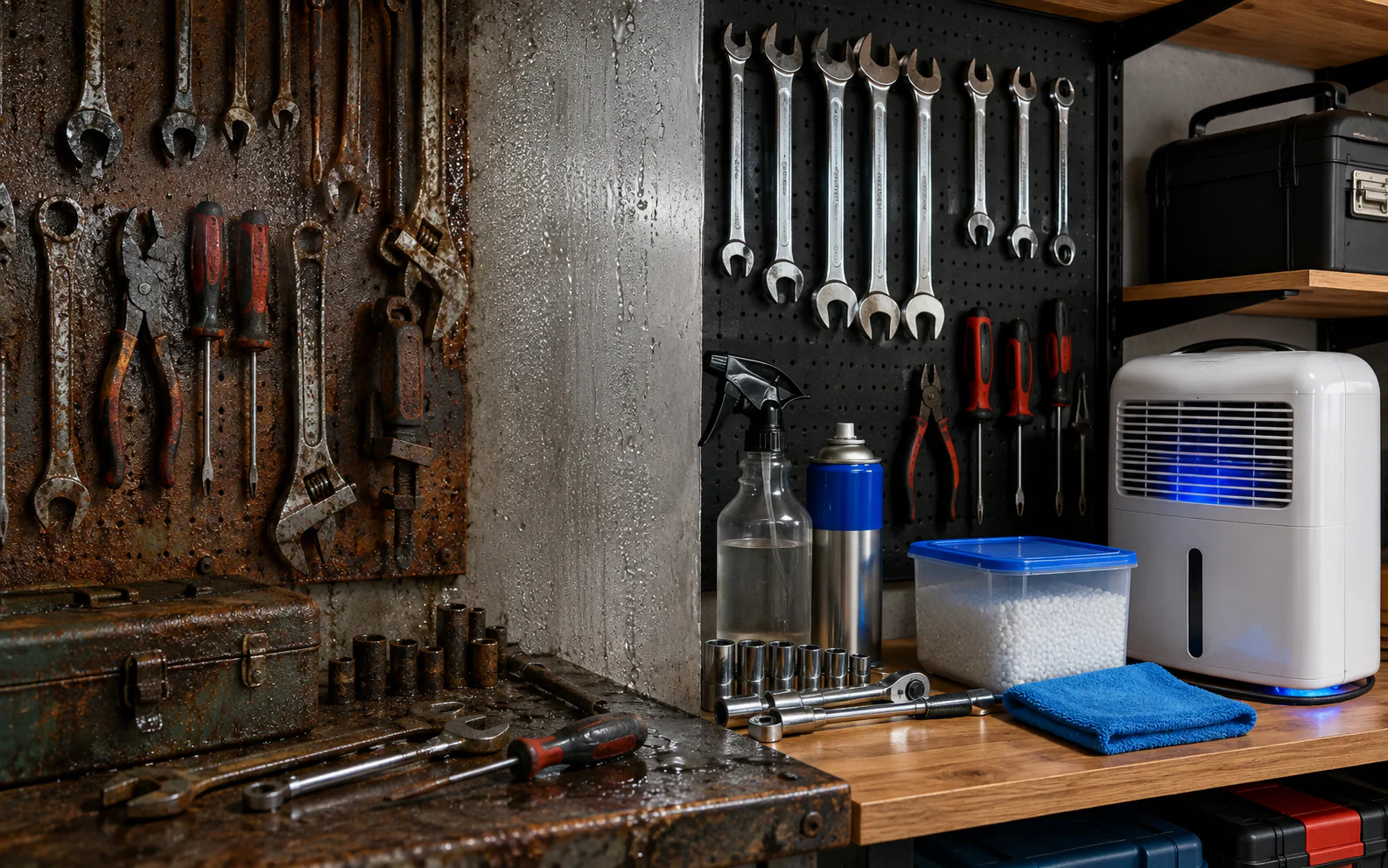
High humidity in a garage is the primary enemy of metal hand tools and power equipment. When warm, moist air collides with cold steel, it creates condensation. This thin layer of moisture triggers oxidation, leading to rust that ruins cutting edges, jams moving parts, and degrades tool life.
To protect your tools from garage humidity, you must establish a multi-layered defense. This involves applying protective coatings directly to the metal, using sealed storage containers with moisture-absorbing desiccants, and managing the overall garage climate. Taking these steps immediately halts the oxidation process and keeps your workshop gear in peak condition.
Protective coatings like oils and
- Keep garage relative humidity below 50% to halt rust formation.
- Apply a thin layer of paste wax or machine oil to create a physical moisture barrier.
- Use silica gel packs or VCI cards inside enclosed toolboxes to dry the microclimate.
- Never store metal tools directly on bare concrete floors, which release moisture.
- Seal garage door gaps and windows before running a portable dehumidifier.
| Topic | When it helps | What to keep in mind |
|---|---|---|
| Step 1 | Hand tools, chisels, plane soles, and cast iron table saw tops. | Avoid using heavy greases that attract sawdust and workshop debris, creating a sticky mess. |
| Step 2 | Socket sets, precision measuring tools, and hand planes stored in cases. | Standard silica gel packs eventually saturate and stop working. You must dry them out in an oven or replace them. |
| Step 3 | Closed tool chests, cabinet drawers, and tackle boxes. | VCI emitters only work in enclosed spaces. If you leave your toolbox drawer open, the protective vapor escapes. |
| Step 4 | Power tools, spare hand tools, and seasonal gear. | Never put damp or sweaty tools into a sealed bin, as the trapped moisture will accelerate rust. |
Focus strictly on tool protection
Step 1. Apply a Protective Oil or Wax Barrier
How to Protect Tools from Garage Humidity. The most reliable way to stop rust is to prevent moisture from touching the metal surface. Applying a thin layer of paste wax, camellia oil, or dedicated tool protectant creates a hydrophobic barrier. Paste wax is highly recommended for cast iron tool tops, while light machine oils work best for hand tools with moving joints.
- Hand tools, chisels, plane soles, and cast iron table saw tops.
- Avoid using heavy greases that attract sawdust and workshop debris, creating a sticky mess.
- Apply paste wax with a soft cloth, let it dry for a few minutes, and buff it clean for a slick, rust-resistant finish.
- Cost – Very Low
- Application Frequency – Every 3 to 6 months
- Protection Level – High
Step 2. Use Silica Gel Packs in Enclosed Toolboxes
If you store your tools in drawers or plastic cases, you can control the microclimate inside those containers. Placing silica gel packs or rechargeable desiccant canisters inside your toolbox absorbs ambient moisture before it can settle on your tools. These packs draw water vapor out of the air, keeping the local humidity level safe.
- Socket sets, precision measuring tools, and hand planes stored in cases.
- Standard silica gel packs eventually saturate and stop working. You must dry them out in an oven or replace them.
- Choose indicating silica gel canisters that change color when they are saturated, letting you know exactly when to reactivate them.
- Cost – Low
- Application Frequency – Recharge every 2 to 4 months
- Protection Level – Medium-High
Step 3. Install Vapor Corrosion Inhibitor (VCI) Emitters
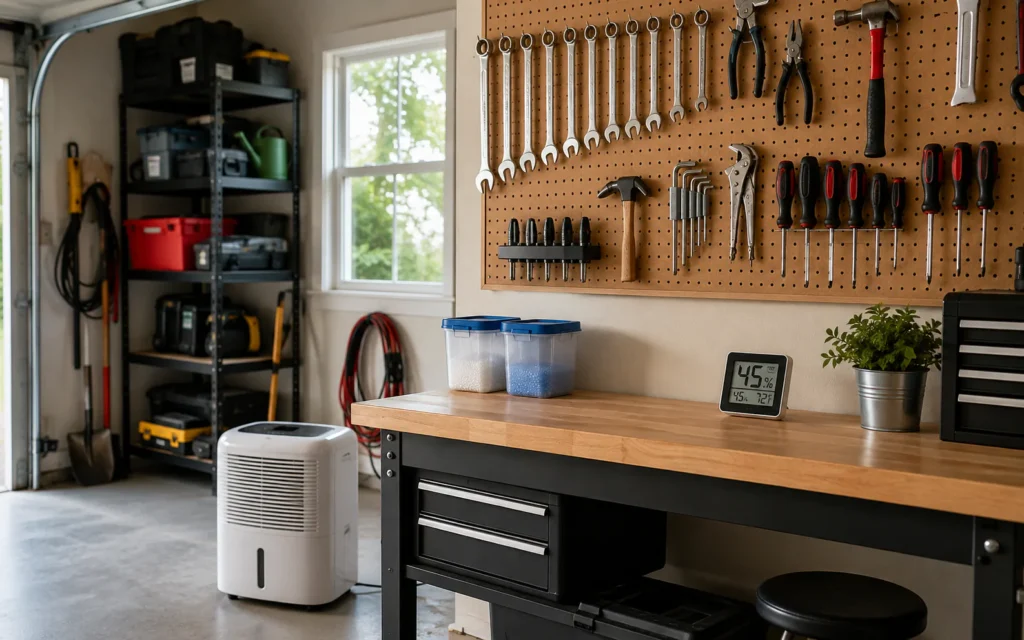
Vapor Corrosion Inhibitors (VCI) release an odorless, invisible vapor that deposits a microscopic protective layer on metal surfaces inside an enclosed space. This vapor blocks the electrochemical reaction that causes rust. VCI cards, foam plugs, or drawer liners can protect tools in a sealed toolbox for up to two years without leaving a greasy residue.
- Closed tool chests, cabinet drawers, and tackle boxes.
- VCI emitters only work in enclosed spaces. If you leave your toolbox drawer open, the protective vapor escapes.
- Place one VCI emitter cup or card in each drawer of your rolling tool cabinet and keep the drawers closed when not in use.
- Cost – Medium
- Application Frequency – Replace every 1 to 2 years
- Protection Level – Excellent
Step 4. Store Tools in Sealed Gasket Bins
Standard cardboard boxes absorb moisture from the air and hold it against your tools. Switch to heavy-duty plastic storage bins equipped with rubber gaskets around the lids. These gaskets create an airtight seal that prevents humid garage air from entering. When paired with a silica gel pack, this setup provides a completely dry environment.
- Power tools, spare hand tools, and seasonal gear.
- Never put damp or sweaty tools into a sealed bin, as the trapped moisture will accelerate rust.
- Wipe tools completely dry with a clean rag before locking them inside a gasket-sealed container.
- Cost – Medium
- Application Frequency – One-time purchase
- Protection Level – High
Managing the Garage Environment
While protecting individual tools is crucial, managing the overall garage environment is the most effective long-term solution. High humidity is often caused by poor ventilation, water seeping through concrete floors, or air leaks around garage doors. By addressing these structural issues, you can significantly lower the relative humidity in your workspace.
If your garage is relatively sealed, running a portable dehumidifier is highly effective. Aim to keep the relative humidity between 40% and 50%. This range is dry enough to prevent rust on steel and cast iron, but not so dry that it causes wooden tool handles or workbenches to shrink and crack.
A homeowner seals the gaps around their garage door with weatherstripping before running a 50-pint dehumidifier, preventing the machine from trying to dehumidify the entire outdoors.
Running a dehumidifier in a garage with open windows or large gaps under the door, which wastes electricity and burns out the compressor.
- Install weatherstripping around garage doors and windows to block humid outdoor air.
- Use a hygrometer to monitor daily humidity levels in your workshop.
- Improve airflow with ceiling or wall-mounted fans to prevent stagnant, moisture-heavy air pockets.
- Apply a concrete sealer to the garage floor to block ground moisture from rising through the slab.
| Control Method | Pros | Cons | Best For |
|---|---|---|---|
| Compressor Dehumidifier | Highly effective, automated humidity control | Increases electric bill, requires regular draining | Sealed, insulated garages |
| Garage Ventilation Fans | Low operating cost, keeps air moving | Does not remove moisture on highly humid days | Mild climates with moderate humidity |
| Concrete Floor Sealer | Blocks ground moisture permanently | Requires emptying the garage for application | Garages with damp concrete slabs |
| Insulation & Climate Control | Prevents extreme temperature swings | High initial installation cost | Dedicated year-round workshops |
Daily Habits and Storage Mistakes to Avoid
Sometimes, the way you handle and store your tools contributes directly to rust. Human sweat contains salts and moisture that rapidly corrode steel. Leaving tools scattered on workbenches overnight exposes them to the cool night air, which often drops below the dew point and causes condensation to form.
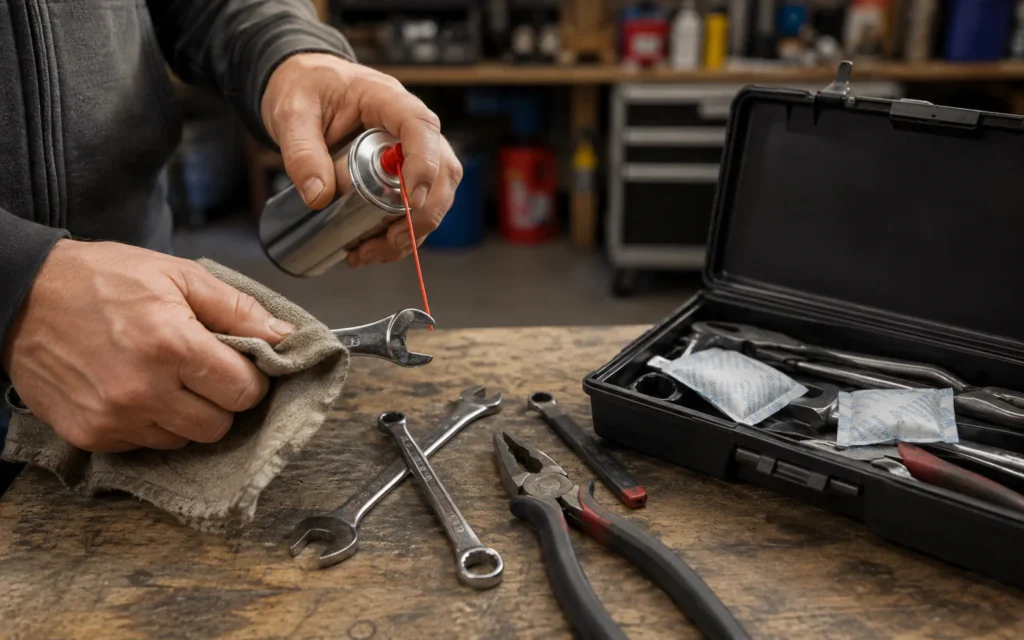
Where you place your tools also matters. Bare concrete is porous and constantly releases moisture vapor. Storing toolboxes, power tool cases, or heavy machinery directly on a concrete floor invites moisture to pool underneath, leading to severe rust on the bases of your equipment.
After a hot afternoon of woodworking, a hobbyist wipes down their hand tools with a microfiber cloth to remove salty sweat before putting them away.
Storing tools directly on bare concrete floors or hanging them directly against cold, uninsulated exterior walls.
- Never store tools directly on concrete; use wooden pallets, shelving, or rubber mats to elevate them.
- Wipe down every tool with a clean, dry cloth after use to remove sweat and fingerprints.
- Avoid hanging expensive hand tools directly against uninsulated exterior walls, which get cold and attract condensation.
- Keep toolboxes closed when not in use to preserve the dry microclimate created by your desiccants.
FAQs
What humidity level is too high for tools in a garage?
Any relative humidity level above 50% can trigger rust on bare steel and cast iron. Rust forms rapidly when the humidity exceeds 60%. Keeping your garage workshop between 40% and 50% humidity is ideal for protecting both metal tools and wooden handles.
Can I store power tools in an unheated garage during winter?
Yes, but temperature swings are the real danger. When a cold garage warms up quickly, moisture condenses on the cold metal components inside your power tools. Store them in plastic cases with silica gel packs, or bring your batteries and high-value tools indoors during extreme cold snaps.
Is WD-40 good for protecting tools from humidity?
WD-40 is an excellent water displacer for short-term use, but it evaporates relatively quickly. For long-term protection against high humidity, use a dedicated machine oil, camellia oil, or paste wax, which leave a thicker, more durable protective film on the metal.
Why do tools rust faster in a garage than inside the house?
Garages generally lack insulation and climate control, exposing them to outdoor humidity and rapid temperature changes. When the temperature drops at night and rises during the day, condensation forms on cold metal tools, creating the perfect environment for rust.
Conclusion
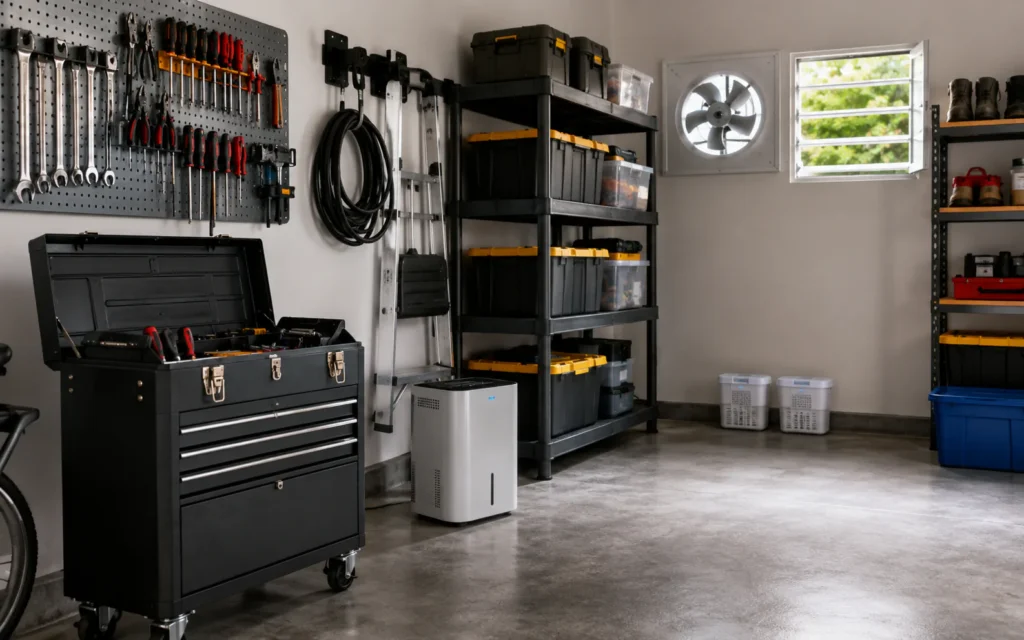
Protecting your tools from garage humidity does not require an expensive climate-control system. By combining simple physical barriers like paste wax with smart storage habits like using sealed bins and silica gel, you can keep rust at bay. Elevating your tools off concrete floors and wiping them down after every use are zero-cost habits that pay massive dividends over time.
If you struggle with severe moisture, focus on sealing air leaks around your garage doors before investing in a dehumidifier. Taking a proactive, multi-layered approach ensures your tools remain sharp, clean, and ready for your next project.
Related posts
 Which Tool Kit Is Worth Buying? How to Choose the Right Set for Your Home
Wondering which tool kit is worth buying? Compare basic household sets, mechanic kits, and power tool combos to find the best tools for your budget and…
 Which Hand Tools Are Made in the USA? Reliable Brands and Buying Rules
Discover which hand tools are still made in the USA. Compare top domestic brands, tool categories, and learn how to verify origin labels before buying. Several…
 Why Do Campers Carry Multi Tools? Practical Uses in the Field
Why do Campers carry multi tools to handle gear repairs, campsite setup, food prep, and field fixes with minimal weight. Here is why one belongs in…