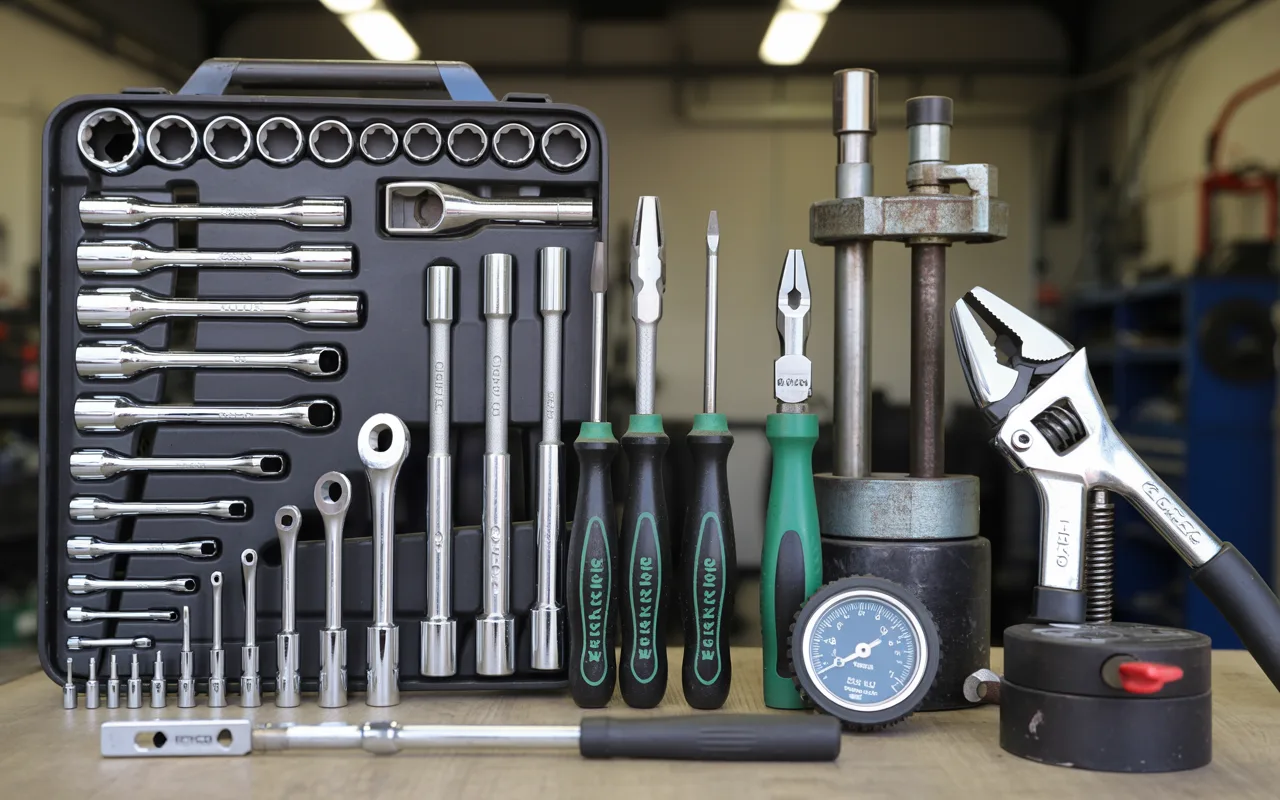
Wondering what are the essential tools for car maintenance? Learn the must-have tools every driver should keep for basic car care, quick repairs, and routine vehicle maintenance at home.
Taking care of a car does not always require a professional mechanic. Many basic maintenance tasks can be done at home with a small set of reliable tools. If you have the right equipment, you can check fluids, replace parts, tighten bolts, and solve small problems before they turn into bigger repairs.
So what are the essential tools for car maintenance? The answer includes a combination of simple hand tools, safety equipment, and a few specialized items that make routine work easier.
Even beginner car owners can build a basic toolkit that helps them change tires, check the battery, replace filters, or perform quick inspections. Over time, these tools save money and give you more confidence in handling everyday car care.
In this guide, you will learn about the most useful tools every car owner should have, how they are used, and why they matter for safe vehicle maintenance.
Why Every Car Owner Should Have Basic Maintenance Tools
Car maintenance does not have to be complicated. Many issues start small. A loose battery terminal, low tire pressure, or worn wiper blades can lead to bigger problems if ignored.
Having the right tools allows you to:
- Perform routine inspections
- Handle emergency roadside fixes
- Save money on small repairs
- Extend your car’s lifespan
- Improve safety while driving
Automotive educator Mark Evans once said:
“Basic car tools give drivers confidence. When you understand your vehicle and have the right equipment, simple problems stop feeling stressful.”
That confidence is exactly why building a small car maintenance toolkit is worthwhile.
What Are the Essential Tools for Car Maintenance?
Many drivers ask the same question: what are the essential tools for car maintenance? The answer depends slightly on your car model and how much work you want to do yourself. Still, most vehicles require a similar set of tools.
Below are the core tools every car owner should consider.
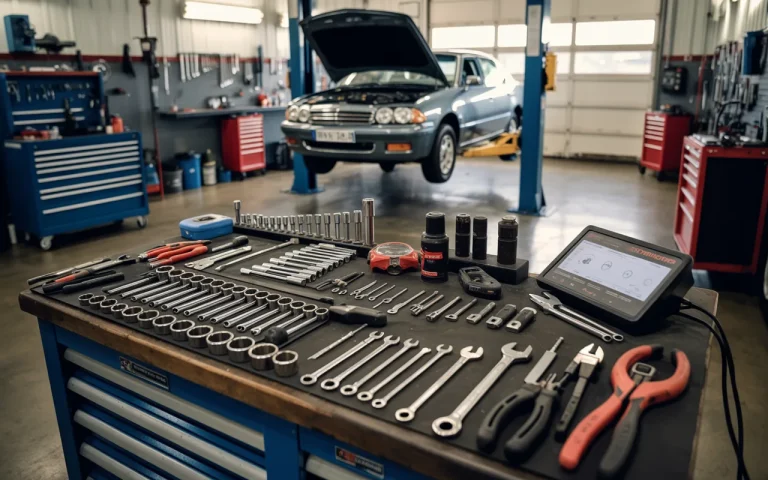
Core Car Maintenance Tools
| Tool | Main Purpose |
|---|---|
| Socket and ratchet set | Tightening and removing bolts |
| Wrench set | Working with nuts and bolts |
| Screwdrivers | Removing clips, panels, and covers |
| Jack and jack stands | Lifting the car safely |
| Tire pressure gauge | Checking tire pressure |
| Oil filter wrench | Removing oil filters |
| Pliers | Gripping and pulling parts |
| Torque wrench | Tightening bolts to correct specifications |
These tools form the foundation of a home car maintenance kit.
Basic Hand Tools Every Car Owner Needs
Hand tools are the starting point for any automotive work. They allow you to loosen, tighten, and remove many parts around the vehicle.
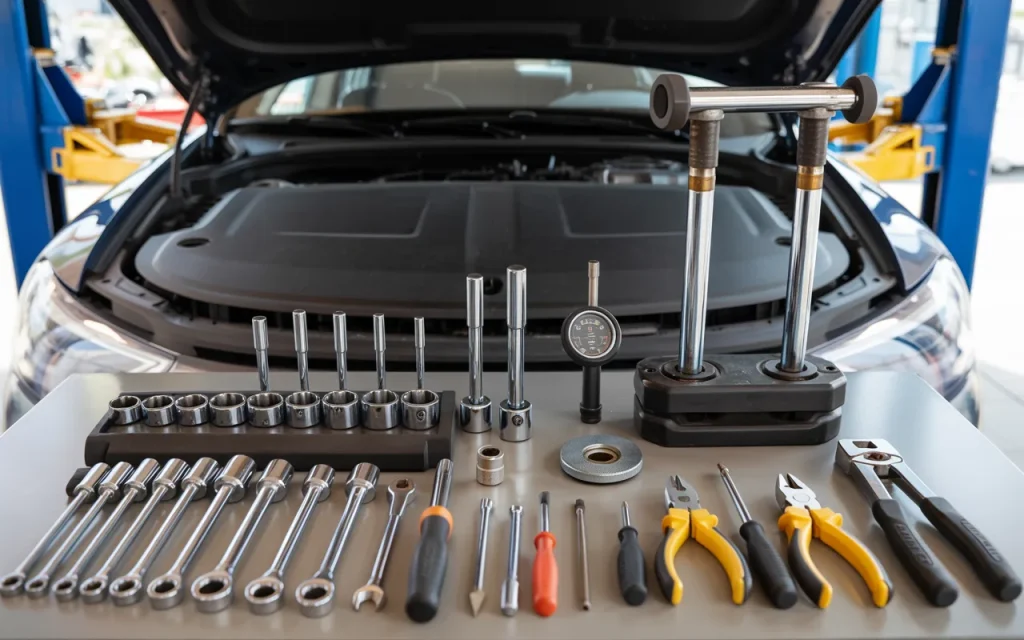
Socket and Ratchet Set
A socket set is one of the most useful tools for car maintenance. It allows you to remove bolts from different areas of the vehicle such as:
- Engine components
- Battery terminals
- Brake parts
- Suspension bolts
Sockets come in different sizes, usually measured in millimeters for modern cars.
Without a socket set, even simple repairs become difficult.
This is why mechanics often say the first answer to what are the essential tools for car maintenance always includes a socket set.
Combination Wrench Set
Wrenches help when a socket cannot fit into tight spaces. They are commonly used for:
- Brake work
- Fuel line fittings
- Battery terminal adjustments
- Alternator mounting bolts
A standard wrench set includes sizes from 8 mm to 19 mm, which covers most vehicles.
Screwdrivers
Cars contain many screws and clips that hold panels, covers, and electrical components.
A basic set should include:
- Flathead screwdrivers
- Phillips screwdrivers
- Various sizes
These tools are used for tasks like replacing interior panels, changing headlights, and adjusting hose clamps.
Automotive technician Lisa Carter explains:
“A good screwdriver set is used far more often than people expect. From air filters to dashboard panels, screws are everywhere in modern vehicles.”
Pliers
Pliers help grip and remove small parts that are difficult to hold with fingers.
Common types include:
- Needle nose pliers
- Slip joint pliers
- Locking pliers
These tools help remove hose clamps, pull fuses, or hold small hardware during repairs.
Lifting and Safety Tools
Working under a car requires safe lifting equipment. Never rely on the small emergency jack included with most vehicles for maintenance work.
Hydraulic Floor Jack
A hydraulic floor jack lifts the car quickly and safely. It allows you to raise the vehicle for tasks like:
- Tire changes
- Brake inspections
- Underbody checks
Most home garages use a two ton or three ton hydraulic jack.
Jack Stands
Jack stands support the car after it is lifted.
Using jack stands is critical for safety. A hydraulic jack alone should never hold the vehicle while you work underneath.
Place jack stands under strong points of the car frame for stability.
Wheel Chocks
Wheel chocks prevent the car from rolling during maintenance.
They are simple wedge shaped blocks placed behind the tires that remain on the ground.
Many people forget them, but they add an extra layer of safety.
Tire Maintenance Tools
Tires are one of the most important safety components on any vehicle. Proper tools help maintain tire pressure and replace flat tires.
Tire Pressure Gauge
A tire pressure gauge measures the air pressure inside your tires.
Correct tire pressure helps with:
- Fuel efficiency
- Tire lifespan
- Safe handling
Most vehicles recommend a specific pressure listed on a sticker inside the driver door.
Drivers who ask what are the essential tools for car maintenance often overlook this simple tool, yet it is one of the most important.
Lug Wrench
A lug wrench removes the nuts that hold the wheels in place.
It is used during tire changes and wheel removal.
Many cars include one with the spare tire kit, though stronger aftermarket versions make the job easier.
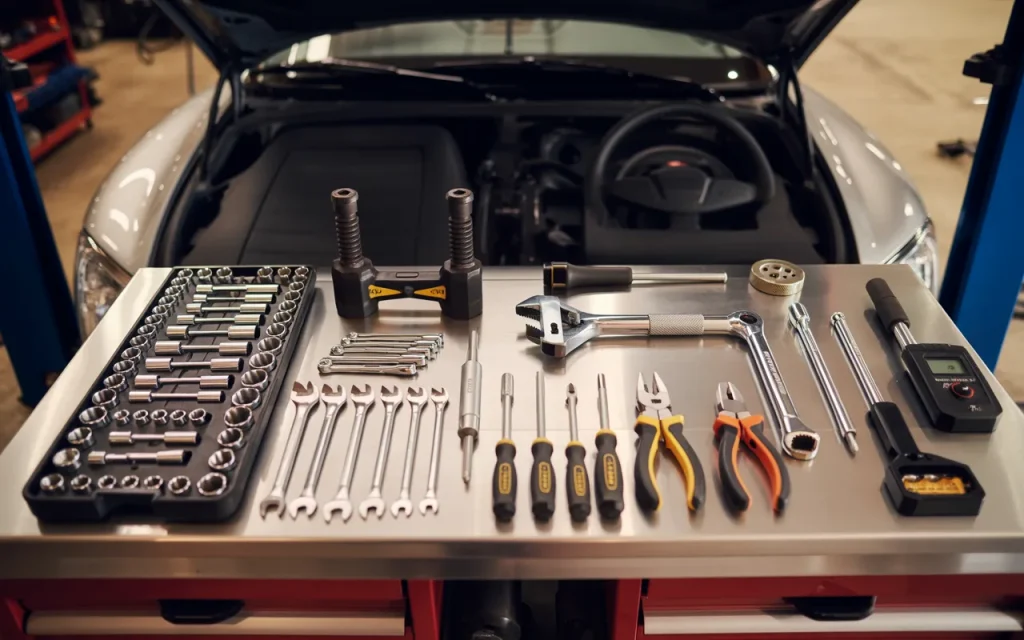
Torque Wrench
A torque wrench tightens bolts to a specific level of tightness.
This tool is very important when installing wheels because lug nuts must be tightened correctly.
If they are too loose, the wheel may move. If they are too tight, the studs can become damaged.
Mechanic David Ramirez once said:
“Correct torque protects your vehicle. It keeps parts secure without damaging threads or components.”
Fluid Maintenance Tools
Cars depend on several fluids to operate smoothly. A few simple tools help manage them easily.
Oil Filter Wrench
Changing engine oil requires removing the oil filter.
Oil filters are often tight and difficult to grip, which is why an oil filter wrench is helpful.
It provides better leverage and prevents damage to the filter housing.
Funnel
A funnel prevents spills while adding fluids like:
- Engine oil
- Coolant
- Transmission fluid
- Brake fluid
Spilled fluids can damage engine components or paint, so a funnel keeps the process clean.
Fluid Catch Pan
A drain pan collects old oil or coolant during fluid changes.
It prevents environmental contamination and makes disposal easier.
Common Car Fluids and Maintenance Frequency
| Fluid | Typical Check Interval | Purpose |
|---|---|---|
| Engine oil | Every month | Lubricates engine parts |
| Coolant | Every few months | Prevents overheating |
| Brake fluid | Every 6 months | Maintains braking system |
| Transmission fluid | Every 30,000 to 60,000 miles | Supports smooth gear shifts |
Monitoring these fluids becomes much easier with the right tools.
Electrical and Diagnostic Tools
Modern vehicles rely heavily on electrical systems. A few tools help identify issues quickly.
Digital Multimeter
A multimeter measures voltage, resistance, and electrical current.
It is useful for checking:
- Car battery voltage
- Alternator output
- Electrical connections
Even beginners can use a multimeter to determine whether a battery is weak.
OBD2 Scanner
An OBD2 scanner reads diagnostic trouble codes from the car’s computer.
When the check engine light turns on, this tool helps identify the issue.
It connects to the vehicle’s OBD port and displays codes that explain possible problems.
For drivers asking what are the essential tools for car maintenance, an OBD2 scanner is extremely helpful for modern cars.
Cleaning and Maintenance Tools
Keeping the car clean also supports maintenance and longevity.
Microfiber Towels
Microfiber towels help clean surfaces without scratching paint.
They are used for:
- Washing the car
- Cleaning interior panels
- Drying glass
Car Wash Mitt
A wash mitt removes dirt safely without damaging the paint.
Combined with proper car shampoo, it keeps the exterior looking new.
Soft Brushes
Small detailing brushes help clean tight areas such as:
- Air vents
- Wheel spokes
- Interior seams
Regular cleaning also helps you notice leaks, cracks, or worn components early.
Emergency Tools Every Driver Should Carry
In addition to home garage tools, drivers should keep a few items inside the vehicle.
Emergency Tool Kit Checklist
| Tool | Purpose |
|---|---|
| Jumper cables | Start a dead battery |
| Flashlight | Visibility at night |
| Tire inflator | Inflate low tires |
| Basic wrench set | Quick roadside fixes |
| Work gloves | Protect hands during repairs |
These tools help drivers stay prepared for common roadside problems.
How to Build a Beginner Car Maintenance Toolkit
If you are starting from scratch, you do not need to buy every tool immediately.
Instead, begin with the basics:
- Socket set
- Screwdriver set
- Tire pressure gauge
- Hydraulic jack
- Jack stands
- Pliers
As you perform more maintenance tasks, you can gradually add specialized tools.
Many drivers who ask what are the essential tools for car maintenance start with a small kit and expand it over time.
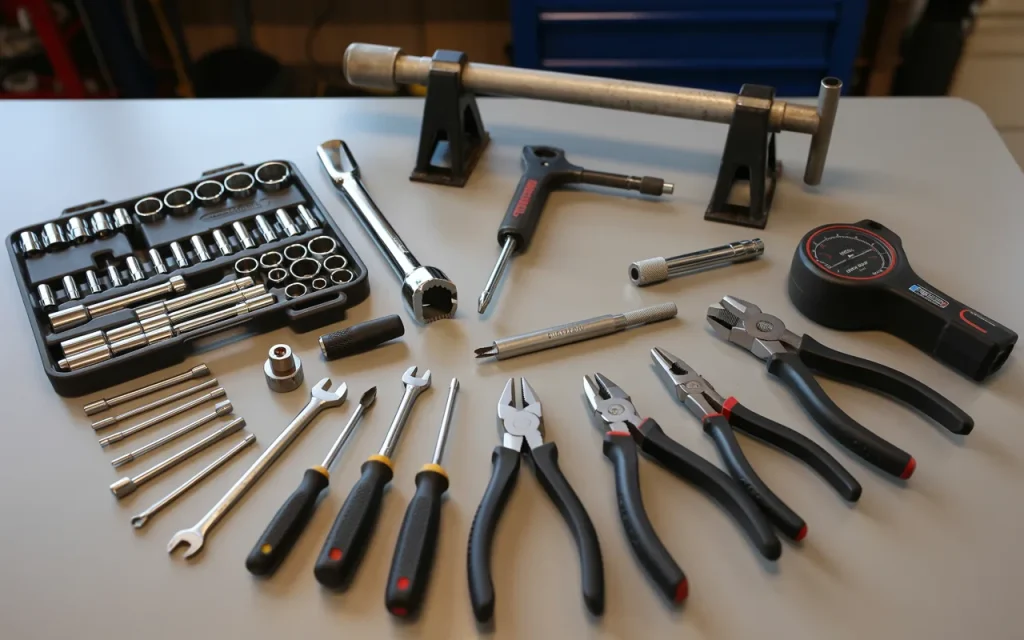
Tips for Storing and Organizing Your Tools
Keeping tools organized saves time and prevents frustration during repairs.
Helpful storage tips include:
- Use a toolbox with labeled compartments
- Keep small parts in containers
- Store frequently used tools near your work area
- Clean tools after each use
A well organized workspace makes maintenance safer and faster.
Frequently Asked Questions
What are the essential tools for car maintenance at home?
The most important tools include a socket set, wrench set, screwdrivers, jack stands, a hydraulic jack, tire pressure gauge, and an oil filter wrench. These tools allow you to handle common tasks such as tire changes, oil changes, and basic inspections.
Can beginners maintain a car with basic tools?
Yes. Many routine maintenance tasks require simple tools and basic knowledge. Checking tire pressure, replacing air filters, and changing wiper blades are easy tasks that beginners can perform safely.
How much does a basic car tool kit cost?
A basic toolkit can cost between $100 and $300 depending on quality. This small investment can save hundreds of dollars in repair costs over time.
How often should basic car maintenance be done?
Routine checks should be done every month. This includes inspecting tire pressure, engine oil levels, coolant levels, and battery condition.
Are professional tools necessary for car maintenance?
Most everyday maintenance tasks do not require professional grade equipment. Basic hand tools are enough for common repairs and inspections.
Conclusion
Knowing what are the essential tools for car maintenance helps every driver take better care of their vehicle. With the right equipment, many routine tasks become simple and manageable.
A small set of tools such as socket wrenches, screwdrivers, jack stands, tire gauges, and fluid maintenance tools can handle a large portion of basic car care. These tools allow you to check important components, fix small issues, and maintain your car with confidence.
Drivers who keep a basic toolkit often catch problems earlier and avoid costly repairs. Even small actions like checking tire pressure or tightening a loose bolt can improve safety and extend the life of a vehicle.
If you are building your own toolkit, start with the basics and add tools as you gain experience. Over time, you will find that understanding what are the essential tools for car maintenance makes vehicle ownership easier and more rewarding.
A well prepared driver is always ready for routine maintenance and unexpected situations on the road.