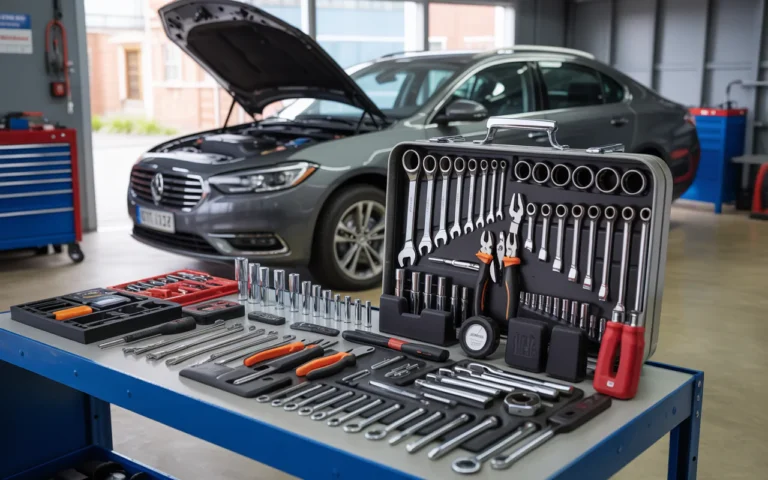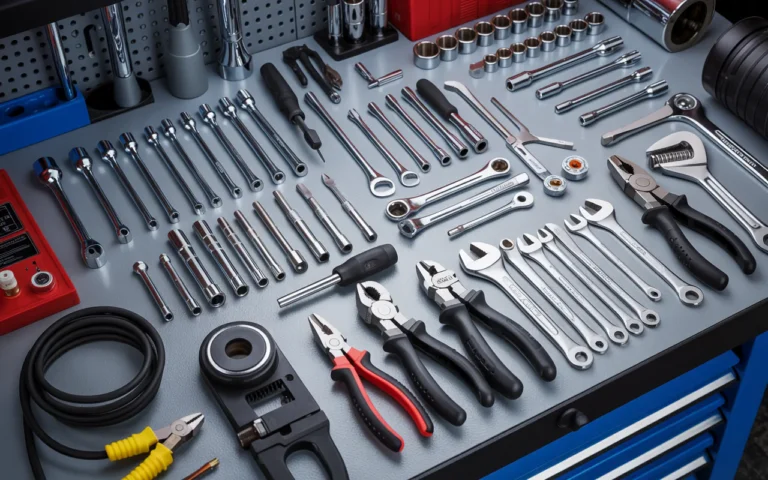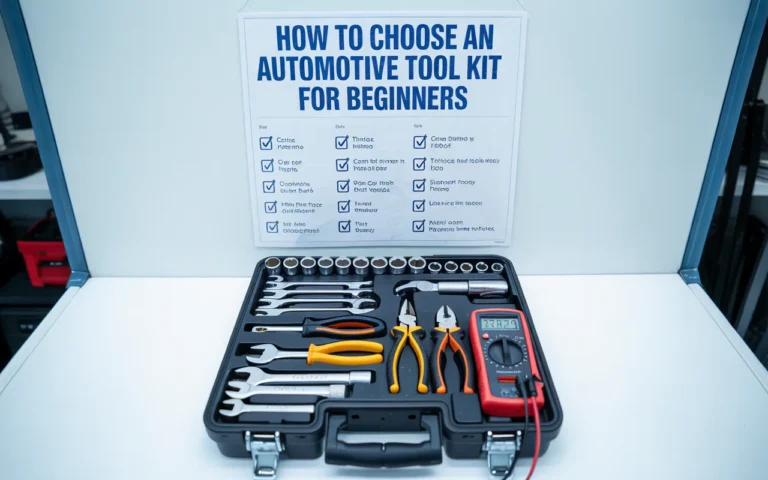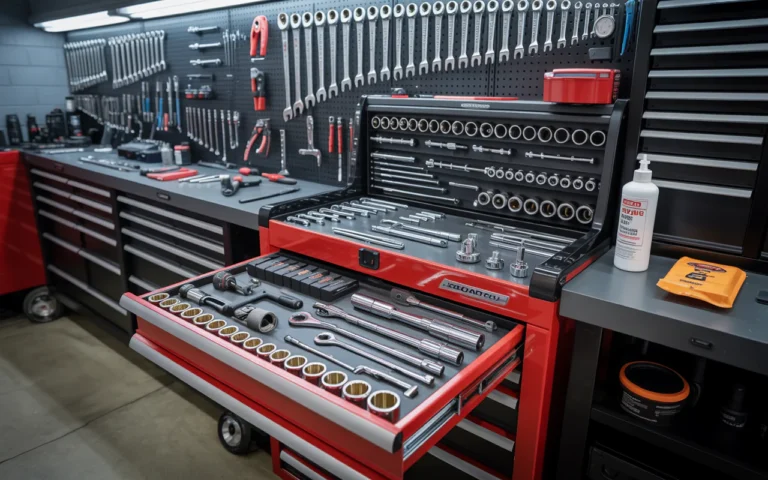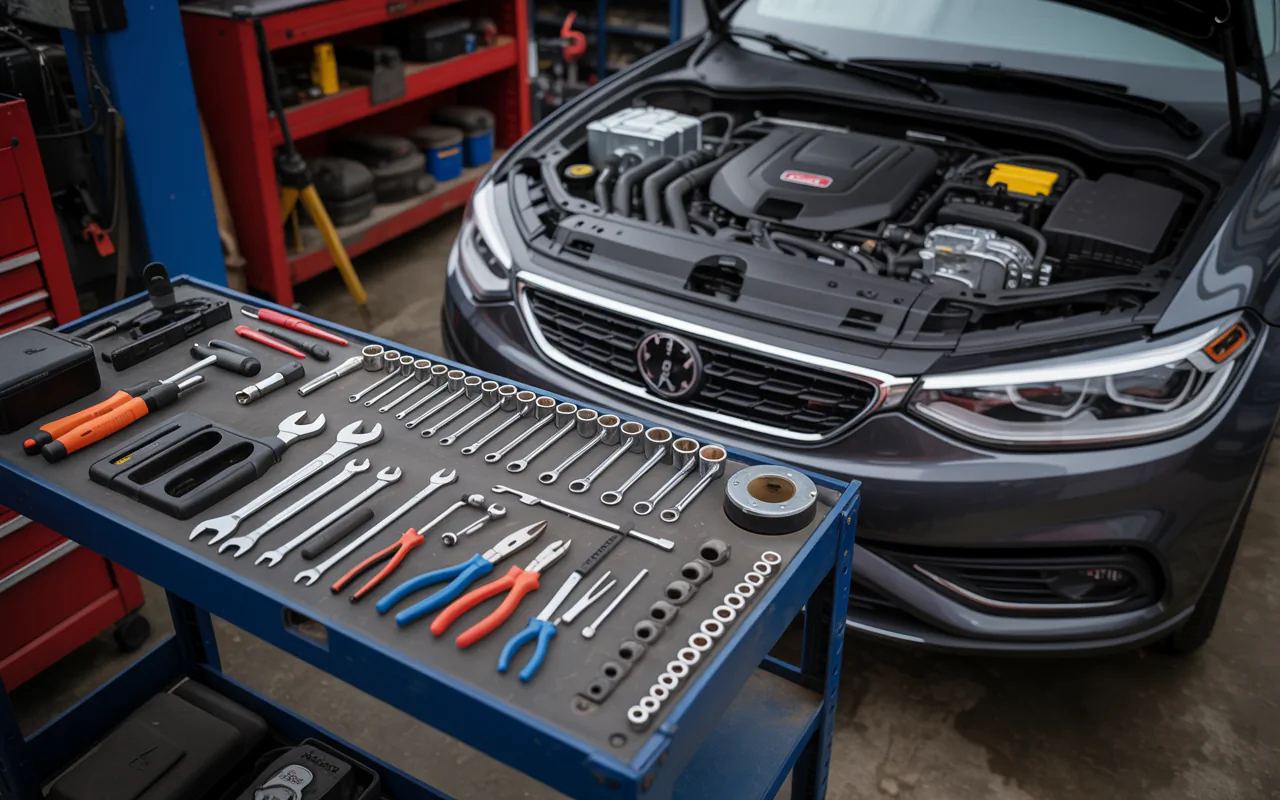
You need to know the limitations of a basic automotive tool kit before you start a repair. A basic kit lacks specialty tools, heavy duty options, and diagnostic gear for modern cars.
You just bought a small set of wrenches, a ratchet, a few sockets, and a screwdriver. You feel ready to fix your car. That is a great start. But soon you will run into the limitations of a basic automotive tool kit. Many new car owners learn this the hard way. They open the hood, find a broken part, and realize their shiny new kit cannot touch it.
I have been there. I once tried to change a serpentine belt with only a 10mm socket and a pair of pliers. It did not go well. That experience taught me a simple truth. A basic tool kit is useful for small tasks, but it has clear limits. Let me walk you through those limits so you do not get stuck on the side of the road or in your own driveway.
In this article, I will explain exactly what a basic set can and cannot do. I will also help you decide when to add more tools. By the end, you will know if your kit is enough for the job or if you need to borrow, rent, or buy something else.
First, What Does a Basic Automotive Tool Kit Include?
To understand the limitations of a basic automotive tool kit, we need to look at what is inside. A typical basic kit costs between $20 and $60. It usually has:
- A 3/8 inch drive ratchet
- 8 to 12 standard and metric sockets (8mm to 19mm, 5/16 to 3/4 inch)
- A set of combination wrenches (same sizes as sockets)
- A few screwdrivers (flathead and Phillips)
- A spark plug socket (maybe)
- A pair of slip joint pliers
- An extension bar (short, 3 inches)
- A plastic carrying case
That is it. No torque wrench. No breaker bar. No multimeter. No OBD2 scanner. No pullers or presses.
This kit is perfect for tightening a loose battery cable or changing a tail light bulb. But for real repairs, you will feel the limitations of a basic automotive tool kit very fast.
The One Job It Does Well (And Why That Misleads You)
A basic kit handles simple bolt turning. You can remove a plastic engine cover. You can take off a wheel (if the lug nuts are not too tight). You can swap an air filter. You can tighten a hose clamp.
That feels good. It gives you confidence. But that confidence can trick you. You think you are ready for a brake job or an alternator swap. Then you hit a rusted bolt or a cramped space, and you stop cold. That is exactly where the limitations of a basic automotive tool kit become painful.
“Most people overestimate what a cheap tool set can do. They buy a $40 kit and expect to rebuild an engine. That is not how tools work.” – Jerry Thompson, retired auto mechanic with 35 years of experience.
The 7 Biggest Limitations of a Basic Automotive Tool Kit
Let me break down each limit clearly. I will use simple words and real examples.
No Torque For Tight Or Rusted Fasteners
A basic ratchet is short. The handle is maybe 6 to 8 inches long. That gives you very little leverage. A rusted suspension bolt or a tight crank pulley bolt needs 200+ foot pounds of force. Your little ratchet will slip or break.
You might try to use a pipe for extra leverage. That often snaps the ratchet head. Good ratchets cost money. Basic kit ratchets are not built for that stress.
The limit: You cannot loosen or tighten high torque fasteners.
No Deep Sockets For Long Studs Or Nuts
Basic kits include shallow sockets. These work fine for most nuts and bolts. But many car parts have long threaded studs. Think of alternator mounts, shock absorber tops, or exhaust manifold studs. A shallow socket will not reach the nut because the stud hits the bottom of the socket.
You need deep sockets. A basic kit does not have them. So you either buy a separate set or stop the job.
No Low Profile Or Flex Head Tools
Modern engines are packed tight. You often need a low profile ratchet (thin head) or a flex head ratchet that bends. Basic kits have standard clunky heads. They do not fit between the engine and the firewall. They cannot reach bolts hidden behind hoses or brackets.
I once tried to remove a starter motor bolt with a basic kit. The ratchet head was too thick. I could not get it on the bolt at all. I had to borrow a flex head ratchet from a neighbor.
No Electrical Diagnostic Tools
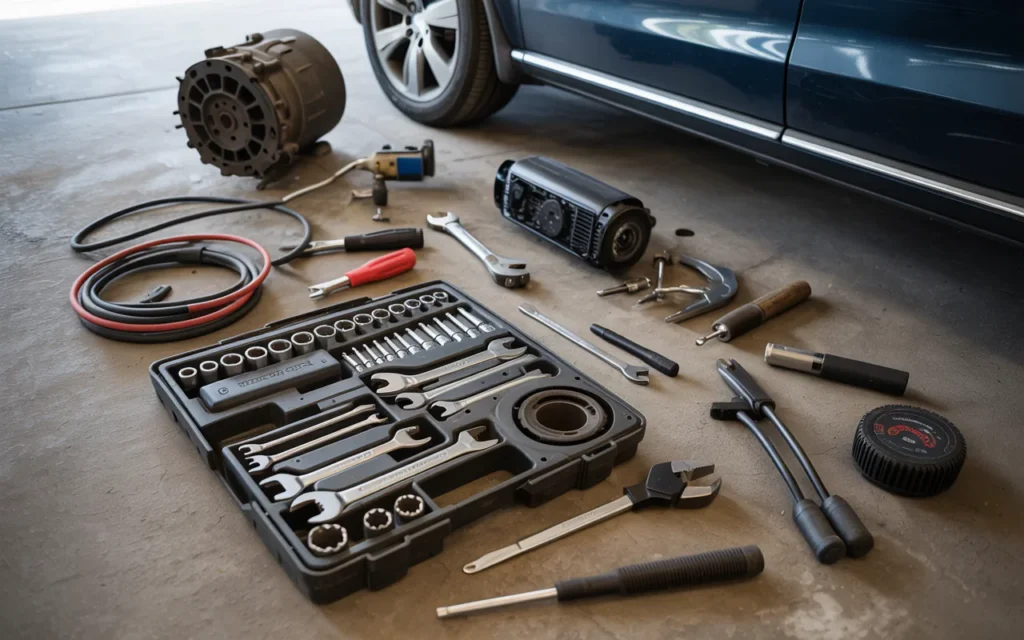
Cars today have computers, sensors, and wiring problems. A basic tool kit has no multimeter, no test light, no circuit tester. You cannot check a blown fuse properly. You cannot test a battery drain. You cannot read a check engine light code.
That is a huge gap. Electrical issues are very common. The limitations of a basic automotive tool kit leave you blind to half of all car problems.
No Specialty Sockets Or Bits
Many car fasteners are not normal hex bolts. You see Torx (star shape), E-Torx (external star), hex keys (Allen), triple square, and security bits. A basic kit has none of these.
Try removing a VW axle bolt without a triple square socket. You cannot. Try taking off a Mercedes brake caliper without an E-Torx set. You will strip the bolt head. That makes a small job a big mess.No Pullers, Presses, Or Holding Tools
Some jobs require force in a specific way. A pulley puller for a harmonic balancer. A ball joint press for suspension work. A piston ring compressor for engine rebuilding. A fan clutch holding tool. None of these are in a basic kit.
You will find the limitations of a basic automotive tool kit very fast when you need to remove a pressed on bearing. You simply cannot do it without a dedicated tool.
No Safety Or Lifting Gear
A basic kit does not include jack stands, a floor jack, wheel chocks, or a creeper. You cannot safely lift a car with only the scissor jack from the trunk. That jack is for emergencies only. It is not stable for working under the car.
Working without proper lifting gear is dangerous. People die every year from cars falling on them. That is not a tool limit to ignore. It is a safety limit.
A Quick Comparison Table: Basic Kit vs. Real Repair Needs
| Job Type | Can Basic Kit Do It? | Missing Tool Needed |
|---|---|---|
| Change engine air filter | Yes | None |
| Replace a battery | Yes (if terminals are clean) | Wire brush (not included) |
| Swap brake pads | Partially | C-clamp or caliper press, Torx bits for some cars |
| Replace alternator | No (usually) | Deep sockets, breaker bar, serpentine belt tool |
| Change suspension strut | No | Spring compressor, impact socket, torque wrench |
| Diagnose check engine light | No | OBD2 scanner |
| Remove a rusted exhaust bolt | No | Penetrating oil, torch, impact wrench |
This table shows the gap clearly. Small jobs are fine. Medium and large jobs are not.
Why Modern Cars Make The Limitations Worse
Cars built after 2010 are harder to work on with basic tools. Here is why.
More Plastic And Cramped Engine Bays
Manufacturers pack engines tight to save space. You cannot see the back of the engine. You cannot reach many bolts without long extensions and universal joints. Basic kits have one short extension. No universal joint. No wobble sockets.
More Electronics And Sensors
Every system has sensors now. The throttle body is electronic. The parking brake is electric. The cooling fan has a computer module. You need diagnostic tools to test these. A basic kit gives you no help there.
More One Time Use Fasteners
Many new cars use torque to yield bolts (stretch bolts). You cannot reuse them. You must replace them and tighten them to a specific angle. That requires a torque wrench and an angle gauge. Neither is in a basic kit.
“I tell my students: a basic tool kit is for your first oil change, not your first engine rebuild. Respect what it can do, but know its limits.” – Lisa Chen, automotive instructor and ASE certified master technician.
What Happens When You Push A Basic Kit Too Far
You might ignore the limitations of a basic automotive tool kit and try anyway. Here is what usually happens.
Stripped Bolts And Rounded Nuts
A cheap 12 point socket slips on a rusted bolt. Then the bolt head rounds off. Now you have a bigger problem. You need bolt extractors, which are not in the kit. A trip to the hardware store or a tow to a shop follows.
Broken Ratchet Or Socket
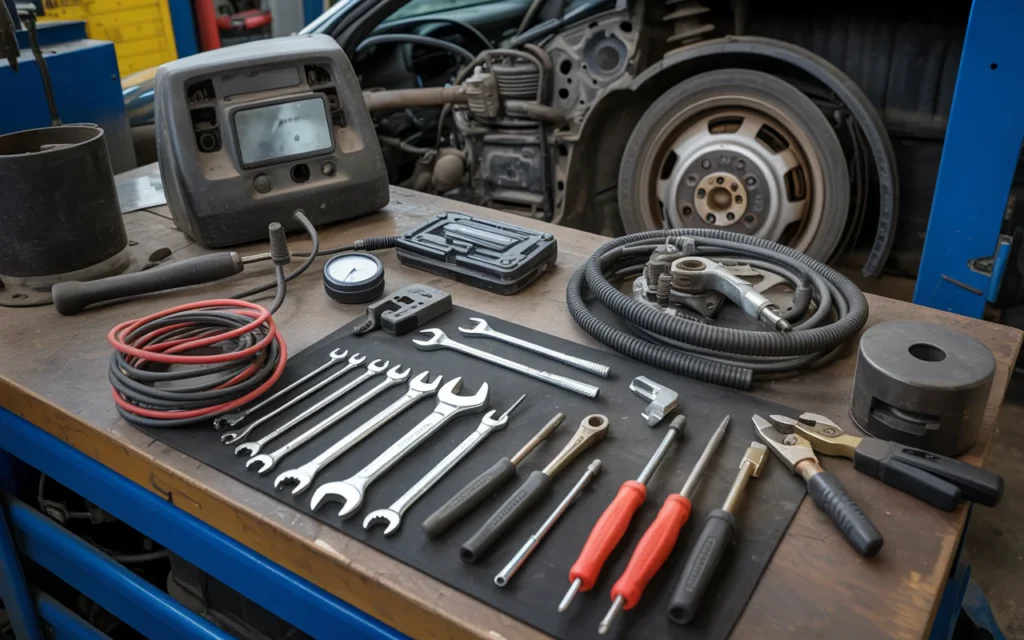
Basic kits use lower grade steel. A ratchet can snap inside a tight space. A socket can split. Then you have a broken tool and a stuck fastener. Removing a broken ratchet from a tight engine bay is not fun.
Personal Injury
Using a short ratchet on a tight bolt makes you pull hard. When the tool slips, your hand hits a sharp metal edge. I have cut my knuckles many times this way. Worse, if you are under the car with a weak jack, the car can fall.
How To Work Around These Limits Without Spending A Fortune
You do not need to buy a $2,000 tool set. But you should know how to get past the limitations of a basic automotive tool kit without breaking your budget.
Borrow From Auto Parts Stores
Most chain auto parts stores loan specialty tools for free. You pay a deposit and get it back when you return the tool. They have pulley pullers, ball joint presses, torque wrenches, and OBD2 scanners. Use this service. It is a lifesaver.
Rent Tools From Local Shops
Some independent shops rent tools by the day. A breaker bar or an impact socket set costs a few dollars to rent. That is cheaper than buying a tool you use once.
Buy One Tool At A Time
Do not buy a full big set. Buy the missing tool for the job you are doing right now. Need deep sockets? Buy a single 14mm deep socket for $3. Need a Torx bit? Buy a set of four for $8. Over time, you build a useful collection.
Use The Right Technique
Penetrating oil (like PB Blaster or Liquid Wrench) helps loosen rusted bolts. Let it sit for 10 minutes. Use a hammer to tap the bolt head gently. That breaks rust. Then try with your ratchet. Sometimes technique beats tool limits.
A Second Table: Basic Kit vs. Advanced DIY Kit
Here is what a smart DIY mechanic adds over time. This shows what you are missing.
| Tool Type | Basic Kit Has? | Advanced DIY Kit Adds |
|---|---|---|
| Ratchets | 1 (3/8 inch) | 1/4 inch, 1/2 inch, flex head, long handle |
| Sockets | Shallow only | Deep, impact rated, swivel, low profile |
| Wrenches | Standard combo | Ratcheting, flex head, stubby, offset |
| Torque tools | No | Torque wrench (1/2 inch drive), angle gauge |
| Electrical | No | Multimeter, test light, circuit probe, OBD2 scanner |
| Specialty bits | No | Torx, E-Torx, hex, triple square, security bits |
| Pullers | No | Gear puller, harmonic balancer puller, bearing separator |
| Lifting gear | No | Floor jack, two jack stands, wheel chocks |
This table helps you plan your next tool purchase wisely.
Real Stories From Real People (Including Me)
Let me share three short stories that show the limitations of a basic automotive tool kit in real life.
Story 1: The Stuck Caliper Bolt
My friend Sarah tried to change her brake pads with a basic $35 kit. The caliper bolt was tight. Her short ratchet slipped. She rounded the bolt head. The car sat in her driveway for three days. She paid a mobile mechanic $120 to remove one bolt. That bolt cost more than her whole tool kit.
Story 2: The Hidden Alternator Bolt
I helped my neighbor with a dead battery. The alternator was bad. To remove it, we needed a 14mm deep socket and a 6 inch extension. My basic kit had a shallow socket only. The bolt was recessed 2 inches deep in a bracket. We could not reach it. We borrowed a deep socket from another neighbor. Job took 20 minutes after that.
Story 3: The Mystery Check Engine Light
My cousin Tom has a basic tool kit. His check engine light came on. He had no scanner. He guessed the problem. He replaced the oxygen sensor ($80) and the spark plugs ($40). Light stayed on. He took it to a shop. They scanned it in 2 minutes. It was a loose gas cap. He wasted $120 because his kit had no diagnostic tool.
Frequently Asked Questions (FAQ)
Q1: Can a basic automotive tool kit change a tire?
Yes, if the lug nuts are not over tightened. Many shops use impact guns that tighten lug nuts too much. Your basic kit’s short ratchet may not loosen them. You may need a breaker bar or a pipe for leverage.
Q2: What is the first tool I should add to a basic kit?
A breaker bar (1/2 inch drive, 24 inches long). It gives you leverage for stuck bolts. It costs about $20. It will save your ratchet from breaking.
Q3: Can I do an oil change with a basic kit?
Partially. You can remove the drain plug if you have the correct socket size. But you need an oil filter wrench for most cars. Basic kits do not include filter wrenches. You also need a drain pan and ramps or jack stands.
Q4: Why do basic kits skip electrical tools?
Because electrical tools are not mechanical turning tools. Manufacturers assume you will buy a separate multimeter. But they should include a simple test light. Most do not.
Q5: Are expensive tool kits worth the money?
For daily use, yes. For once a month repairs, mid range kits from brands like Craftsman, GearWrench, or Husky are fine. Avoid the very cheap $20 kits. They use soft metal that strips bolts.
Q6: How do I know if my basic kit will work for a job?
Look at the repair guide first. If it asks for a Torx socket, a puller, or a torque wrench, your basic kit will fail. Stop and get the right tool before you start.
Q7: Can I use a basic kit on a hybrid or electric car?
Only for very simple jobs like cabin air filters. Hybrids and EVs have high voltage cables and special safety disconnects. You need insulated tools and training. A basic kit is not safe for those cars.
Q8: What is the most common broken tool in a basic kit?
The 3/8 inch ratchet. People use a pipe on it for leverage. The internal gear strips. Then the ratchet spins freely. Replace it with a better quality ratchet.
Final Thoughts – Work With Your Kit, Not Against It
The limitations of a basic automotive tool kit are real. But that does not mean your kit is useless. It means you need to be smart. Use your basic kit for what it does well. Small fasteners. Simple assemblies. Light duty repairs.
For bigger jobs, borrow, rent, or buy one tool at a time. Do not force your little ratchet to do a breaker bar’s job. Do not guess electrical problems without a multimeter. Do not lift a car with only the emergency jack.
The best mechanics are not the ones with the biggest tool boxes. They are the ones who know the limits of their tools. They stop when something is unsafe. They get the right tool before they cause damage.
You can fix a lot on your own car. Just be honest about what your basic kit can and cannot do. Respect that limit. Add tools slowly. Ask for help when you need it. That is how you stay safe, save money, and actually finish the job.
Now go look at your tool kit. What is missing for the next repair you have in mind? Make a small list. Buy one missing tool. You will feel the difference right away.