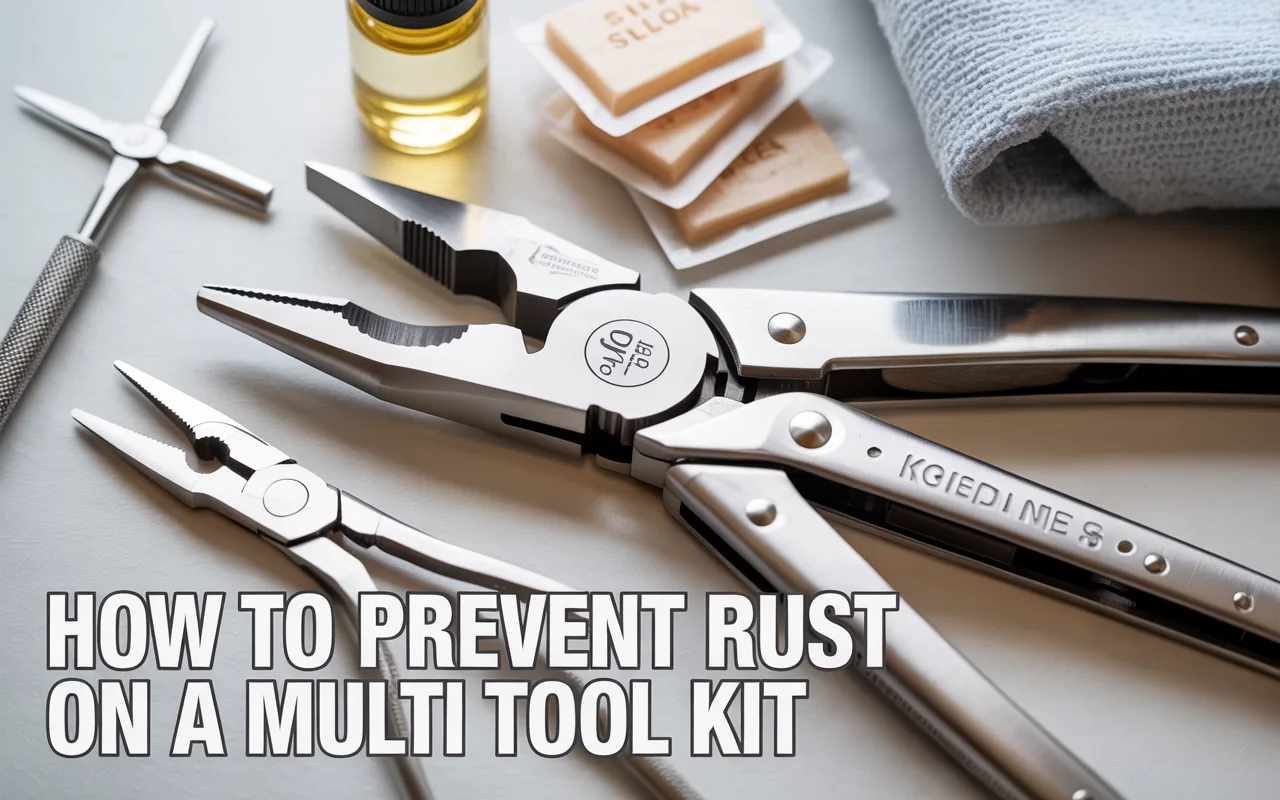
Learn simple ways to prevent rust on a multi tool kit using everyday items. Discover cleaning steps, storage tips, and products that keep your tools rust-free for years.
You bought a nice multi tool kit. Maybe it was for camping, maybe for fixing things around the house. You used it a few times. Then one day you open your drawer and see orange spots. Rust. It happens fast. But here is the good news. You can stop rust before it starts. You do not need fancy tools or special skills. You just need to know a few simple tricks.
Rust is just oxygen meeting metal. When water sits on steel, rust forms. Your multi tool has many small parts. Hinges, blades, screwdrivers. Water hides in these spots. If you live in a humid place, rust comes even faster. But you can beat it. This guide shows you exactly how to prevent rust on a multi tool kit with stuff you already have at home.
Why Multi Tools Rust So Quickly
Multi tools are handy because they pack many functions in one small package. But that same design makes them rust faster than single tools. Think about it. A regular knife has one blade. You wipe it dry easily. A multi tool has blades, pliers, files, and saws all folded together. Moisture gets trapped between the layers. Air cannot reach those spots to dry them out.
Table 1: Common Rust Causes on Multi Tools
Cause
Why It Happens
How Bad It Is
Sweat
Hands sweat during use, salt speeds rust
High
Rain
Wet pocket or outdoor use
Medium
Humidity
Air moisture settles on metal
Medium
Food residue
Acidic foods eat through coating
Low but slow
Storage in sheath
Leather or nylon traps moisture
High
I talked to Mark Torres, a tool repair specialist with 15 years of experience. He told me, “Ninety percent of the rusted tools I see come from people putting them away wet. Not even soaking wet. Just damp from pocket sweat. That’s enough to start spots in three days.”
Clean Your Tool the Right Way
Cleaning is step one to prevent rust on a multi tool kit. But you have to clean it correctly. Many people scrub hard with soap and water. That actually hurts the tool. Soap strips the factory oil that protects the metal. Water gets into hinges and stays there.
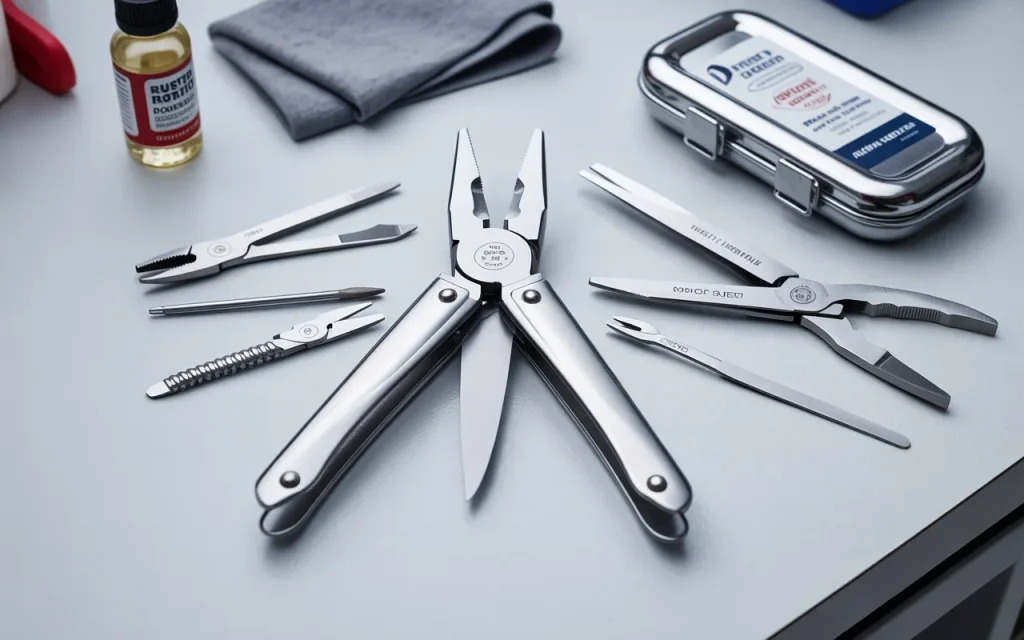
Here is what works better. After using your tool, wipe it with a dry cloth. Get into all the cracks. Open every blade and tool. Wipe each one separate. If the tool is really dirty, use a little rubbing alcohol on a cloth. Alcohol dries fast and removes sticky stuff without leaving water behind.
For deep cleaning every few months, use compressed air. You know, the cans for cleaning keyboards. Blow air into all the hinges and joints. This pushes out dust and moisture you cannot see. Then wipe everything with a lightly oiled cloth.
Dry Storage Is Everything
Where you keep your multi tool matters more than how you clean it. A dry place stops rust before it starts. Never leave your tool in a bathroom. Too much steam. Never leave it in a car glove box. Temperature changes make moisture form inside.
The best spot is a drawer with a silica gel pack. You know those little packets that come in shoe boxes? Save them. They soak up moisture from the air. Put one in the drawer with your tool. Replace it every few months when it gets full of water.
Some people think leather sheaths protect tools. They do not. Leather holds moisture like a sponge. If you put a slightly damp tool in leather, it stays damp for days. Nylon sheaths are worse because they dry even slower. Store your tool loose in a dry drawer instead.
Oil Is Your Best Friend
Oil creates a barrier between metal and air. No air, no rust. But you do not need special tool oil. Many common oils work fine. The key is using very little. Too much oil just attracts dust and dirt.
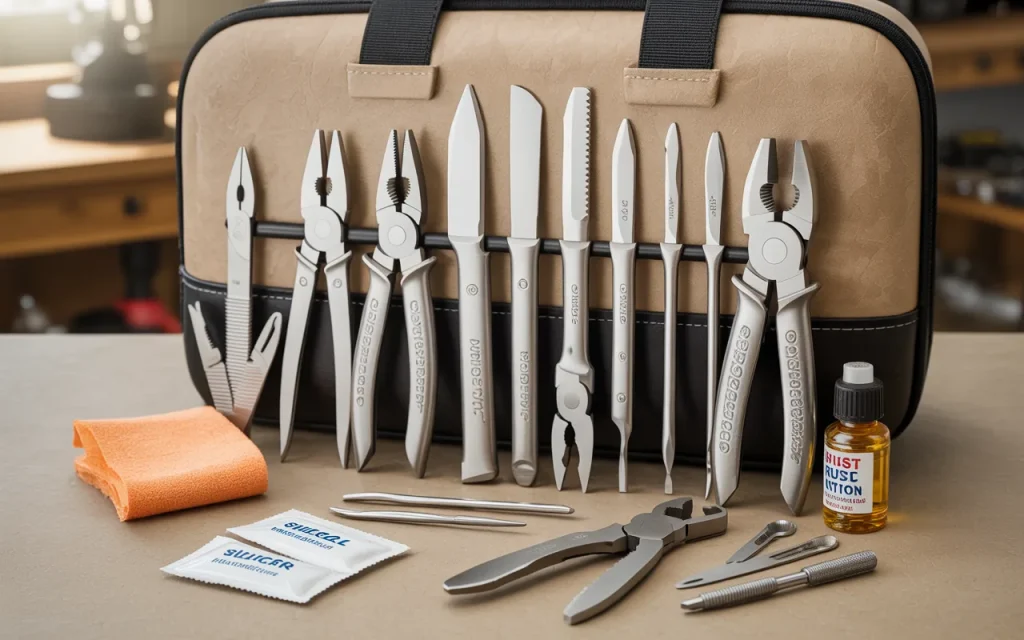
Mineral oil is great because it is cheap and food safe. You can find it in the laxative section of any drug store. Put one drop on a cloth. Wipe all metal parts lightly. Then wipe again with a dry part of the cloth. You want just a thin film, not wet oil.
For blades that cut food, use food-grade mineral oil. For tools that just cut wire or wood, regular machine oil works. Even cooking oils like vegetable oil work in a pinch. But they go bad over time and get sticky. Better to use mineral oil.
Lisa Park, a outdoor gear blogger who tests tools for hiking magazines, shared this. “I have a multi tool that is ten years old. Still no rust. I wipe it with an oily rag every time I come home from a trip. Takes thirty seconds. That simple habit saved me from buying new tools every year.”
Watch Out for These Hidden Rust Traps
Some parts of your multi tool rust faster than others. Knowing where to look helps you prevent rust on a multi tool kit more effectively.
The plier joint is the number one rust spot. Water sits right in the pivot point. After cleaning, open and close the pliers several times while wiping. This pulls moisture out of the joint.
Blade grooves are another problem. Many multi tools have partially serrated blades. Those little teeth trap water. Use an old toothbrush to clean them. Then blow hard to push water out.
Springs inside the handles rust too. You cannot see them easily. But if your tool feels stiff to open, springs might be rusting. A drop of oil at the hinge points flows inside and protects them.
What to Do If Rust Already Started
Maybe you found this article too late. There is orange rust on your tool already. Do not worry. You can fix it. Surface rust comes off pretty easy. Deep pitted rust is harder but still fixable.
For light rust, use a pencil eraser. Rub it on the rust spots. The eraser grit rubs off rust without scratching the metal underneath. Works like magic.
For heavier rust, use fine steel wool. Grade 0000 is the finest. Dip it in a little oil and rub gently. The oil lifts the rust and protects the metal at the same time. Go slow. Check your progress often.
For rust in tiny grooves, use a toothpick with oil. Scrape gently. Then wipe clean. If rust is really bad, white vinegar helps. Soak a cloth in vinegar and wrap it around the rust spot for an hour. The acid eats rust. But rinse well after and oil immediately. Vinegar strips all protection.
Table 2: Quick Rust Removal Methods
Rust Level
What to Use
How Long It Takes
Light spots
Pencil eraser
1-2 minutes
Medium coating
0000 steel wool with oil
5-10 minutes
Heavy rust
Vinegar wrap
1 hour then scrub
Deep pitting
Fine sandpaper (600 grit)
15-20 minutes careful work
Seasonal Care Makes a Difference
Rust happens faster in some seasons than others. Summer humidity is the enemy. Winter is usually drier but brings other problems.
In summer, check your tool once a week. If you live where humidity stays above 60 percent, wipe your tool with an oily cloth even if you did not use it. Moist air alone can start rust.
In winter, the problem is temperature changes. Coming from cold outside into warm inside, moisture forms on the metal. This is condensation, just like on a cold drink glass. Let your tool warm up slowly in your pocket before opening it indoors. Wipe it when you get inside.
Spring and fall are easier. Just normal care works fine. But after rainy days, check your tool if it was in an outside pocket.
Products That Help Prevent Rust
You do not need expensive products. But a few cheap things make rust prevention easier.
Silica gel packs we talked about already. You can buy big bags online for cheap. Toss a few in your tool drawer. Change them every few months or when they feel soft.
Rust prevention wipes exist. Companies make wipes with rust blocker chemicals. They work well for travel. Keep one in your camping bag. Wipe your tool down at the end of each trip.
Corrosion inhibitor spray is another option. These sprays leave a thin waxy coating. Good for long term storage. If you put your multi tool away for the whole winter, spray it lightly and wrap in a cloth.
But remember, the best product is a simple cotton cloth and a bottle of mineral oil. Cheap and effective.
Common Mistakes People Make
Let me tell you what not to do. I have made these mistakes myself.
Do not wash your multi tool in the dishwasher. Ever. I know someone who tried this. High heat and water destroyed the tool. Hinges rusted solid in one cycle.
Do not use bleach or harsh cleaners. They strip protective coatings and eat metal. Stick to mild soap if you must use water, but alcohol is better.
Do not store tools in plastic bags. Plastic traps any moisture inside. If you put a damp tool in a bag, it stays damp forever. Use a cloth pouch instead if you need a cover.
Do not ignore small rust spots. They grow fast. A tiny orange speck today can be a pit in the metal next month. Wipe it off as soon as you see it.
James Carter, a maintenance worker who carries a multi tool every day, said, “I see guys at work with rust buckets. They tell me the tool is cheap. But I have the same cheap tool for years. I just wipe it down at the end of my shift. That is the only secret. Consistency.”
Long Term Storage Tips
Maybe you have a backup multi tool. Or you only use yours for certain activities. Long term storage needs extra steps.
First, clean the tool completely. Use alcohol to remove all oils and dirt. Let it dry for a full day in a warm room. You want every bit of moisture gone.
Then oil it heavier than usual. Use a few drops on all moving parts. Wipe excess but leave a visible film.
Wrap the tool in acid-free paper. This is the kind used for storing silverware. It breathes but blocks dust. Do not use newspaper. Ink transfers and can damage the tool.
Put the wrapped tool in a sealed container with silica gel packs. Check it every six months. If you see any change, clean and re-oil.
How to Check for Rust Regularly
Make rust checking a habit. Once a month, take your multi tool out. Open every tool all the way. Look at each piece in good light. Pay special attention to the spots where tools fold into the handle.
Run your finger along blades. You can feel rust bumps before you see them. If you feel roughness, clean that spot.
Check the pliers jaw teeth. Open the pliers all the way and look between the teeth. Rust hides there.
Smell the tool. Sounds weird but rust has a metallic smell. If your tool smells like old metal, check closer.
Do this check on the same day each month. Maybe the first of the month. Easy to remember.
What Affects Rust Speed
Different multi tools rust at different speeds. Steel type matters a lot. High carbon steel rusts fast. Stainless steel rusts slower but still rusts. No steel is completely rust proof.
Cheaper tools often use lower grade steel. They rust faster. But even expensive tools rust if you neglect them.
Your body chemistry affects rust too. Some people have more acidic sweat. Their tools rust faster. If you notice rust forming quickly on your tools, wipe them down more often. Maybe even twice a day if you use them heavily.
Climate is the biggest factor. Desert areas have almost no rust problems. Coastal areas have constant rust from salt in the air. If you live near the ocean, you need to oil tools weekly even if unused.
Final Thoughts on Rust Prevention
Keeping rust off your multi tool is not hard. It just takes a little attention. Wipe after use. Store dry. Oil sometimes. Check regularly.
These steps take maybe two minutes a week. That small time saves you from buying new tools every year. It also keeps your tool working smooth. Rust makes tools stiff and hard to open. Nobody wants that.
Think of rust prevention like brushing teeth. Quick daily care prevents big problems later. Your multi tool will last for decades with simple maintenance.
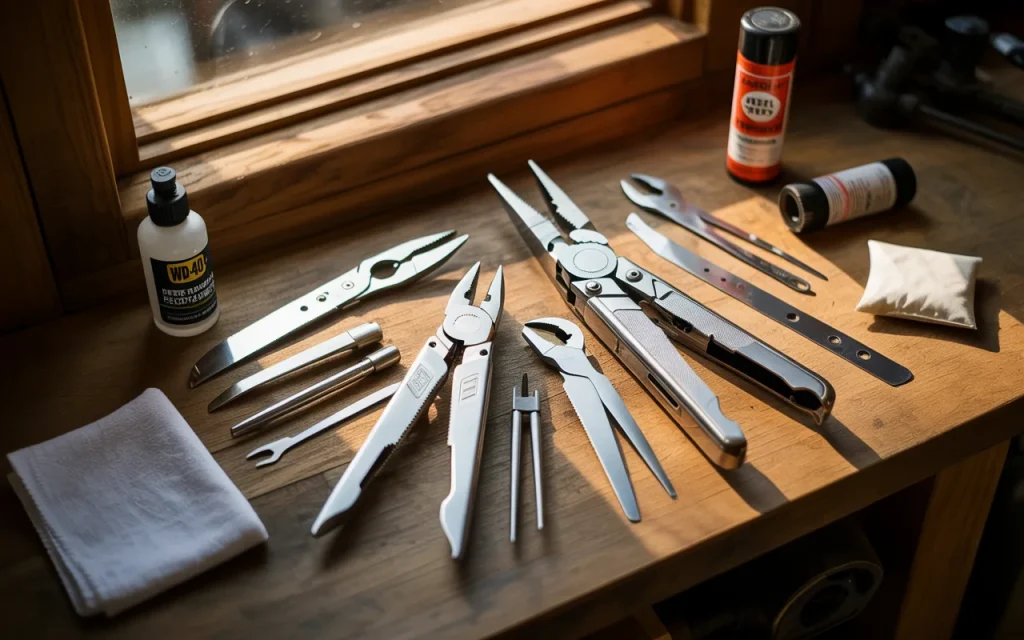
Yes, WD-40 works fine. It displaces water and leaves a light protective layer. But it dries out faster than oil. You need to reapply more often. For long term protection, use actual oil after WD-40.
How often should I oil my multi tool to prevent rust?
Once a month for normal use. If you use it daily or live in humid areas, once a week. If you use it in water, oil it the same day.
Does stainless steel mean no rust?
No. Stainless steel resists rust but does not stop it completely. It still rusts, just slower. You still need to care for stainless tools.
Can I put my multi tool in rice to dry it?
Rice works for phones but not great for tools. Rice leaves dust in hinges. Better to use a hair dryer on low heat or just wipe and air dry overnight.
Will vinegar hurt my multi tool if I use it for rust removal?
Vinegar removes rust but it is acidic. It can damage the metal if left too long. Use it only for rust spots and rinse very well after. Then oil immediately.
Mineral oil is best for most people. It is cheap, food safe, and works well. For heavy use, gun oil or tool oil lasts longer but costs more.
Should I keep my multi tool in its original box?
Original boxes are usually cardboard. Cardboard absorbs moisture from the air. Better to store in a dry drawer with silica gel. Cardboard is okay if you live in a very dry climate.
How do I know if rust is too deep to fix?
If you see pits or holes in the metal, that rust is permanent. You cannot fix pitted metal fully. But you can stop it from getting worse. Keep the tool oiled and the pitting will not spread much.
Can I use sandpaper on rust?
Yes, but use fine grit like 600 or higher. Coarse sandpaper scratches the metal and makes more spots for future rust to start. Go fine and slow.
Does painting my multi tool stop rust?
You can paint some parts but not moving parts like hinges. Paint chips off moving parts and traps moisture underneath. Oil is better for protection.