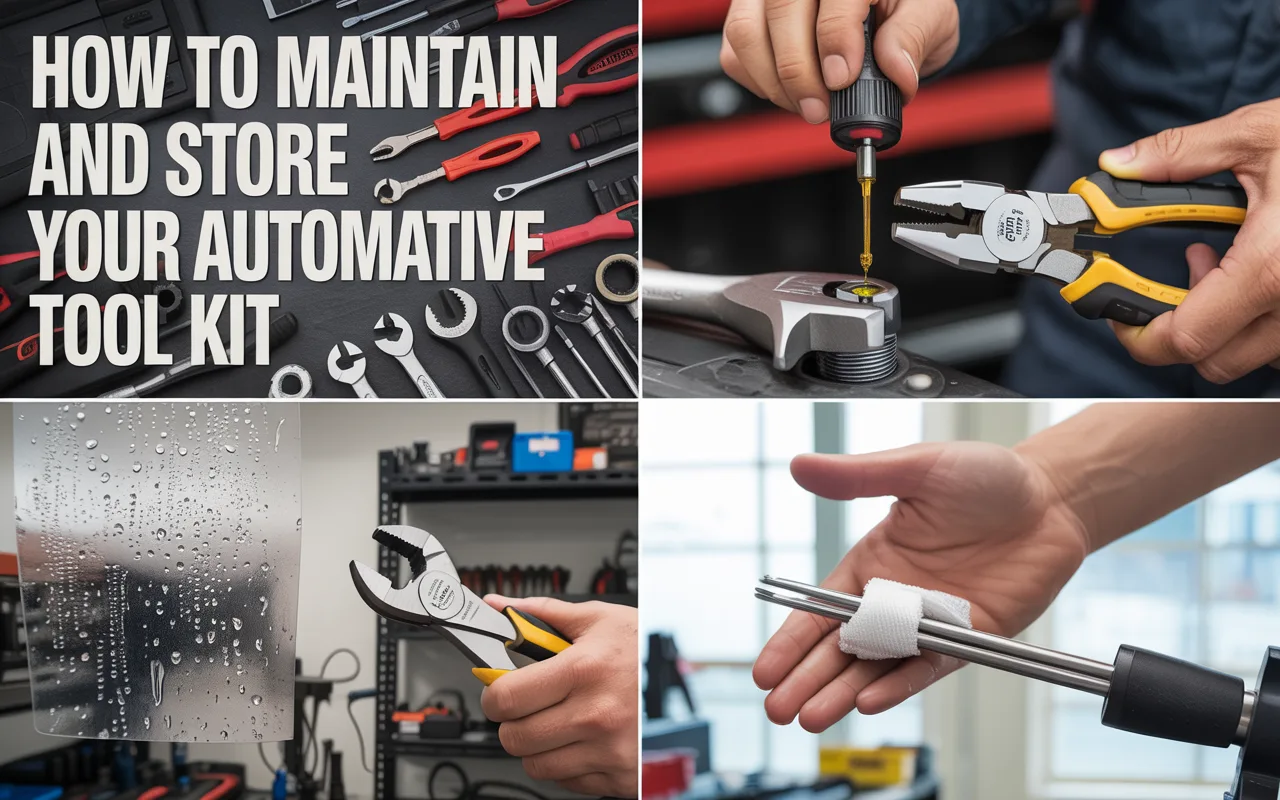
Knowing how to properly maintain and store your automotive tool kit will save you money, prevent rust, and ensure every wrench and socket is ready when you need it for a repair.
If you have ever been halfway through a brake job, lying on your back under a car, only to reach for a 10mm socket that has vanished into thin air, you know the frustration I am talking about. An automotive tool kit is not just a collection of metal and plastic. It is your ticket to self-reliance, a way to save money on repairs, and for many of us, a source of real pride.
But tools do not take care of themselves. They face grease, grime, moisture, and the general chaos of a garage floor. If you want your tools to last a lifetime, or even to pass them down to the next generation, you need a solid plan. This guide is all about how to maintain and store your automotive tool kit effectively. We will go over simple cleaning habits, smart storage solutions, and the little routines that keep your gear in top shape. Whether you are a weekend warrior or a seasoned mechanic, these tips will help you keep your workspace organized and your tools ready for action.
Why Proper Care Matters More Than You Think
It is easy to toss a wrench back into a drawer and forget about it until the next oil change. But neglecting your tools does more than just create clutter. It costs you money. Rust is the biggest enemy of steel tools. Once corrosion sets in, it can ruin the fit of a socket or seize up a ratchet mechanism.
Moreover, a disorganized kit is a dangerous one. When you are working on a car, you need to focus. Digging through a pile of rusty tools to find the right size screwdriver not only wastes time but leads to frustration that can cause mistakes. Taking the time to learn how to maintain and store your automotive tool kit properly ensures safety, efficiency, and longevity. As the old saying goes, you do not rise to the level of your ambition; you fall to the level of your training. Or in this case, the level of your organization.
“A well-organized toolbox is a sign of a well-organized mind. It allows you to focus on the problem, not the search for the solution.” – Carroll Smith, Engineer and Author
Step 1: Cleaning Your Tools After Every Use
This is the golden rule. The moment you finish a job, clean your tools before putting them away. It takes five minutes, but it saves hours of restoration work later.
The process is straightforward. First, use a clean, dry rag to wipe off grease, mud, and grime. For heavy grease, a little bit of brake cleaner on a shop towel works wonders. If your tools feel sticky, use a mild degreaser or simple dish soap and water. Be careful with wooden handles; just wipe them down quickly. The most critical step is drying. Never store wet tools. Moisture is the enemy. Use a compressed air gun to blow water out of the crevices of ratchets and pliers, or simply wipe them dry with a microfiber cloth.
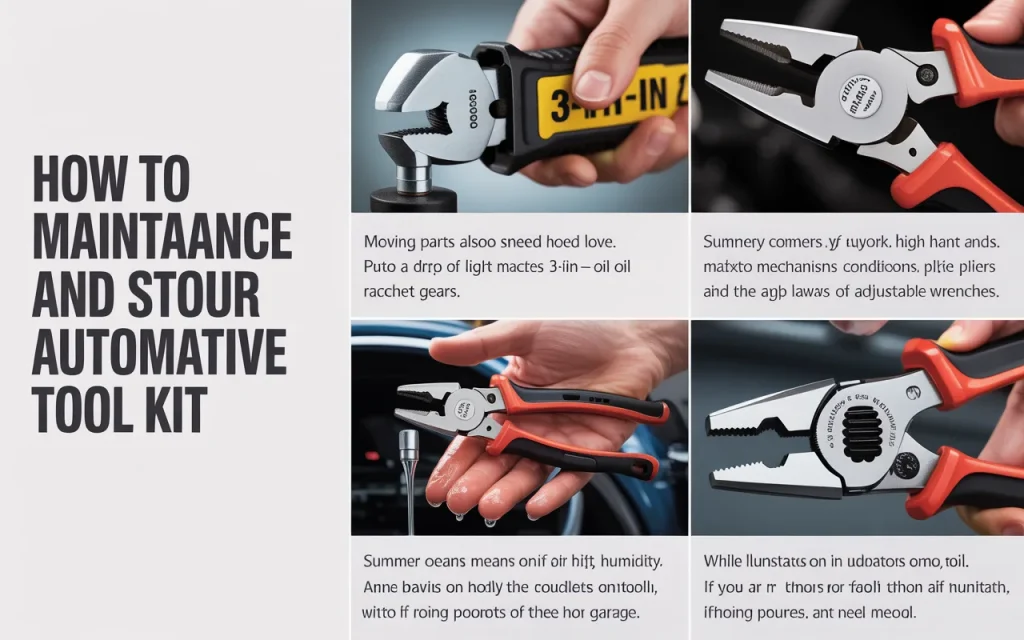
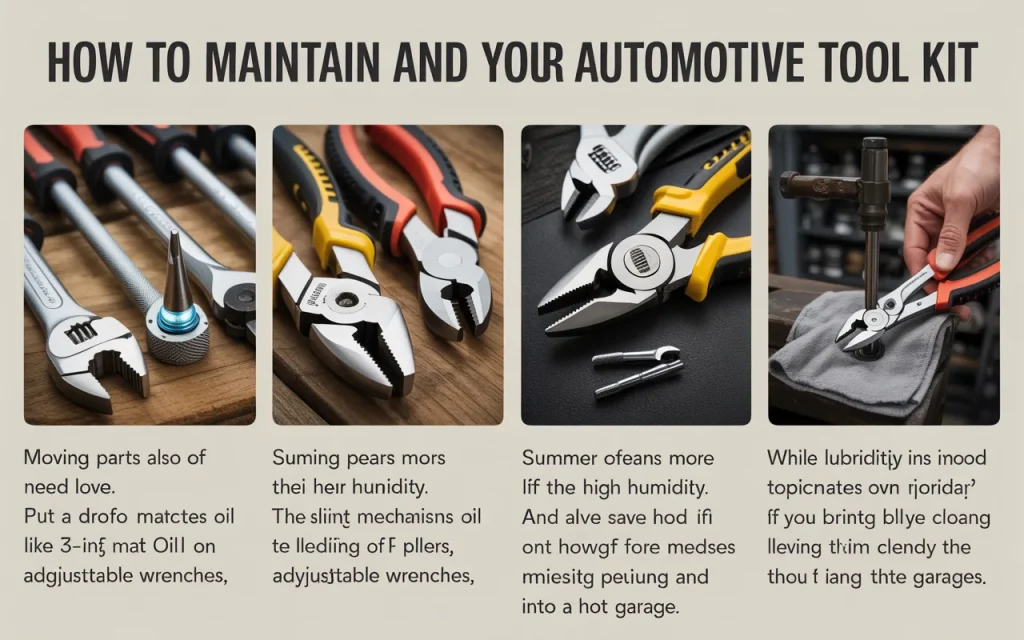
Moving parts also need love. Put a drop of light machine oil like 3-in-1 oil on ratchet gears, the sliding mechanisms of pliers, and the moving jaws of adjustable wrenches. Work the oil in by clicking the ratchet or opening and closing the pliers a few times. This simple routine forms the foundation of how to maintain and store your automotive tool kit without letting rust take hold.
Step 2: Dealing with Rust (The Enemy)
Even with the best care, sometimes rust appears. It is not the end of the world, and you do not need to throw the tool away.
| Type of Rust | Solution |
|---|---|
| Surface Rust (Light) | Use a penetrating oil like WD-40 and a piece of aluminum foil or fine steel wool. Scrub gently. The aluminum foil is hard enough to remove rust but soft enough not to scratch the steel underneath. |
| Heavy Rust (Pitting) | Soak the tool in white vinegar for 24 hours. The acid dissolves the rust. After soaking, scrub with a wire brush, rinse thoroughly, dry immediately, and coat with oil to prevent immediate re-rusting. |
Once you have removed the rust, you can return the tool to your kit. However, if the tool was stored improperly to begin with, you might want to reconsider your storage method to prevent a repeat issue. This is a key part of learning how to maintain and store your automotive tool kit effectively.
Smart Storage Solutions for Longevity
Once your tools are clean and oiled, they need a home. How you store them is just as important as how you clean them. The goal is to protect them from moisture, impact damage, and loss.
Toolboxes vs. Tool Bags vs. Tool Cabinets
Choosing the right container depends on your environment. If you work in a humid garage or a basement, a sealed tool cabinet is better than a canvas bag.
| Storage Type | Best For | Pros | Cons |
|---|---|---|---|
| Metal Tool Chest/Cabinet | Home garages and professional shops | Rigid protection, lockable, often has ball-bearing drawers, resistant to pests | Heavy, expensive, stationary |
| Canvas Tool Bag | Mobile mechanics, roadside emergencies | Portable, lightweight, flexible | Offers little protection against impact; tools can rust if bag gets wet |
| Plastic Tool Case | Specific kits like socket sets | Molded slots for each tool, waterproof, easy to carry | Limited space; if one tool breaks, the case feels incomplete |
If you are storing your tools in a garage that gets cold and damp, consider adding silica gel packets inside the drawers. These absorb moisture from the air and are a cheap way to prevent rust. When you think about how to maintain and store your automotive tool kit, controlling the environment around the tools is half the battle.
Organization Techniques for Speed and Safety
Throwing tools into a drawer is a recipe for broken knuckles later. When you organize, you protect the tools from banging into each other, and you protect yourself from the frustration of a messy workspace.
Foam shadowing, often called tool control, is a favorite method among aircraft mechanics and serious car enthusiasts. You buy foam sheets, lay them in your drawer, and cut out the shape of each tool. This does three important things. It protects tools because they do not roll around and hit each other. It gives you inventory control because you know instantly if a tool is missing. If the cutout is empty, you left a 10mm socket under the hood. And it speeds up your work because you grab the right tool without searching.
For tools you use daily, like screwdrivers and pliers, mounting a magnetic tool strip on the wall above your workbench keeps them visible and accessible. Just be careful not to magnetize sensitive electronic tools, though for standard hand tools, this is not an issue.
“The cost of losing a tool is not just the price of replacing it. It is the time spent looking for it, the delay in the job, and the risk of leaving it inside a customer’s vehicle.” – Mike Rowe, TV Host and Advocate for Skilled Trades
Seasonal Maintenance and Long-Term Storage
If you live in a place with four seasons, your storage needs might change throughout the year. Humidity in the summer and freezing temperatures in the winter affect your tools differently.
Summer Care
Summer often means more car work, but it also means high humidity. Sweaty hands leave salt on tool handles. Moisture in the air condenses on cold metal tools if you bring them from an air-conditioned house into a hot garage. Wipe tools down after every use during summer months. Keep a dehumidifier running in your garage if the humidity is consistently high. These small habits are essential when you maintain and store your automotive tool kit through the warmer months.
Winter Care
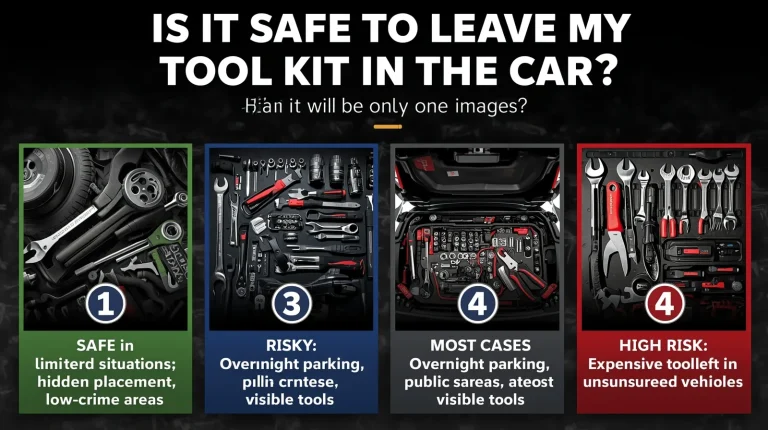
In winter, road salt and moisture are prevalent. If you use your tools for winter repairs, they get exposed to corrosive salt. If you use your tools in the snow or salt, clean them immediately. Salt will accelerate rusting within hours. Also, do not leave tools in your vehicle’s trunk during winter. The temperature fluctuations cause condensation inside toolboxes, leading to rust.
Storing Tools You Do Not Use Often
Every car enthusiast has specialized tools used once a year, like a timing light or a ball joint press. For these long-term storage items, start with a clean and oil coat. A thick coat of oil is your friend. Some people use a silicone spray for a less greasy feel. Store these less-used tools in sealed plastic bins with a tight-fitting lid. This prevents dust and moisture from settling on them. If you put a special tool in a box in the attic, label the box clearly. “Front Wheel Bearing Tool” is better than “Misc Car Stuff.”
Common Mistakes to Avoid
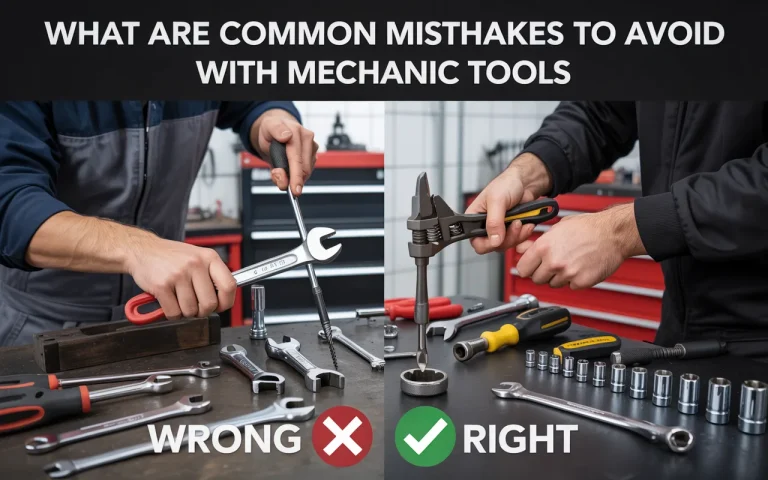
Even with the best intentions, we all make mistakes. Here are a few habits that work against your goal to maintain and store your automotive tool kit.
Using tools as hammers
A wrench is not a hammer. A screwdriver is not a pry bar. Using a tool for a job it was not designed for leads to bent frames, chipped edges, and broken mechanisms. This damages the tool and ruins its precision.
Over-oiling
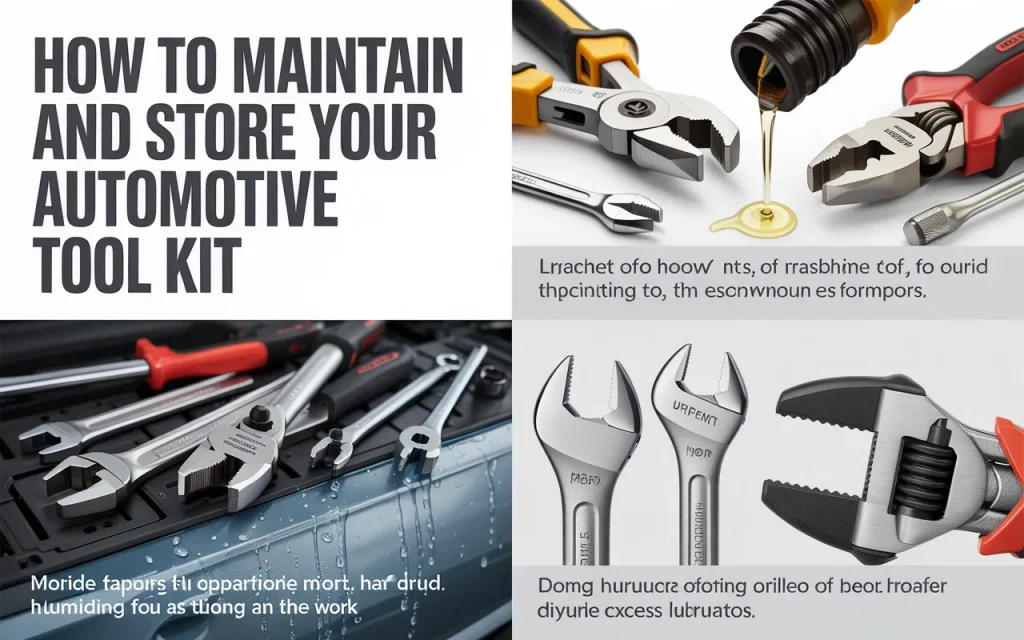
While lubrication is important, too much oil attracts dust and dirt. If your tools feel sticky or grimy after sitting in the drawer, you used too much oil. Use a light, dry lubricant or wipe off excess oil with a rag before storing.
Ignoring the ratchet
Many people clean the sockets but ignore the ratchet head. Dirt and grit can get inside the gear mechanism. If your ratchet starts to skip or feel gritty, do not just keep using it. Open it up if possible, clean the internal gears with solvent, and re-grease it. This is a core part of how to maintain and store your automotive tool kit that often gets overlooked.
Storing tools on concrete
If you have a concrete floor in your garage and you set your toolbox directly on it, or leave tools on the floor, you are inviting rust. Concrete holds moisture. A metal toolbox sitting on wet concrete can develop rust on the bottom drawers. Elevate your tool storage if possible.
“I have tools that belonged to my grandfather. They are 80 years old and still work because he wiped them down every night. A tool is a partnership; you take care of it, and it takes care of you.” – Jessi Combs, Late Racer and Fabricator
Inventory and Digital Management
Part of proper storage is knowing what you actually own. It is easy to buy duplicate tools because you forgot you already had a set of deep sockets buried in the bottom of a tote.
Create a Tool Inventory
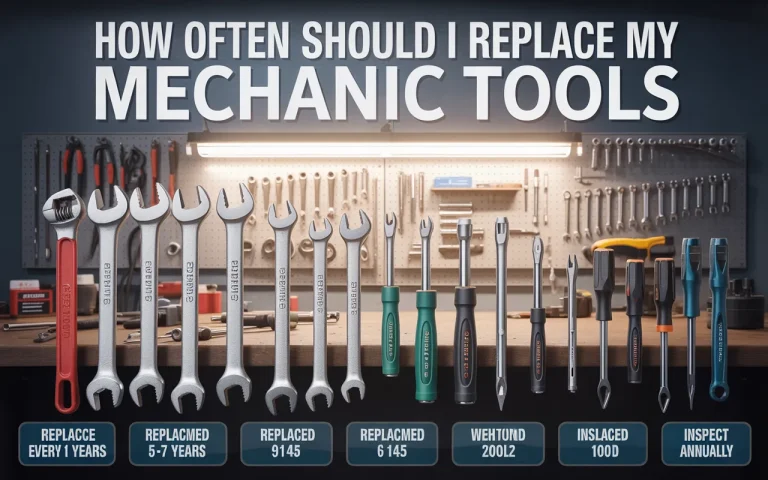
Once a year, do a full inventory. Open every drawer, every bag, and every case. Check for damage by looking for cracks in plastic handles, worn-out jaws on pliers, or rounded edges on sockets. Replace these or mark them for warranty. Update records by keeping a simple list on your phone or computer. Note the brand, size, and location of specialty tools. This is especially helpful for insurance purposes in case of theft or fire.
Labeling Drawers
If you have a large tool chest, labeling the drawers helps everyone in the household find things and put them back correctly. You can use a label maker or simply paint pen numbers on the drawers. For example, drawer one could hold screwdrivers and Allen keys. Drawer two could hold wrenches in standard and metric sizes. Drawer three could hold sockets for the 3/8 inch drive. Drawer four could hold pliers and cutters.
This system ensures that when you are rushing to finish a job, you are not wasting precious minutes opening every drawer looking for a pair of needle-nose pliers. This kind of organization makes it much easier to maintain and store your automotive tool kit consistently.
Frequently Asked Questions
1. How often should I clean my automotive tools?
You should clean them after every single use. A quick wipe down takes less than a minute per tool. If you do a major project, set aside 10 minutes at the end to clean everything before putting it away. This is the simplest way to maintain and store your automotive tool kit effectively.
2. Can I store my tools in a plastic bin in the garage?
Yes, but only if the bin is airtight and the tools are clean and dry before they go in. Plastic bins are great for preventing dust, but they can trap moisture if you seal them while the tools are wet. Use silica gel packs inside the bin to absorb any excess humidity.
3. What is the best lubricant for tool storage?
For general storage, a light machine oil or a silicone-based lubricant works best. WD-40 is good for displacing water and cleaning, but it is not a long-term lubricant. For ratchets, use a light grease like white lithium grease on the internal gears.
4. Why do my tools keep rusting even though they are in a toolbox?
This is usually due to humidity. Your garage may have high moisture content in the air. You can fix this by placing silica gel packets in each drawer, using a dehumidifier in the garage, or lining your drawers with anti-corrosion tool drawer liner, often sold as VCI paper or foam.
5. How do I store power tools along with my hand tools?
Power tools need special care. Remove batteries before storing them for long periods. Keep batteries in a cool, dry place, not in the toolbox. Store power tools in their original cases if possible, or in a dedicated drawer with foam cutouts to protect them from impact.
Conclusion
Taking care of your tools is not just about being neat. It is about respecting the equipment that allows you to work on your car, fix problems, and enjoy the freedom of self-reliance. Learning how to maintain and store your automotive tool kit properly turns a random collection of metal into a reliable system that will serve you for decades.
Start with the basics. Clean your tools after each use, dry them completely, and give moving parts a drop of oil. Next, look at your storage. Upgrade to foam shadowing if you can, or at least separate your tools so they are not banging against each other. Keep an eye on humidity, especially during seasonal changes, and never store wet or dirty tools in a sealed box.
By spending a few minutes on maintenance now, you save yourself the headache of searching for missing sockets later. You protect your investment and ensure that when you need to fix that strange noise coming from the engine, your tools are ready, clean, and exactly where you left them. Your future self, lying under the car on a Sunday afternoon, will thank you for it.