Is it safe to leave my tool kit in the car? Learn the real risks, safety tips, and smart storage methods to protect your tools from theft and damage.
Leaving a tool kit in your car can be convenient, especially if you handle small repairs, roadside issues, or DIY tasks on the go. But is it safe to leave my tool kit in the car? The short answer is: it depends on where, how, and what you store.
This guide explains the real risks, when it might be acceptable, and how to store your tools safely if you choose to keep them in your vehicle. You will also learn simple steps to reduce theft, prevent damage, and decide what belongs in your car and what should stay at home.
The Short Answer: Is It Safe or Not?
It is generally not fully safe to leave your tool kit in the car all the time, especially in visible or unsecured areas. However, in some situations, it can be reasonably safe if you take the right precautions.
Here is the basic breakdown:
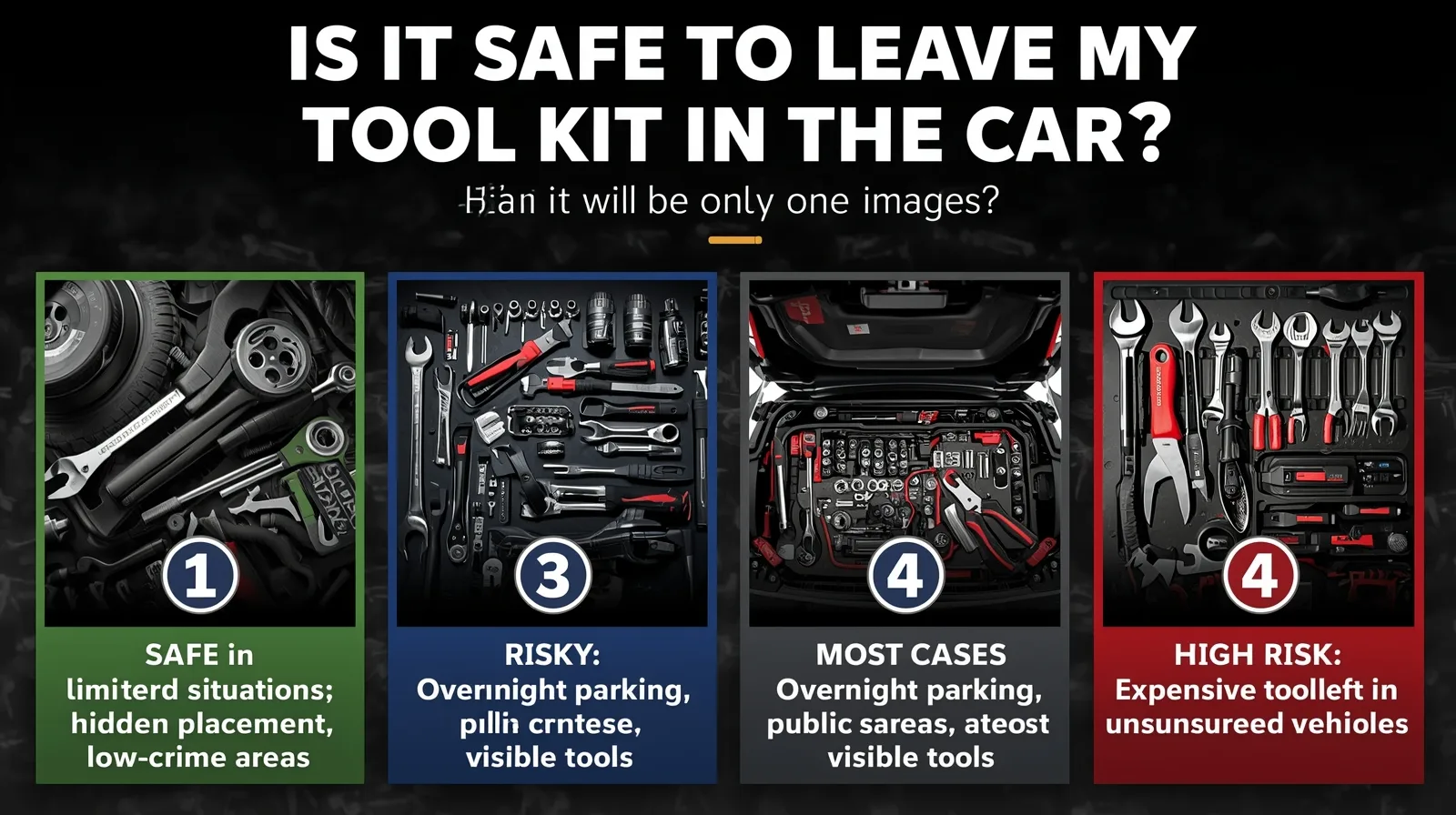
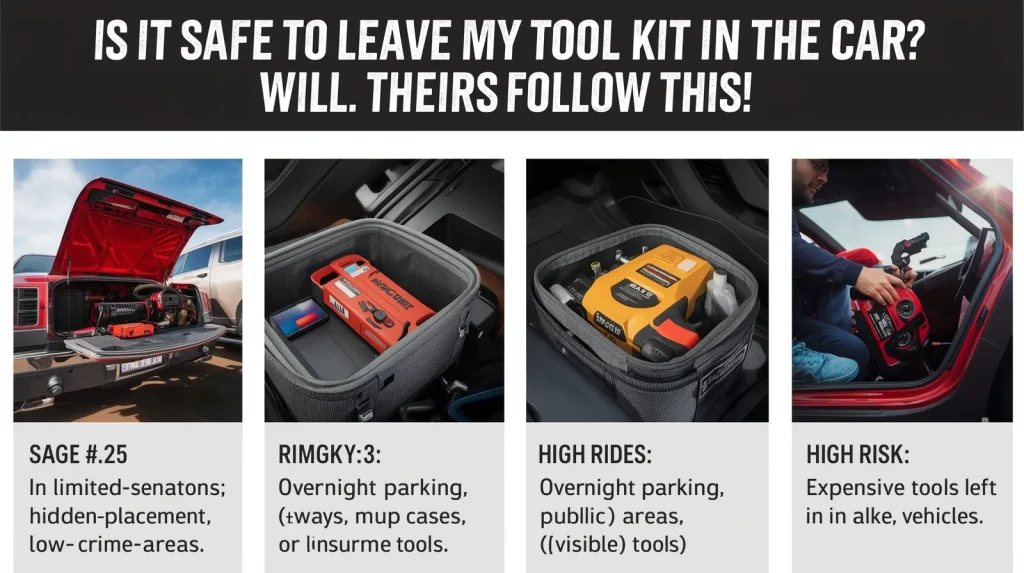
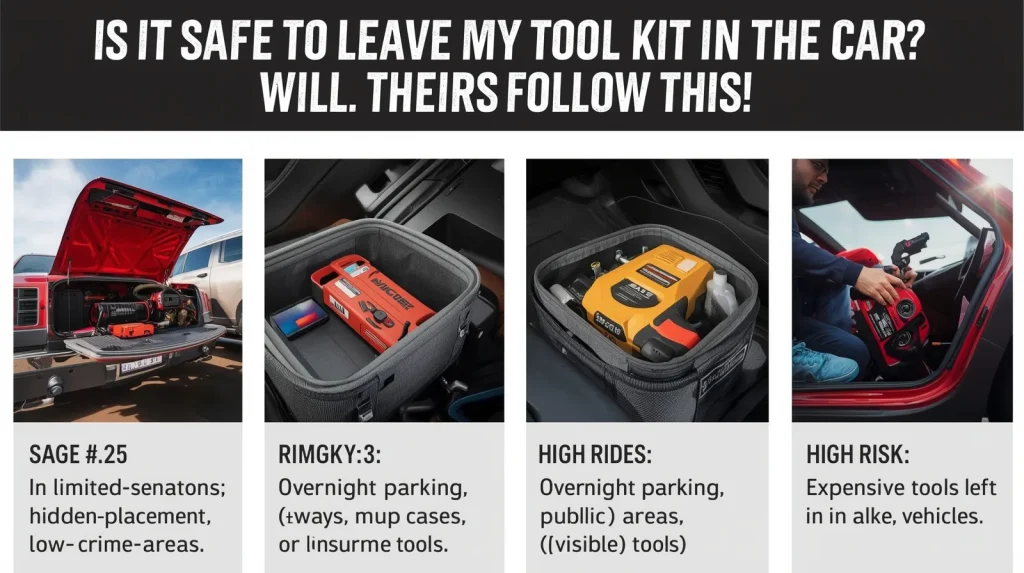
- Safe in limited situations: Short-term storage, hidden placement, low-crime areas
- Risky in most cases: Overnight parking, public areas, visible tools
- High risk: Expensive tools left in plain sight or unsecured vehicles
The key point is that the risk is not just about theft. Heat, humidity, and even accidents can damage your tools or create safety issues.
What Risks Should You Actually Worry About?
Leaving tools in your car exposes them to more than one type of risk. Some are obvious, like theft, while others are often overlooked.
1. Theft and Break-ins
Tools are valuable and easy to resell. Even a basic tool kit can attract attention if it is visible through your car windows.
Common situations that increase risk:
- Parking in crowded or unfamiliar areas
- Leaving tools on seats or the floor
- Using transparent storage boxes
Once someone sees tools inside, your car becomes a target.
2. Heat and Temperature Damage
Cars can get extremely hot, especially in warm climates. This can affect your tools in several ways:
- Rubber handles may degrade or crack
- Plastic cases can warp
- Adhesives, tapes, or sealants may fail
Cold weather can also cause issues like brittleness or moisture buildup.
3. Moisture and Rust
Humidity and condensation inside a car can lead to rust over time, especially for metal tools. This is more common if:
- You park outdoors regularly
- Your car has poor ventilation
- Tools are stored in fabric or open containers
4. Safety Risks During Driving
Loose tools can become dangerous in an accident or sudden stop. Heavy tools can:
- Roll under pedals
- Hit passengers
- Damage interior parts
This is often ignored but can be a serious safety concern.
When Is It Safer to Leave Tools in Your Car?
There are situations where keeping a tool kit in your car makes sense and carries lower risk.
Safer Scenarios
- You store tools in a locked trunk
- The tool kit is small and basic
- You park in a secure or private area
- You only leave tools for short periods
Less Safe Scenarios
- Tools are visible from outside
- The car is parked overnight on the street
- The area has a higher rate of theft
- The tool kit includes expensive equipment
The difference between safe and unsafe often comes down to visibility and time.
What Type of Tool Kit Are You Keeping?
Not all tool kits carry the same level of risk. A basic roadside kit is very different from a professional set.
Tool Kit Risk Comparison
| Tool Kit Type | Risk Level | Why It Matters |
|---|---|---|
| Basic emergency kit | Low | Low value, less attractive to thieves |
| DIY home tool kit | Medium | Moderate value, visible use |
| Professional tools | High | High resale value, often targeted |
| Power tools | Very high | Expensive and easy to sell |
If you are only keeping essentials like a wrench, screwdriver, and tire tools, the risk is much lower than storing a full mechanic set.
Smart Ways to Store a Tool Kit in Your Car
If you decide to keep your tools in your car, how you store them makes a big difference.
Best Practices for Safe Storage
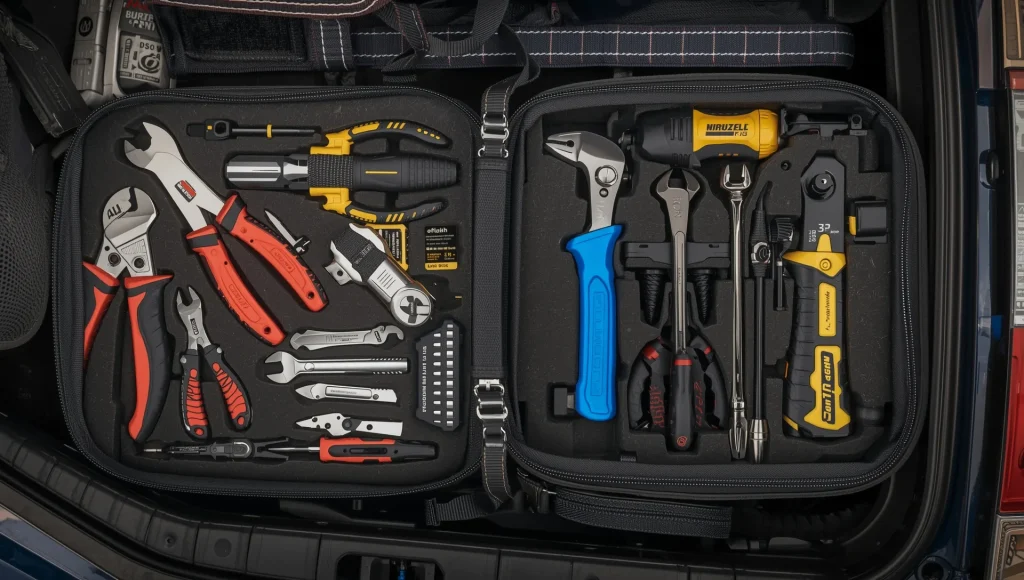
- Use the trunk instead of the cabin
- Choose a dark, non-transparent storage box
- Keep tools organized and secured
- Avoid leaving them loose or scattered
- Use a lockable toolbox if possible
Storage Safety Checklist
| Safety Step | Why It Helps |
|---|---|
| Hide tools from view | Reduces theft risk |
| Use a lockable container | Adds an extra layer of security |
| Secure the box in place | Prevents movement during driving |
| Remove expensive items | Limits potential loss |
| Check tools regularly | Prevents rust and damage |
These steps are simple but can significantly reduce risk.
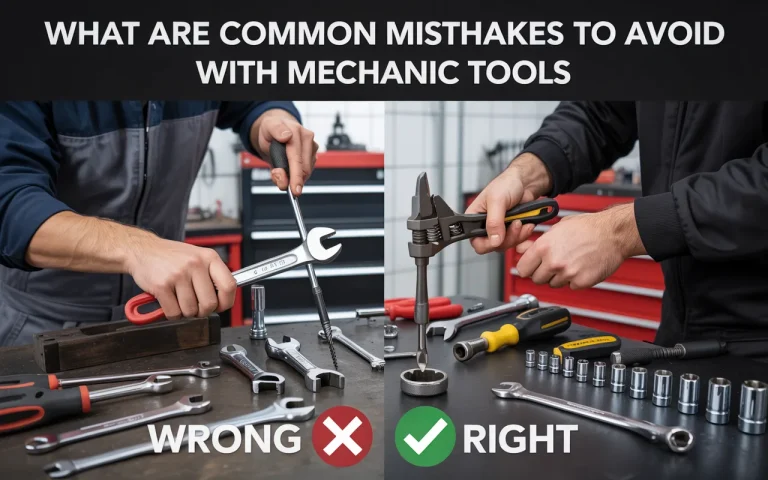
Common Mistakes People Make
Many people leave tools in their car without thinking about the long-term impact. Here are some common mistakes to avoid:
Leaving Tools in Plain Sight
Even a small toolkit on the back seat can attract attention. This is one of the most common reasons for break-ins.
Storing Expensive Tools Permanently
High-value tools should not stay in your car unless absolutely necessary.
Ignoring Weather Conditions
Heat and humidity can damage tools over time, especially in regions with extreme climates.
Not Securing the Tool Kit
Loose tools are both a safety hazard and a sign of poor organization.
Forgetting About Insurance
Most car insurance policies do not cover personal items like tools. If they are stolen, you may not get compensation.
Should You Leave a Tool Kit in the Car Overnight?
Overnight storage increases risk significantly.
If you must leave your tool kit in the car overnight:
- Park in a secure or well-lit area
- Use a locked garage if available
- Keep tools hidden and secured
If possible, it is better to bring valuable tools inside, especially in unfamiliar locations.
What Tools Should You Keep in Your Car?
Instead of keeping everything, focus on essential items that are useful in emergencies.
Recommended Basic Car Tool Kit
- Tire jack and lug wrench
- Screwdriver set
- Adjustable wrench
- Jumper cables
- Flashlight
- Gloves
These items are practical, low-risk, and helpful in everyday situations.
Avoid keeping:
- Expensive power tools
- Large tool collections
- Rare or specialized equipment
Local Factors That Affect Safety
Where you live or park plays a big role in whether it is safe to leave your tool kit in the car.
Consider:
- Crime rates in your area
- Type of parking available
- Weather conditions like heat and humidity
In areas with high temperatures and humidity, tool damage can happen faster. In busy urban areas, theft risk is typically higher.
FAQ
Is it safe to leave my tool kit in the car every day?
Not completely. Daily storage increases exposure to theft and weather damage. It is safer for short-term use only.
Can tools get damaged from heat inside a car?
Yes. High temperatures can damage rubber, plastic, and certain materials over time.
Should I lock my tool kit inside the car?
Yes. A lockable toolbox adds extra security and reduces theft risk.
Is it okay to keep tools in the trunk?
Yes, the trunk is one of the safest places since tools are not visible from outside.
Are basic car tool kits safe to keep in the vehicle?
Generally yes. Low-cost, essential tools are less likely to be stolen and are useful in emergencies.
Does car insurance cover stolen tools?
Usually not. Personal items like tools are often excluded unless you have specific coverage.
Conclusion
So, is it safe to leave my tool kit in the car? It can be, but only under the right conditions. Visibility, location, and the value of your tools all play a role in determining the level of risk.
If you keep your tool kit hidden, secure, and limited to essential items, the risk becomes manageable. But for expensive or rarely used tools, it is always better to store them at home.
As a next step, review what you currently keep in your car and remove anything unnecessary or high-value. A simple adjustment can protect your tools and give you peace of mind.