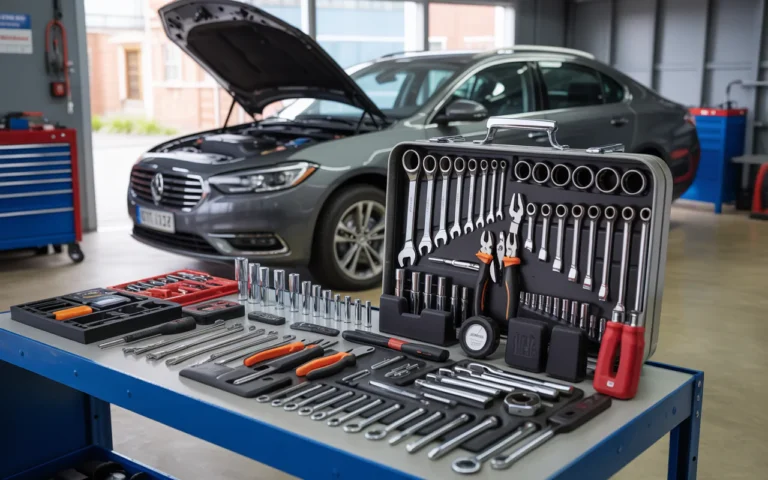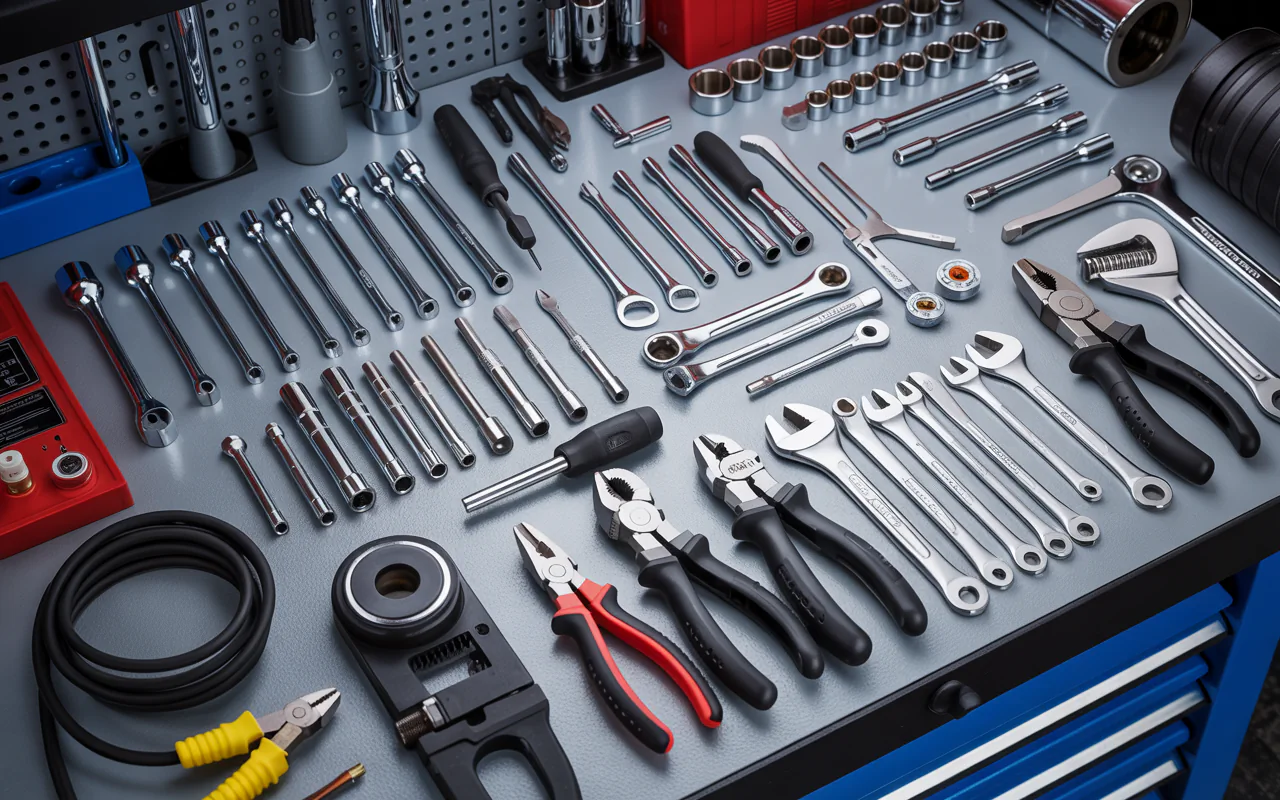
Need to fix your own car? Learn what tools are included in a basic automotive tool kit for simple repairs, maintenance, and emergencies. Start with this clear guide.
If you are new to working on cars, you might feel a bit lost looking at all the tools in a store. What do you really need? Not the fancy stuff. Just the basics. I have been fixing my own cars for years, and I promise you can handle many small repairs with a simple set of tools.
The truth is, you do not need a garage full of expensive equipment. You just need a smart collection of hand tools. In this guide, I will show you exactly what tools are included in a basic automotive tool kit. By the end, you will know what to buy, what to skip, and how to get started with confidence.
Let me be clear. This is not for rebuilding an engine. This is for everyday jobs. Changing a battery, swapping air filters, tightening a loose belt, or replacing spark plugs. These are the tasks that save you money and teach you about your car.
Most people only need ten to fifteen hand tools to handle 80 percent of common car repairs.” – John Muir, author of How to Keep Your Volkswagen Alive
So grab a cup of coffee, and let us walk through the tools together.
Sockets and Ratchets – The Heart of the Kit
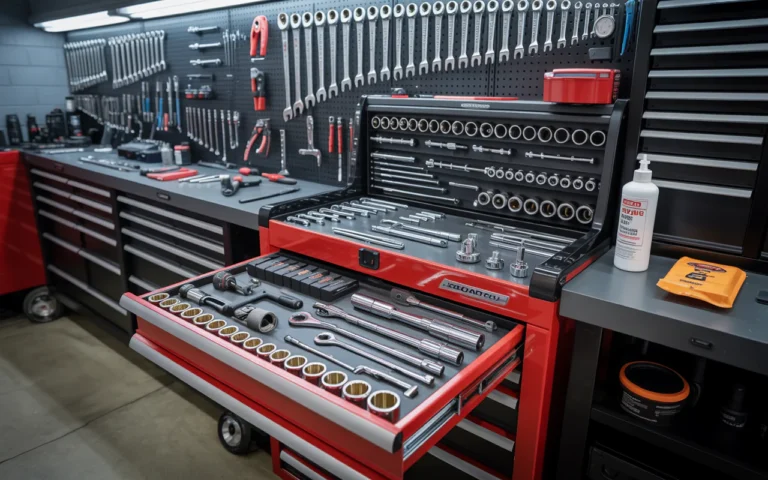
Sockets are metal cups that turn bolts and nuts. A ratchet is the handle that clicks as you turn it. This pair makes jobs fast and easy.
What tools are included in a basic automotive tool kit for sockets? You need two drive sizes: 1/4 inch and 3/8 inch. The 1/4 inch drive is for small bolts. The 3/8 inch drive is for medium to large bolts. Skip 1/2 inch drive for now unless you work on trucks.
You also need both shallow and deep sockets. Deep sockets reach nuts on long studs. You need metric sizes from 8mm to 19mm. Most modern cars use metric. Also get standard (inch) sizes from 1/4 inch to 3/4 inch for older cars.
Get a 6-point socket, not 12-point. Six-point grips better and strips less.
| Drive Size | Best For | Common Socket Sizes (Metric) |
|---|---|---|
| 1/4 inch | Small bolts, interior trim, hose clamps | 8mm, 10mm, 12mm |
| 3/8 inch | Engine parts, brakes, suspension | 10mm, 12mm, 14mm, 15mm, 17mm, 19mm |
Combination Wrenches – Your Backup and Reach Tool
What Tools Are Included In A Basic Automotive Tool Kit. A combination wrench has an open end on one side and a box end on the other. The box end grabs the bolt head fully. The open end slides into tight spots.
You need metric wrenches from 8mm to 19mm. Also get inch sizes from 1/4 inch to 3/4 inch. Do not buy a full set of 20 wrenches. Start with 8mm, 10mm, 12mm, 13mm, 14mm, 15mm, 17mm, and 19mm.
These wrenches save you when a socket cannot fit. They also work as a backup if your ratchet breaks.
“Having a good set of combination wrenches is like having a second pair of hands. You will reach for them more than you think.” – Richard “Rick” Higgins, automotive instructor, 2021
Screwdrivers – Simple but Essential
Cars have many screws. You need the right screwdrivers to avoid damage.
What tools are included in a basic automotive tool kit for screws? You need four types: flathead, Phillips, Torx, and Robertson (square). But for most cars, flathead and Phillips do 90 percent of the work.
Get a #2 Phillips. It fits most interior and engine bay screws. Get a 1/4 inch flathead for prying and turning slot screws. Also get a small #0 Phillips for tiny screws on sensors and electronics.
Add a set of Torx bits (T10 to T40) if you work on European or newer American cars. Many modern cars use Torx for seat belts, brakes, and interior panels.
Pliers – Gripping, Cutting, and Holding
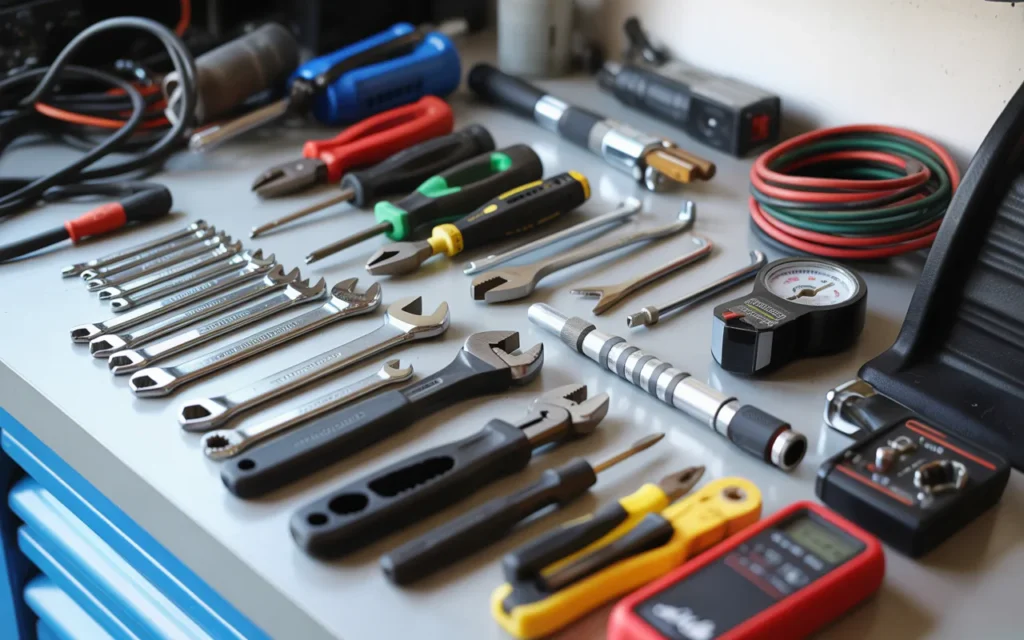
Pliers hold things your fingers cannot. They also cut wires and bend metal.
What Tools Are Included In A Basic Automotive Tool Kit. You need three types: slip joint pliers, needle nose pliers, and locking pliers (Vise-Grip style). Slip joint pliers grip big objects like hoses. Needle nose pliers reach into small spaces and hold wires. Locking pliers clamp onto a bolt or nut and stay there. This frees your hands.
Also get a pair of wire cutters. Many kits include them as part of the pliers set.
| Tool Type | Primary Use |
|---|---|
| Slip joint pliers | Holding round objects, bending metal |
| Needle nose pliers | Reaching clips, pulling wires |
| Locking pliers | Clamping broken bolts, holding parts still |
| Wire cutters | Cutting zip ties, wires, and small cables |
Hammer – Ball Peen or Dead Blow
What Tools Are Included In A Basic Automotive Tool Kit. You need a hammer. Not for beating your car in anger. For tapping stuck parts free. A ball peen hammer (about 16 ounces) works well. Or get a dead blow hammer filled with sand or shot. Dead blow hammers do not bounce. They deliver force without damaging the part.
Use a hammer to free a rusted brake rotor, tap a bolt loose, or seat a suspension part.
Torque Wrench – Do Not Skip This
Many beginners skip a torque wrench. That is a mistake. A torque wrench lets you tighten bolts to the correct tightness. Too loose, and parts fall off. Too tight, and you strip threads or break bolts.
Get a 3/8 inch drive torque wrench that reads from 10 to 80 foot-pounds. This covers spark plugs, oil drain plugs, wheel lug nuts, and valve covers.
“You do not need a $300 torque wrench. A $40 beam style or click type is enough for home mechanics.” – Carole Smith, DIY mechanic and blogger, The Rusty Wrench
Jack and Jack Stands – Safety First
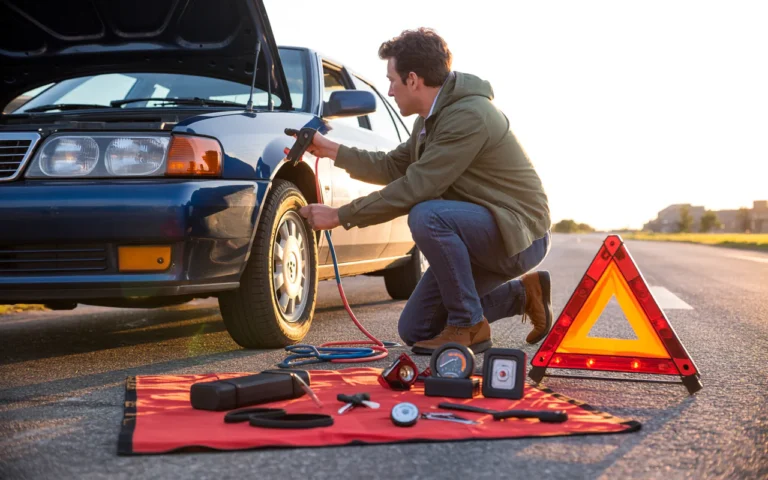
You cannot work under a car with only the factory jack. That jack is for changing a tire on the side of the road. It is not safe for working underneath.
Buy a floor jack (2 to 3 ton capacity) and two jack stands. The jack lifts the car. The jack stands hold it. Never go under a car held only by a jack.
Also get wheel chocks. Put them behind the rear wheels when lifting the front. This stops the car from rolling.
Oil Filter Wrench – Small but Important
Oil changes are the most common DIY job. An oil filter wrench helps you remove the old filter. There are three types: strap, cap, and pliers style. Start with a strap wrench. It fits many filter sizes.
If your car uses a cartridge filter (a plastic housing), buy a cap wrench that matches your filter housing. You can find the size online by searching your car model.
Flashlight or Work Light – See What You Do
Car repairs happen in dark places. Under the dashboard, behind the engine, inside wheel wells. A good light changes everything.
Buy a rechargeable LED work light with a magnetic base. Stick it to the hood or fender. Also keep a small handheld flashlight in your kit. Use it for quick checks.
Tool Box or Bag – Keep It Organized
All these tools need a home. Do not throw them in a cardboard box. Buy a plastic tool box with a tray, or a canvas tool bag. A bag is lighter and easier to carry to your car.
Make sure your box or bag has room for one or two extra tools you may buy later.
Putting It All Together – Your Basic Automotive Tool Kit Shopping List
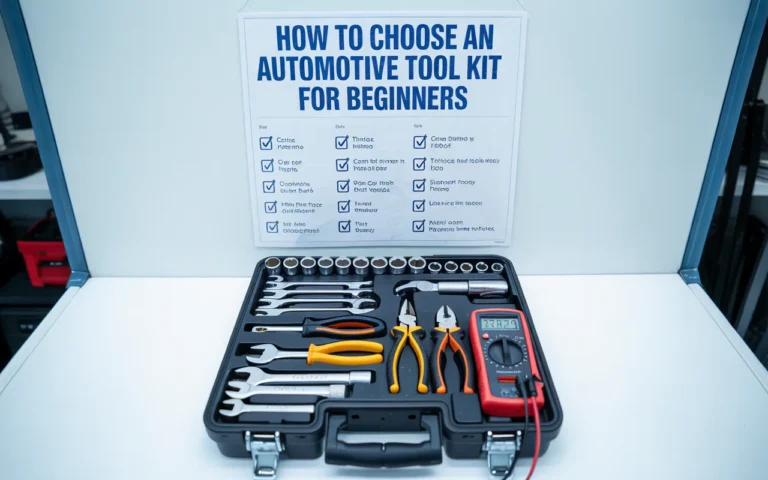
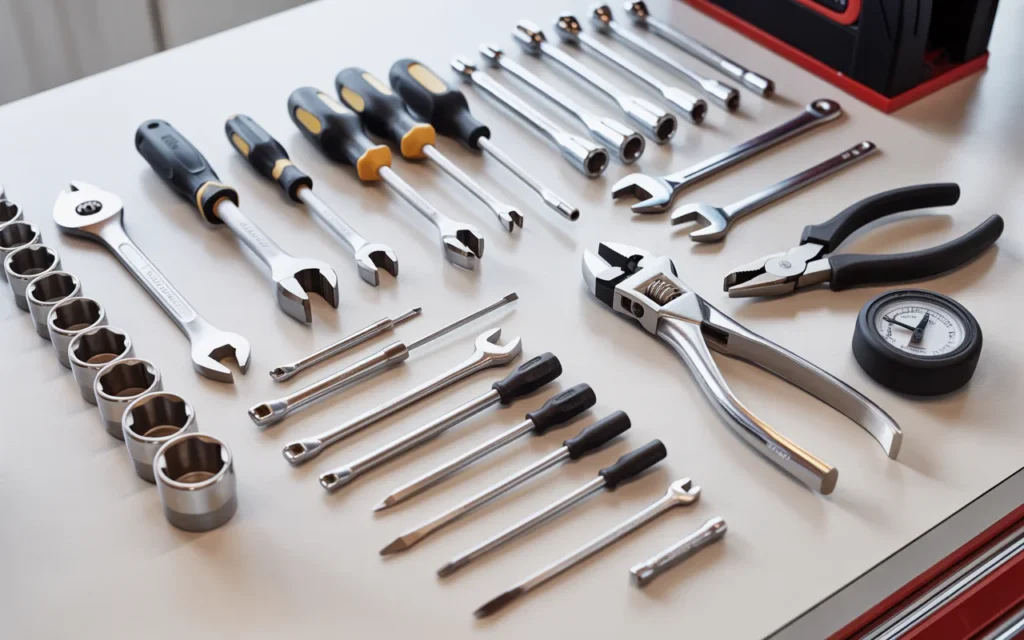
Now you know what tools are included in a basic automotive tool kit. Let me give you a simple checklist. You can take this to a store or use it to sort your existing tools.
Basic Kit Checklist (20 to 25 pieces)
- 1/4 inch ratchet
- 3/8 inch ratchet
- 1/4 inch socket set (metric 8mm–12mm, standard 1/4″–1/2″)
- 3/8 inch socket set (metric 10mm–19mm, standard 3/8″–3/4″)
- Combination wrenches (metric 8mm–19mm)
- #2 Phillips screwdriver
- 1/4 inch flathead screwdriver
- Needle nose pliers
- Slip joint pliers
- Locking pliers
- Wire cutters
- 16 oz ball peen hammer
- 3/8 inch torque wrench (10–80 ft-lbs)
- Floor jack (2 ton minimum)
- Two jack stands
- Wheel chocks (two)
- Oil filter wrench (strap type)
- LED work light
What You Do NOT Need Yet
Do not buy these until you have a specific job that requires them:
- Impact wrench
- Air compressor
- Scan tool (buy a basic OBD2 reader later)
- Compression tester
- Multimeter (nice to have, but not day one)
- Large pry bar
- Bearing puller
Stick to the list above. You can do oil changes, air filters, battery swaps, brake pads, belt changes, and light bulb replacements.
Frequently Asked Questions
Can I buy a pre made basic automotive tool kit?
Yes. Many brands sell ready made kits. Look for a 90 to 120 piece set from Stanley, Craftsman, Husky, or Pittsburgh. Make sure it includes the tools I listed. Check that it has both 1/4 inch and 3/8 inch drives, deep sockets, and combination wrenches.
How much does a basic automotive tool kit cost?
You can build a solid kit for $150 to $250. A pre made kit costs about $100 to $200. Add a floor jack and stands for another $80 to $150. Avoid super cheap kits under $50. They often break or strip bolts.
Are metric tools or standard tools more important?
Metric is more important for most cars made after 1995. But keep a small set of standard (inch) tools for battery terminals, hose clamps, and older cars. A basic kit includes both.
Do I need a breaker bar?
A breaker bar is a long handle without a ratcheting mechanism. It gives you more leverage for stuck bolts. You do not need it on day one. But if you work on rusty cars, add a 1/2 inch drive breaker bar later.
What is the single most important tool for a beginner?
A 3/8 inch ratchet with a 10mm socket. The 10mm bolt is everywhere on modern cars. Buy two or three 10mm sockets. They get lost easily.
Can I use these tools on a motorcycle or lawn mower?
Yes. Most small engines and motorcycles use metric bolts from 8mm to 14mm. Your basic automotive tool kit will work fine. You may add a few smaller wrenches (6mm, 7mm) later.
How do I keep my tools from rusting?
Wipe them with an oily rag after use. Store them in a dry place. Do not leave them in a wet car trunk. A small silica gel pack in your tool box also helps.
Final Thoughts – Start Small, Fix Confidently
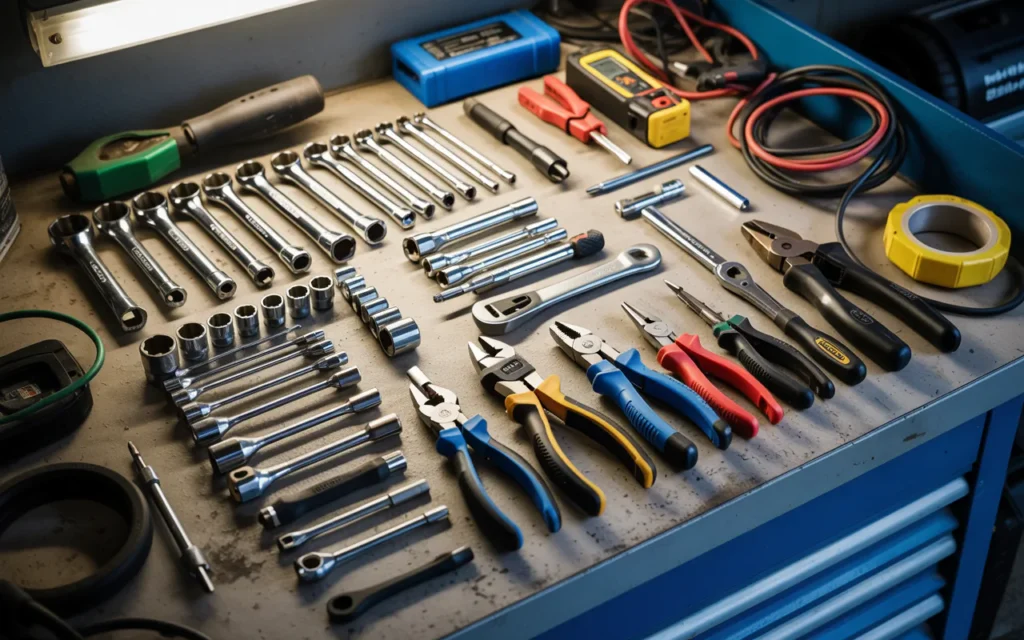
You do not need to be a professional mechanic. You just need the right tools and a little patience. Now you know what tools are included in a basic automotive tool kit. Start with the list I gave you. Buy things slowly. Add one or two tools each month.
I still remember my first oil change. I had a cheap ratchet, one socket, and a pair of pliers. It took me two hours. But I did it. And I felt great. Over time, I added tools as I needed them. That is the best way. Let your repairs guide your tool purchases.
“Every expert was once a beginner with a simple set of tools and a good attitude.” – Tom and Ray Magliozzi, Car Talk hosts
So go ahead. Buy that small tool kit. Change your own air filter. Replace a broken tail light. Tighten that loose belt. You will save money, learn something real, and gain a new kind of confidence.
And when you finish your first job alone, you will smile. Because you did it yourself. With your own two hands and a basic set of honest tools.
Now go get your hands dirty. You have got this.