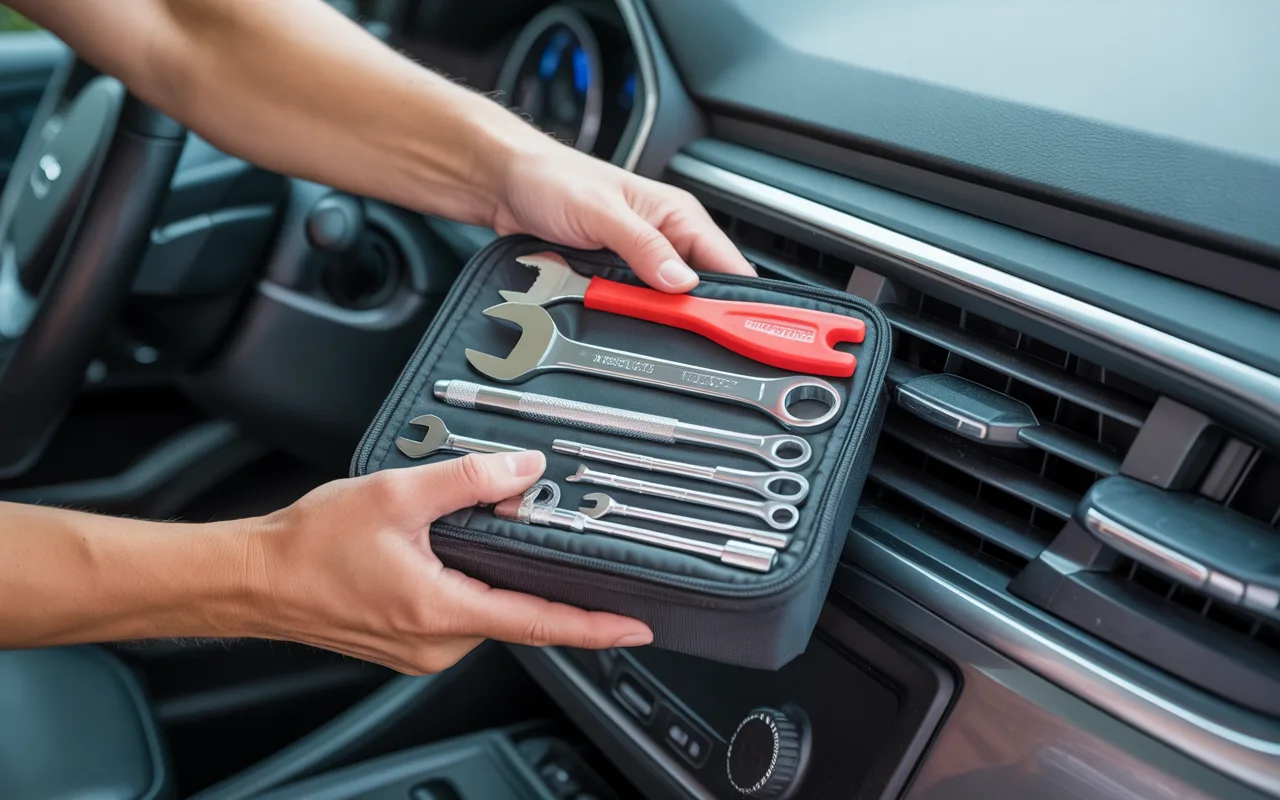
Learn practical ways to store an automotive tool kit in your car safely and neatly. Discover smart storage spots, organization tips, and essential tools every driver should keep in their vehicle.
Most drivers keep a few emergency items in their vehicle, but many forget about proper organization. A loose wrench sliding around your trunk is not helpful when you actually need it. A well organized tool kit can make small roadside problems easier to handle and save you time during emergencies.
Knowing how to store an automotive tool kit in your car helps you stay prepared while keeping your vehicle tidy. A properly stored kit prevents tools from getting lost, avoids damage to your vehicle, and ensures everything is easy to find when you need it.
Drivers often deal with flat tires, loose battery terminals, or minor repairs while traveling. Having a reliable set of tools nearby can make these problems much easier to manage. But the key is smart storage.
This guide explains simple and practical ways to store an automotive tool kit in your car. You will learn where to place the kit, how to organize tools, which containers work best, and what items every driver should keep inside the kit.
Why Every Driver Should Keep an Automotive Tool Kit
Even modern vehicles need occasional quick fixes. A simple tool kit allows you to handle common problems without waiting for roadside assistance.
Some situations where tools help include:
- Tightening a loose battery cable
- Removing debris from a wheel well
- Adjusting loose interior parts
- Changing a flat tire
- Opening stuck bolts or clamps
Automotive writer Mark Bennett once said:
“Every driver should carry a small tool kit. It saves time and reduces stress during minor roadside issues.” Mark Bennett, Automotive Maintenance Writer
Without proper storage, tools may get lost or become difficult to find. Learning how to store an automotive tool kit in your car ensures you always know where your tools are located.
Essential Tools to Keep in Your Car
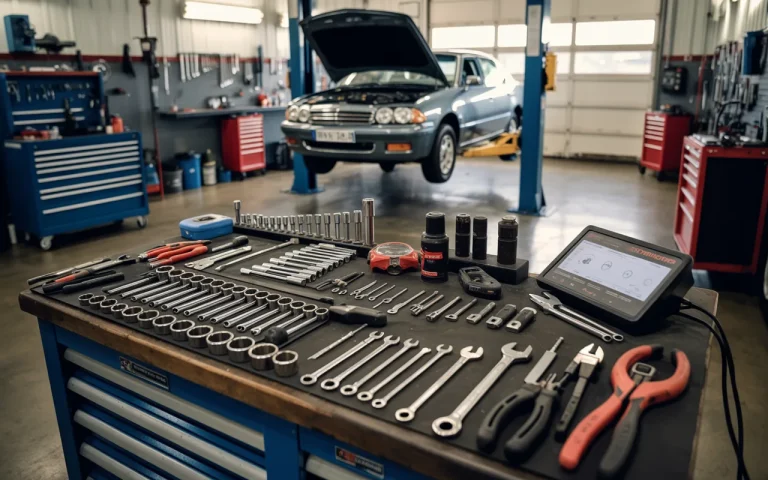
Before deciding how to organize tools, it helps to know what should be inside your kit. The goal is to carry useful items without overloading your vehicle.
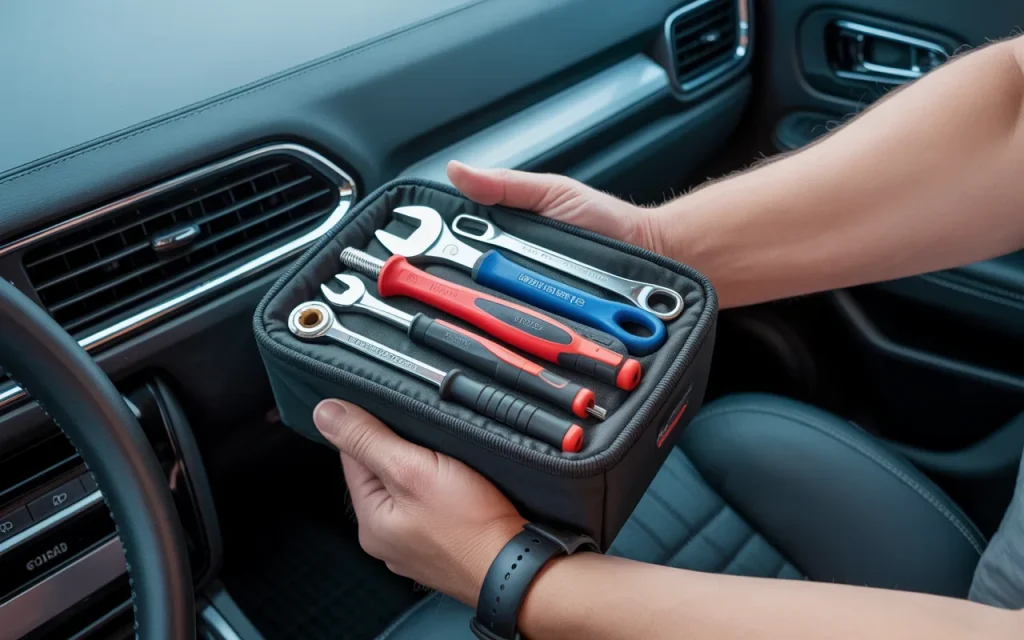
Below is a helpful list.
| Tool | Purpose |
|---|---|
| Screwdriver set | Tightening or removing screws |
| Adjustable wrench | Loosening or tightening nuts |
| Pliers | Holding or pulling small parts |
| Tire pressure gauge | Checking tire pressure |
| Socket set | Working with bolts |
| Flashlight | Visibility during night repairs |
| Utility knife | Cutting tape or packaging |
| Work gloves | Protecting your hands |
A basic kit with these tools covers most small vehicle issues.
Mechanic David Keller explains:
“A compact kit with essential hand tools can handle many roadside repairs.”
David Keller, Certified Automotive Technician
Once you gather the tools, the next step is learning how to store an automotive tool kit in your car efficiently.
Choosing the Right Storage Container
The container plays a big role in keeping tools organized. Without a proper case, tools may scatter across your trunk.
Here are the most common storage options.
Tool Bag
A durable fabric tool bag is lightweight and flexible. Many drivers prefer it because it fits easily in small spaces.
Advantages:
- Easy to carry
- Flexible storage
- Multiple pockets
Disadvantages:
- Less protection from heavy impact
Hard Plastic Tool Box
A plastic toolbox protects tools from damage and keeps them secure.
Advantages:
- Strong and durable
- Better protection
- Good internal compartments
Disadvantages:
- Takes more space in the trunk
Roll-Up Tool Organizer
This type of organizer is made from thick fabric and rolls up for compact storage.
Advantages:
- Compact design
- Easy tool visibility
- Lightweight
Disadvantages:
- Limited capacity
Choosing the right container makes it much easier to store an automotive tool kit in your car without creating clutter.
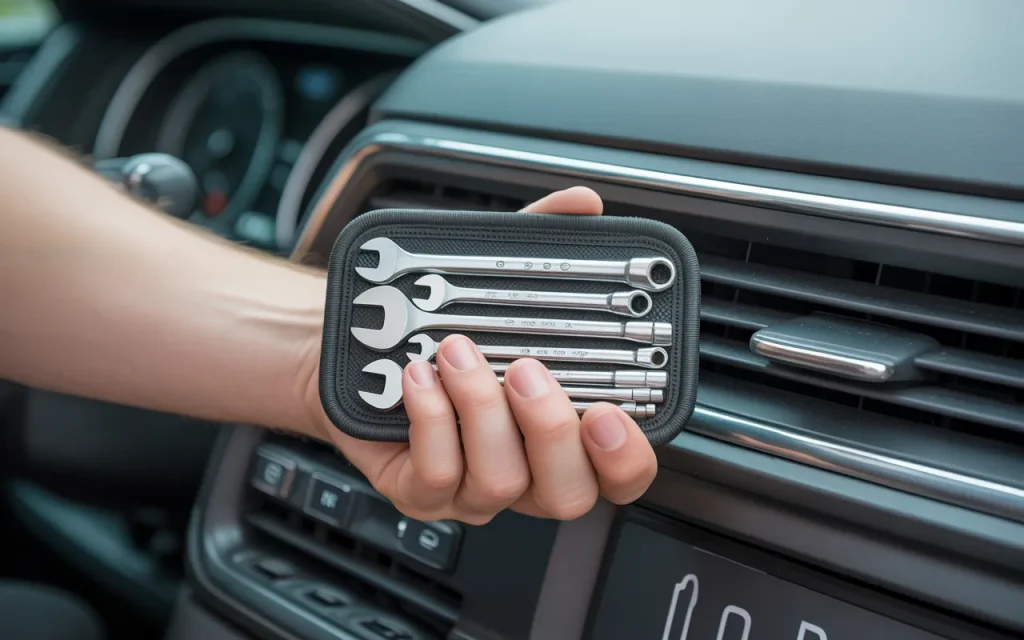
Best Places to Store a Tool Kit in Your Car
Where you place your kit matters. The goal is to keep it secure but still easy to reach.
Trunk Storage Area
The trunk is the most common location for tool storage.
Many vehicles have side compartments or storage wells where tool kits fit perfectly.
Benefits:
- Tools stay hidden
- Less movement while driving
- Easy to access when parked
Under the Cargo Floor
Many modern cars include hidden compartments under the trunk floor panel.
These areas are ideal for tool storage because they prevent movement.
Seat Back Storage
Some SUVs and trucks have pockets or compartments behind seats.
These spaces work well for smaller kits.
Under the Seat
If space is limited, a compact tool roll can fit under the driver or passenger seat.
Just make sure the tools cannot slide forward during braking.
Knowing the best locations helps you safely store an automotive tool kit in your car without affecting driving comfort.
Organizing Tools for Quick Access
Organization saves time during emergencies. Searching through a messy bag while standing on the roadside can be frustrating.
Follow these simple tips.
Group Similar Tools Together
Keep related items in the same section.
Examples:
- Wrenches together
- Screwdrivers together
- Electrical tools together
Use Small Pouches
Small pouches or zip bags help separate small parts like screws or fuses.
Label Compartments
Labels make it easier to find tools quickly.
Place Frequently Used Tools on Top
Items like flashlights and tire gauges should remain easy to reach.
Organizing tools properly makes it easier to store an automotive tool kit in your car in a practical way.
Preventing Tools From Moving While Driving
Loose tools can damage your vehicle interior. They may also create noise while driving.
Here are ways to prevent movement.
| Method | How It Helps |
|---|---|
| Velcro straps | Secures tool bag to trunk surface |
| Non-slip mats | Prevent sliding |
| Storage compartments | Keeps tools in fixed positions |
| Elastic cargo nets | Holds larger tool boxes |
Using these solutions ensures you can store an automotive tool kit in your car safely.
Automotive safety expert Laura Simmons explains:
“Loose objects in a vehicle can become hazards during sudden stops. Secure storage is important.”
Laura Simmons, Vehicle Safety Specialist
Weather Protection for Your Tool Kit
Cars experience temperature changes throughout the year. Heat, cold, and moisture can affect tools.
Here are ways to protect your kit.
Use Rust Resistant Tools
Stainless or coated tools resist corrosion better.
Add Moisture Absorbers
Silica gel packets reduce humidity inside the tool box.
Avoid Direct Water Exposure
If your trunk sometimes leaks or gets wet, place tools in sealed containers.
Taking these steps helps maintain your tools while you store an automotive tool kit in your car long term.
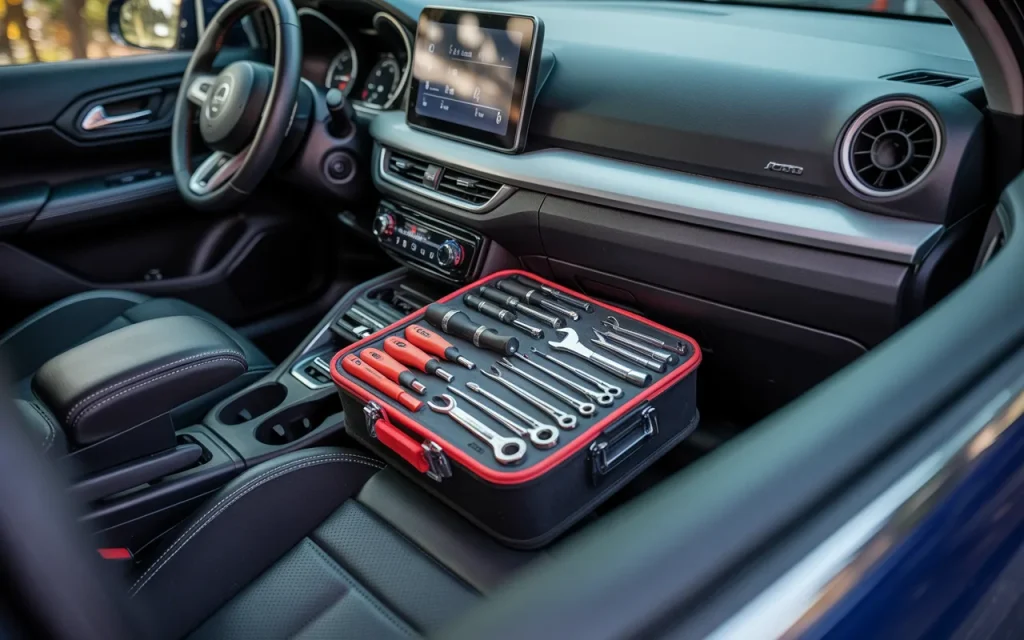
Keeping Emergency Items With Your Tool Kit
Many drivers combine emergency supplies with their tool kits. This creates a single roadside support kit.
Useful items include:
- Jumper cables
- Tire repair kit
- Reflective warning triangle
- Emergency blanket
- Phone charger
- Portable air compressor
Keeping these items together makes roadside situations easier to handle.
Common Mistakes Drivers Make
Many drivers keep tools in their vehicle but fail to store them correctly.
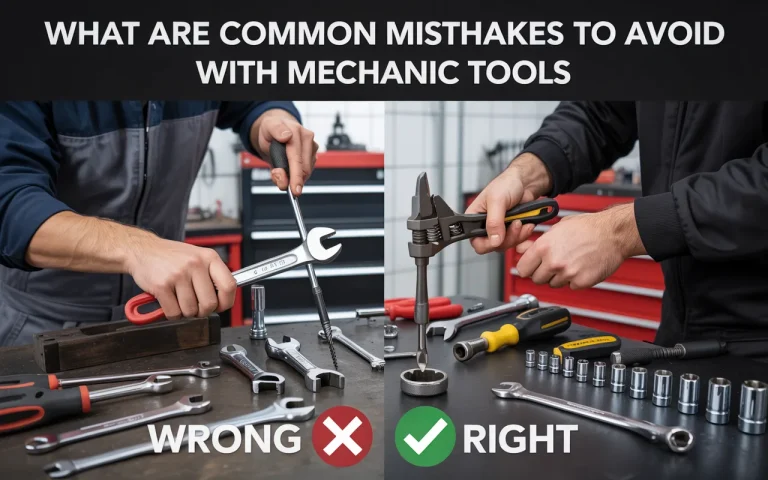
Common mistakes include:
Overloading the Tool Kit
Too many tools add unnecessary weight.
Leaving Tools Loose in the Trunk
Loose tools move around and can cause damage.
Forgetting to Check the Kit
Tools may rust or batteries in flashlights may die.
Storing Tools in Hard to Reach Areas
A tool kit should be easy to access during emergencies.
Avoiding these mistakes makes it much easier to store an automotive tool kit in your car properly.
Creating a Compact Emergency Tool Kit
A compact kit saves space and remains easy to carry.
Here is a simple example layout.
Top layer:
- Flashlight
- Tire pressure gauge
- Gloves
Middle section:
- Screwdrivers
- Adjustable wrench
- Pliers
Bottom section:
- Socket set
- Spare batteries
- Electrical tape
This arrangement helps you quickly find what you need while maintaining an organized kit.
Maintenance Tips for Your Tool Kit
Tools require occasional care.
Follow these simple maintenance tips.
Inspect Every Few Months
Check for rust or damage.
Recharge or Replace Batteries
Flashlights and electronic tools need working batteries.
Clean Tools After Use
Remove dirt or grease before placing tools back in the kit.
Replace Missing Items
After using tools, return them to the kit immediately.
These habits help keep your equipment reliable while you store an automotive tool kit in your car.
FAQ: Automotive Tool Kit Storage
What is the best place to store a tool kit in a car?
The trunk storage compartment is usually the best location. It keeps tools secure and prevents them from moving while driving.
How big should a car tool kit be?
A compact kit with essential hand tools is enough for most drivers. Large tool boxes are unnecessary for basic roadside repairs.
Should tools be stored in a bag or box?
Both options work well. Tool bags are flexible and lightweight, while plastic tool boxes provide better protection.
Can tools damage a car if stored incorrectly?
Yes. Loose tools may scratch interior panels or cause noise while driving. Secure storage prevents these issues.
How often should I check my car tool kit?
It is a good idea to check the kit every three to six months. This ensures tools remain clean and ready to use.
Conclusion
A well organized tool kit can make a big difference during unexpected vehicle problems. Small repairs often become much easier when the right tools are nearby.
Learning how to store an automotive tool kit in your car helps you stay prepared without creating clutter inside your vehicle. By choosing the right container, selecting a safe storage location, and organizing tools properly, you can keep everything accessible and secure.
Regular maintenance of your tool kit ensures tools remain reliable whenever you need them. Simple habits like checking batteries, cleaning tools, and replacing missing items keep your kit ready for action.
If you have not already organized your car tools, now is a great time to do it. Gather the essentials, choose a smart storage spot, and start to store an automotive tool kit in your car in a way that keeps you prepared for the road ahead.