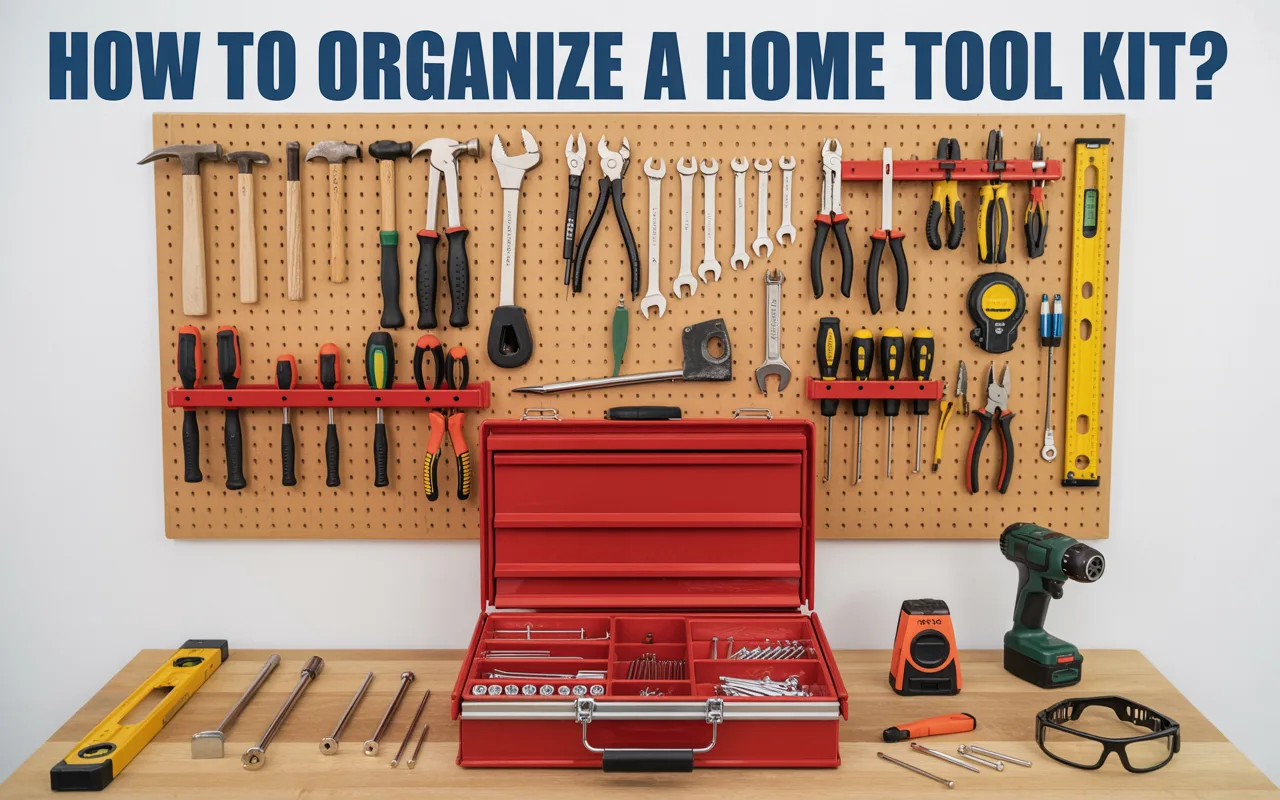
Learn how to organize a home tool kit with clear steps that keep tools visible, protected, and ready for daily fixes or long term home projects.
Every home has tools, even if it is just a hammer, a screwdriver, and a measuring tape tucked into a drawer. Over time, those tools often end up scattered, rusty, or forgotten. That is usually when frustration starts. You know the tool exists, but finding it becomes harder than the repair itself. Learning how to organize a home tool kit is not about perfection. It is about making daily tasks easier, safer, and less stressful.
An organized tool kit saves time because everything has a clear place. It also saves money since tools last longer when stored properly. More importantly, it improves safety. Loose sharp tools in random drawers can cause injuries, especially in homes with children. When tools are sorted and stored with purpose, the entire household benefits.
As carpenter and author Nick Offerman once said, “The satisfaction of a well kept set of tools is a quiet joy that pays off every time you use them.” That joy comes from knowing exactly where your tools are and trusting them to work when you need them.
Assessing Your Tools Before You Start Organizing
Before sorting or buying storage, you need to take stock of what you already own. This step sets the foundation for every decision that follows.
Start by gathering all your tools in one place. Pull them out from drawers, shelves, garages, closets, and boxes. Lay everything on a clean surface so you can see the full picture. This process often surprises people. Many discover duplicate tools or items they forgot they had.
Once everything is visible, sort tools by type and condition. Group hand tools together, power tools together, and accessories like screws or nails in their own pile. At the same time, inspect each item. If a tool is broken beyond repair, consider letting it go. Keeping damaged tools only adds clutter and confusion.
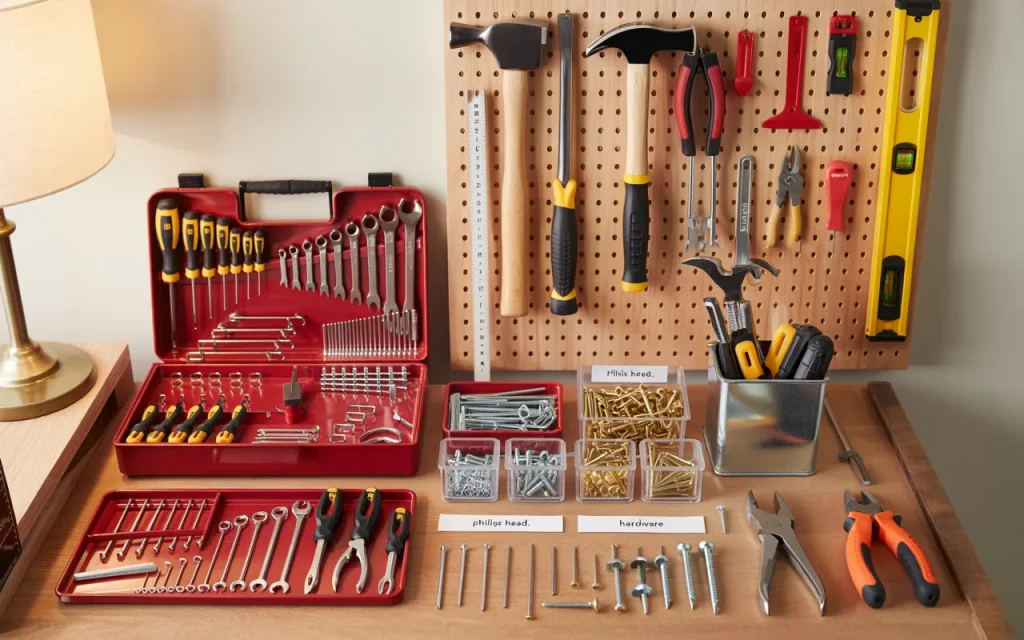
Below is a simple table to help you sort tools during this stage.
| Tool Category | Examples | Action |
|---|---|---|
| Hand tools | Hammer, pliers, wrenches | Keep, clean, group |
| Power tools | Drill, sander | Test, store safely |
| Fasteners | Screws, nails | Sort by size |
| Specialty tools | Level, stud finder | Store separately |
This step ensures that when you organize a home tool kit, you are working only with tools that serve a real purpose.
Choosing the Right Storage Based on Your Space
Storage choices should match your living space and tool collection. There is no single solution that fits every home. A small apartment requires a different approach than a house with a garage or workshop.
If you live in an apartment or condo, compact storage works best. Portable toolboxes, stackable bins, or drawer organizers fit easily into closets or under beds. Look for containers with adjustable compartments so tools do not slide around.
For homes with garages or basements, wall mounted storage can make a big difference. Pegboards, shelves, and cabinets keep tools visible and off the floor. Visibility helps you find tools quickly and return them to the correct spot after use.
Here is a quick comparison of common storage options.
| Storage Type | Best For | Key Benefit |
|---|---|---|
| Toolbox | Small sets | Easy to carry |
| Drawer organizer | Indoor storage | Clean layout |
| Pegboard | Garages | Quick access |
| Shelving units | Larger tools | Better airflow |
Professional organizer Marie Kondo once noted, “When everything has a home, the act of putting things away becomes simple.” That principle applies perfectly to tool storage.
Sorting Tools by Frequency and Function
One of the most overlooked steps is organizing tools based on how often you use them. This approach reduces daily friction and keeps your most needed tools within reach.
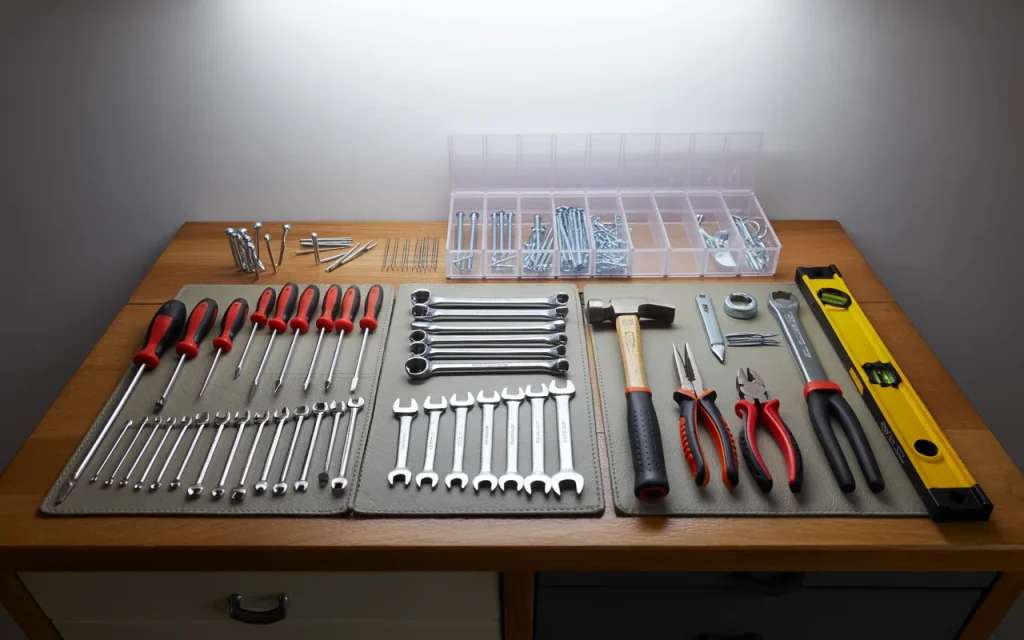
Start by identifying tools you use frequently. These may include screwdrivers, measuring tape, a hammer, or a drill. These tools should be stored at eye level or in the most accessible drawer. Less frequently used tools can be stored higher, deeper, or in labeled bins.
Next, sort tools by function. Cutting tools, fastening tools, measuring tools, and electrical tools each deserve their own zone. This structure helps your brain remember where items belong, making cleanup faster and more consistent.
When people organize a home tool kit using frequency and function, they often notice a lasting improvement. The system works because it aligns with real habits, not ideal ones.
Labeling and Visual Cues for Long Term Order
Labels are not just for large workshops. Even a small home tool kit benefits from clear visual cues. Labels reduce guesswork and help others in the household follow the same system.
Use simple, readable labels on drawers, bins, or shelves. Avoid tiny handwriting that fades over time. If children may access the tools, consider picture labels or color coding for basic categories.
Visual cues also include tool outlines on pegboards or foam inserts in drawers. These guides show exactly where each tool belongs. When a tool is missing, you notice immediately.
According to productivity expert David Allen, “Your mind is for having ideas, not holding them.” Visual systems reduce mental load by making organization obvious and easy to maintain.
Maintaining Your Organized Tool Kit Over Time
Organization is not a one time task. Tools get used, borrowed, and moved. Maintenance keeps your system working without effort.
After each project, return tools to their designated spots. This habit takes seconds but prevents clutter from building. Periodically clean tools to remove dust, grease, or moisture that can cause damage.
Schedule a quick review every few months. Check for tools that no longer fit your needs or new ones that require a home. Small adjustments keep the system relevant.
People who organize a home tool kit with maintenance in mind enjoy long term success because the system adapts with them.
Frequently Asked Questions
How often should I reorganize my home tool kit?
A full reorganization is usually needed once a year or after major home projects. Smaller check ins every few months help keep things tidy.
What is the best way to store tools in small spaces?
Compact toolboxes, vertical storage, and drawer organizers work well. The key is using height and hidden spaces efficiently.
Should power tools be stored differently than hand tools?
Yes. Power tools need dry, stable storage with protection for cords and batteries. Keep them separate from loose hand tools.
Is it okay to store tools inside the house?
Absolutely. Many people store tools indoors to protect them from humidity and temperature changes. Just ensure they are safely stored away from children.
As home improvement expert Bob Vila once said, “Good tools in good order make good work.” With the right approach, your tool kit can support every project that comes your way.
Conclusion: Building a System That Works for You
A well organized tool kit brings calm, confidence, and efficiency to everyday repairs. It turns small tasks into simple wins instead of stressful searches. By assessing your tools, choosing storage that fits your space, and building habits that last, you create a system that supports your home life.
The goal is not perfection. It is consistency and clarity. When you organize a home tool kit with intention, you invest in smoother projects, safer storage, and tools that are always ready when needed.