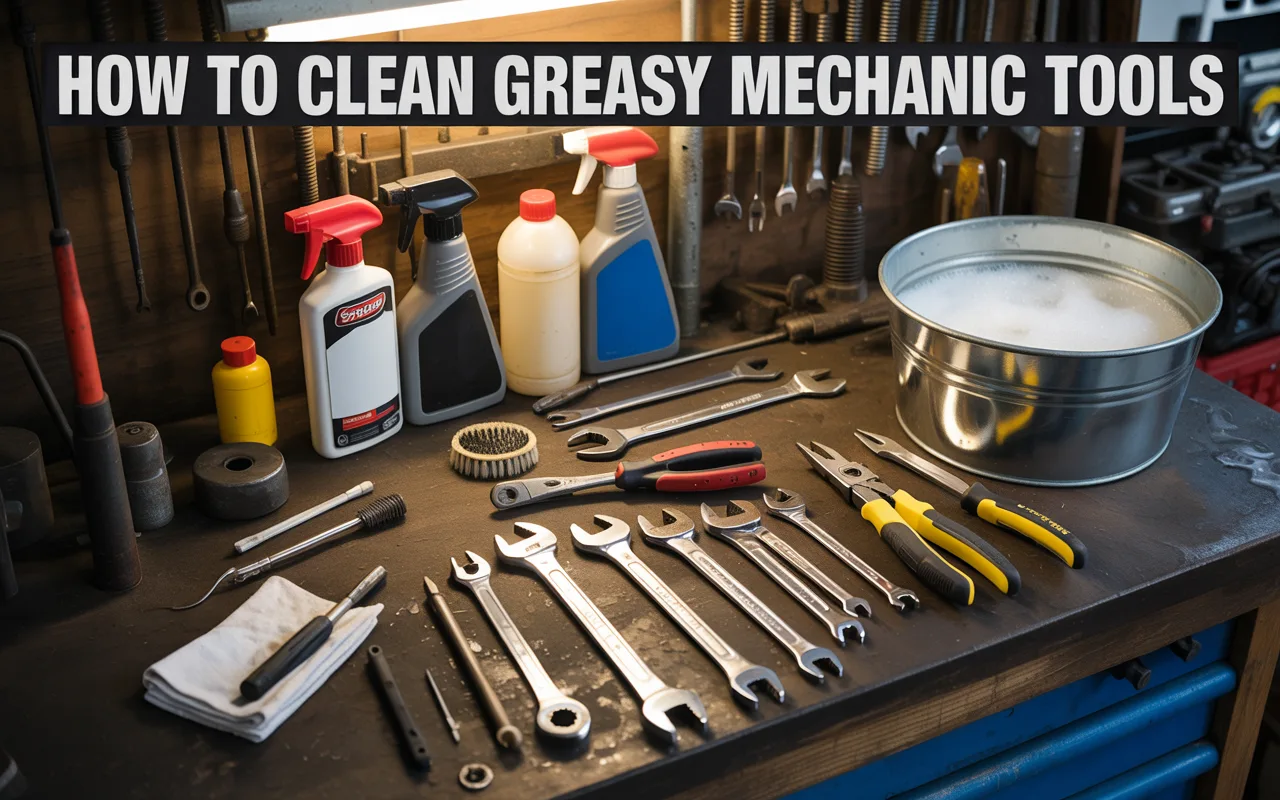
Looking for the best way to clean greasy mechanic tools without wasting hours? We share simple household solutions, step-by-step methods, and pro tips to make your tools look and work like new again.
There is something really satisfying about holding a clean, shiny wrench after a long day fixing cars. But let’s be honest. Getting to that point is often the last thing we want to do. You just finished a tough repair. Your hands hurt. You are tired. And your favorite socket set is covered in black grease and grime.
I have been there more times than I can count. For years, I just threw my dirty tools in the box and promised to clean them later. Later never came. Then one day, I needed a 10mm socket in a hurry. I grabbed three different ones before finding one that wasn’t too slippery to hold. That was the moment I decided to find a better way.
Learning how to clean greasy mechanic tools does not have to be a huge project. You do not need expensive products or special equipment. You just need the right method and a little bit of time. In this guide, I will show you exactly how I keep my tools clean using stuff you probably already have at home.
Why You Need to Clean Greasy Mechanic Tools Regularly
Grease and dirt do more than just make your tools look bad. When grease builds up on your tools, it can cause real problems. Grease attracts more dirt and dust. Over time, this creates a hard layer that is much harder to remove.
Dirty tools can also slip in your hand. This is dangerous when you are applying force. A slipped wrench can mean skinned knuckles or broken parts. Grease can also hide rust starting to form underneath. By the time you notice it, the damage is already done.
Cleaning your tools also helps you work faster. You can find the right tool quickly when everything is clean. You can read the size markings on sockets and wrenches. You keep a better grip. Plus, clean tools just feel better to use.
As Mike Thompson, a master mechanic with 30 years of experience, says:
“I can always tell which mechanics truly care about their craft by looking at their tool box. Clean tools aren’t about being fancy. They are about respect for the work and safety on the job. A clean tool is a safe tool, and a safe tool helps you do better work.”
What You Need Before You Start
Before we get into the actual cleaning, let’s gather our supplies. You do not need to buy special degreasers from the auto parts store, though those work fine. You probably have most of these items at home already.
Common Household Items That Work Great
| Item | What It Does Best |
|---|---|
| Dish soap (Dawn works great) | Cuts through grease without harsh chemicals |
| White vinegar | Removes rust and light grease |
| Baking soda | Makes a paste for tough spots |
| Old toothbrush | Gets into small corners and knurling |
| Microfiber cloths | Wipe away grease without leaving lint |
| Bucket or plastic tub | Holds your cleaning solution |
| Kerosene or diesel fuel | For heavy-duty grease cutting |
If you work on cars a lot, you might want to keep a small tub of kerosene in your shop. Many professional mechanics use this method. But for most home mechanics, dish soap and water work perfectly fine.
Method 1: The Hot Soapy Water Bath
This is my go-to method for most tools. It is simple, cheap, and works really well. Here is how to do it.
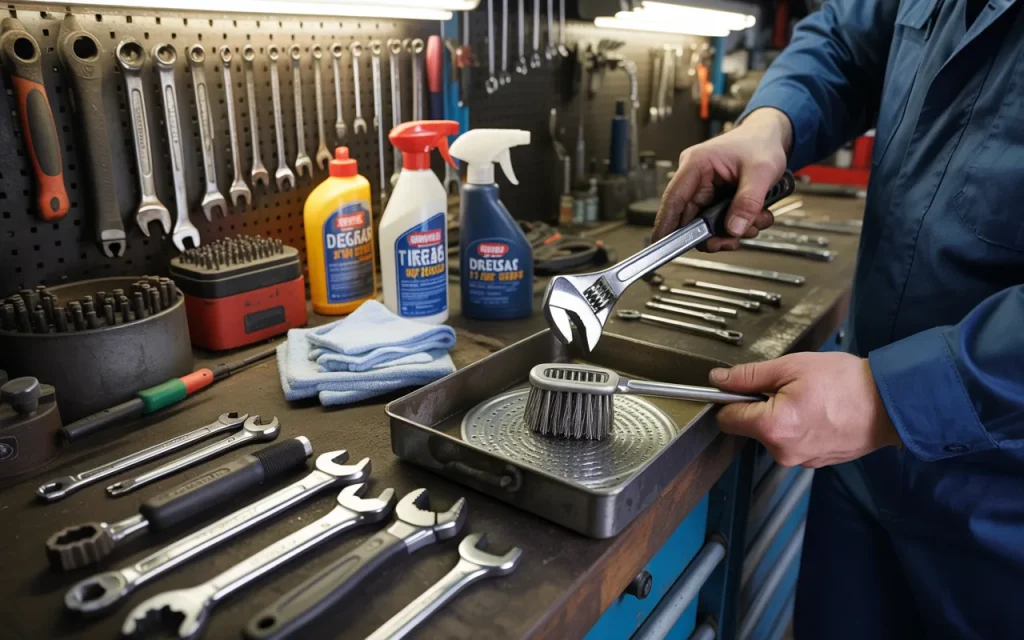
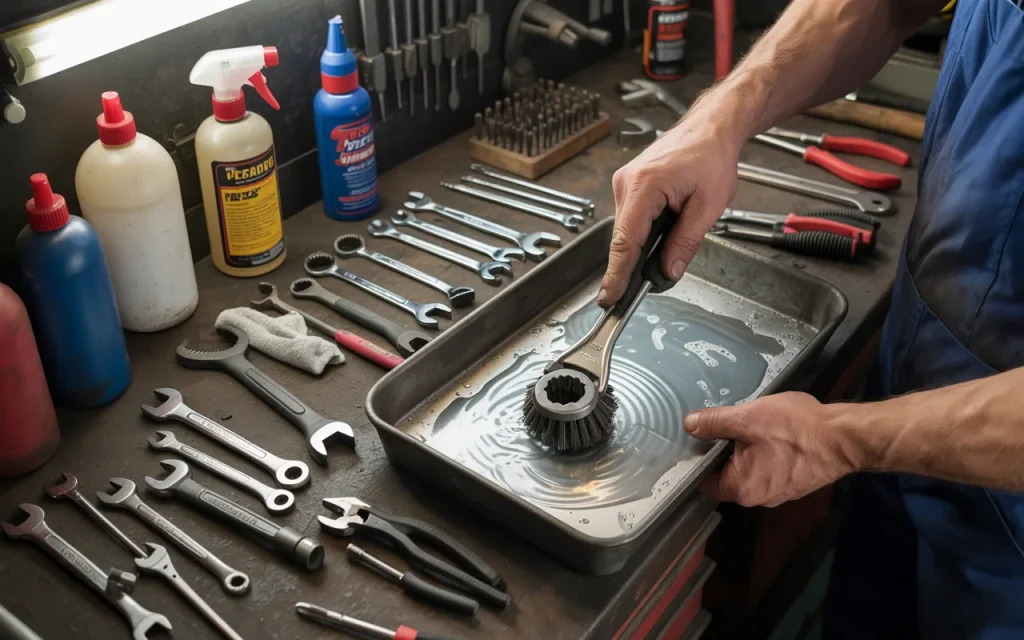
Fill your bucket or sink with the hottest water you can stand. Add a good amount of dish soap. Swish it around to make bubbles. Drop your greasy tools in and let them soak for at least 15 minutes. If the grease is really thick, let them soak for 30 minutes.
After soaking, scrub each tool with your old toothbrush. Pay extra attention to areas with knurling or teeth. These spots trap the most grease. Rinse the tools with clean water and dry them right away with a microfiber cloth.
Do not let tools air dry. Water spots can form, and rust can start quickly. Dry each tool by hand as soon as you rinse it.
Method 2: The Kerosene Bucket Trick
This method is used by professional mechanics everywhere. It works fast and cuts through the heaviest grease. But you need to be careful with kerosene. It is flammable and has strong fumes.
Get a metal bucket with a lid. Fill it about halfway with kerosene or diesel fuel. When you finish using a tool, just drop it in the bucket. Let it soak until you have time to clean everything.
When you are ready, fish the tools out with pliers. Wipe them down with a rag. The grease wipes right off. Then wash the tools with soap and water to remove the kerosene smell. Dry them completely before putting them away.
Linda Garcia, an automotive instructor, shares her advice:
“I tell all my students to keep a bucket of simple degreaser or kerosene in the corner of their garage. Every time you finish using a tool, just drop it in. When the bucket gets full, clean them all at once. This simple habit will keep your tools in great shape for decades.”
Method 3: Using a Parts Cleaner for Tough Jobs
If you work on engines a lot, you might want a parts cleaner. These are small tanks that hold solvent and have a pump. The pump moves solvent through a brush or hose. You scrub the tool while solvent flows over it.
Parts cleaners work fast. They clean grease in seconds. But they cost money and take up space. You also need to buy special solvent and dispose of it properly. For most home mechanics, this is more than you need. But if you work on cars every day, it might be worth it.
Method 4: Homemade Degreaser Paste
Sometimes you have a few tools with really stubborn grease. Maybe they sat dirty for months. For these tools, a homemade paste works great.
Mix baking soda with a little bit of water or vinegar. You want a thick paste, like toothpaste. Spread this paste on the greasy parts of the tool. Let it sit for 10 or 15 minutes. Then scrub with your toothbrush. The paste acts like a gentle scrubber. It lifts grease without scratching the tool.
Rinse with water and dry well. This method works especially well for tools with moving parts, like pliers or ratchets.
How to Clean Different Types of Tools
Not all tools are the same. Some need special care. Here is a quick guide for common mechanic tools.
Socket and Ratchet Care
| Tool Type | Cleaning Method | Special Tips |
|---|---|---|
| Sockets | Soapy water soak | Scrub inside the square drive hole |
| Ratchets | Wipe down only | Do not soak in water, use spray degreaser |
| Wrenches | Soapy water or kerosene | Scrub the open end and box end |
| Pliers | Soapy water soak | Work the joint while cleaning |
| Screwdrivers | Wipe with rag | Keep solvent away from handles |
Ratchets are special. They have internal parts that can be damaged by soaking. Never soak a ratchet in water or solvent. Instead, spray it with a degreaser and wipe it clean. Then add a drop of oil to the mechanism.
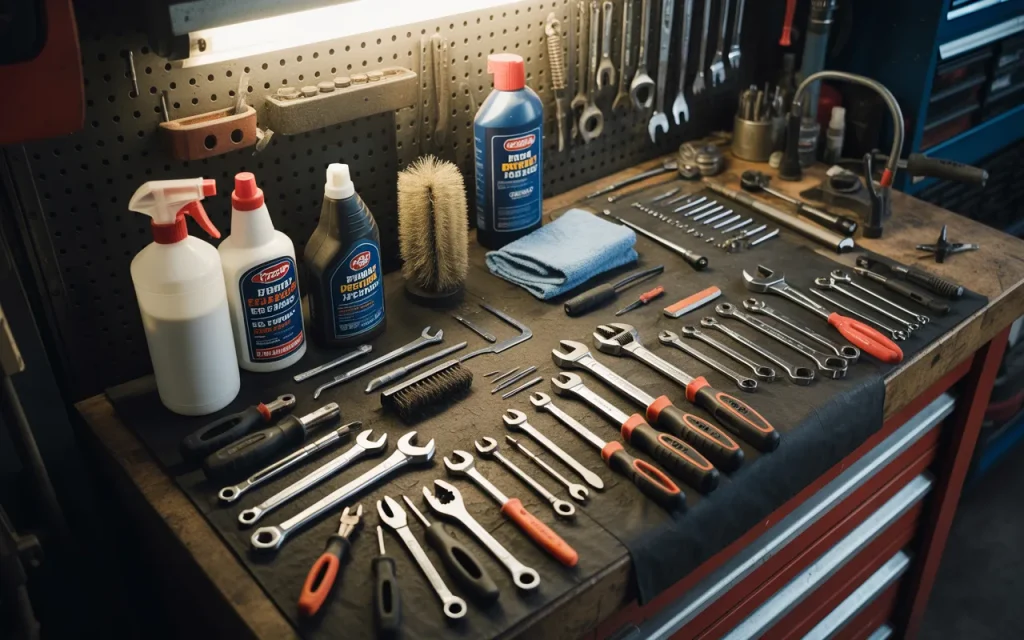
Drying and Oiling Your Tools
Cleaning is only half the job. Drying and protecting your tools is just as important. After washing, dry each tool completely with a clean rag. Pay attention to joints and moving parts. Water hides in these spots.
Once dry, add a very light coat of oil to metal surfaces. You do not need much. A few drops on a rag is enough. Wipe the oil over the tool. This leaves a thin film that stops rust. For tools with moving parts, add a drop of oil to the joints and work them back and forth.
Do not oil tool handles that are rubber or plastic. This makes them slippery. Just wipe them clean and dry.
How Often Should You Clean Your Tools?
This depends on how much you use them. If you use tools every day, a quick wipe down after each job helps a lot. Drop them in a kerosene bucket as you work. Then clean them all at the end of the week.
For weekend mechanics, clean your tools after every major job. If you just did an oil change, wipe down the tools you used. If you did a big engine repair, give everything a good cleaning when you finish.
The key is not letting grease build up over time. A little cleaning after each job is much easier than a big cleaning once a year.
Robert Chen, a tool collector and restorer, offers this wisdom:
“The best tools I find at garage sales are not the ones that look new. They are the ones that were cleaned after every use. You can always restore a tool that was kept clean. But tools left dirty for years often have hidden rust and damage that can’t be fixed. Take care of your tools, and they will take care of you.”
Storing Tools to Stay Clean
Cleaning is important, but storage matters too. Clean tools get dirty fast if you just throw them in a drawer. Here are some storage tips that help keep tools clean.
Keep your toolbox closed when not in use. This keeps dust and dirt out. Use socket organizers instead of just piling sockets in a drawer. This keeps them from rubbing together and getting scratched.
If you work in a humid garage, consider adding silica gel packs to your toolbox. These absorb moisture from the air. You can buy them in bulk or save the ones that come in new product packaging.
For tools you use most often, keep them in a separate tray or on a magnetic strip. This makes it easy to grab them and easy to wipe them down when you finish.
Common Mistakes to Avoid
I have made every mistake possible when learning to clean greasy mechanic tools. Learn from my errors so you do not make the same ones.
Do not use bleach on tools. Bleach can damage metal and cause rust. Stick to dish soap or proper degreasers.
Do not soak wooden handles. If you have old tools with wooden handles, keep them out of water. Wipe them with a damp cloth instead.
Do not use wire brushes on chrome finishes. This scratches the surface. Use a nylon brush or toothbrush instead.
Do not forget to dry tools. Water is the enemy. Even a little moisture left on a tool can cause rust spots overnight.
Do not use too much oil. A light film is all you need. Too much oil just attracts more dirt.
Frequently Asked Questions
Can I clean greasy mechanic tools in the dishwasher?
You can, but I do not recommend it. The dishwasher detergent can damage some tool finishes. Also, the heat can hurt plastic handles. Your dishes might pick up grease residue too. Stick to hand washing.
What is the best degreaser for tools?
For most home mechanics, simple dish soap works best. It cuts grease, rinses clean, and is cheap. For heavy grease, kerosene or a spray degreaser from the auto parts store works well.
How do I clean rust off old tools?
Use white vinegar. Soak rusty tools in vinegar for a few hours. Scrub with a wire brush or steel wool. Rinse well and dry completely. Then oil the tools right away to stop new rust from forming.
Can I clean greasy mechanic tools with brake cleaner?
Brake cleaner works fast but it is strong stuff. Use it outside or in a well-ventilated area. It strips all grease, so you must oil the tools after using it. It also dries very fast, which is good, but it can damage some plastics and paints.
How do I clean the inside of sockets?
Use a small brush or an old toothbrush. You can also wrap a rag around a screwdriver and push it into the socket. Twist to clean the inside walls. For really dirty sockets, a soak in soapy water helps loosen the grease first.
Is it safe to use gasoline to clean tools?
Please do not. Gasoline is very dangerous. It burns easily and the fumes are harmful. Kerosene or diesel is safer, but still needs care. Stick to dish soap and water when you can.
Final Thoughts
Keeping your tools clean does not have to be hard. You do not need fancy products or special skills. A bucket of soapy water, an old toothbrush, and a little time is all it takes.
The key is making cleaning a habit. Wipe down tools after each use. Do a deeper clean once a month. Your tools will last longer, work better, and always be ready when you need them.
I promise you this. The first time you reach for a clean, shiny socket that fits perfectly in your hand, you will wonder why you waited so long to start cleaning your tools. It changes how you feel about working on cars. It makes the whole experience better.
So grab that bucket, fill it with hot soapy water, and start cleaning. Your future self will thank you every time you open that toolbox.