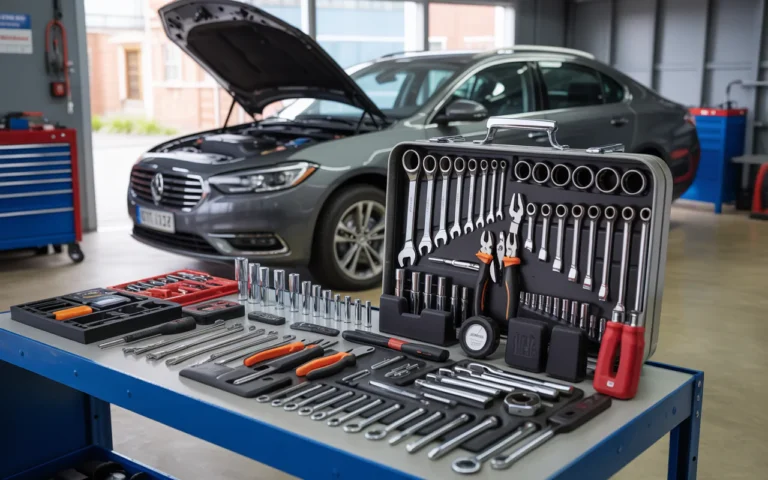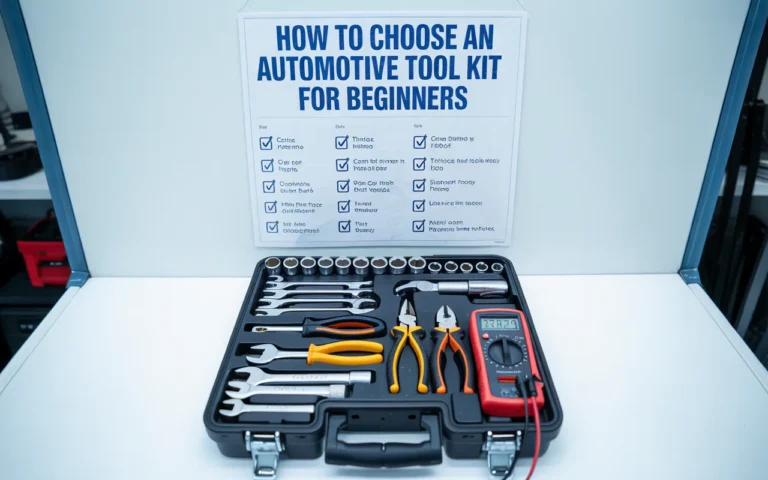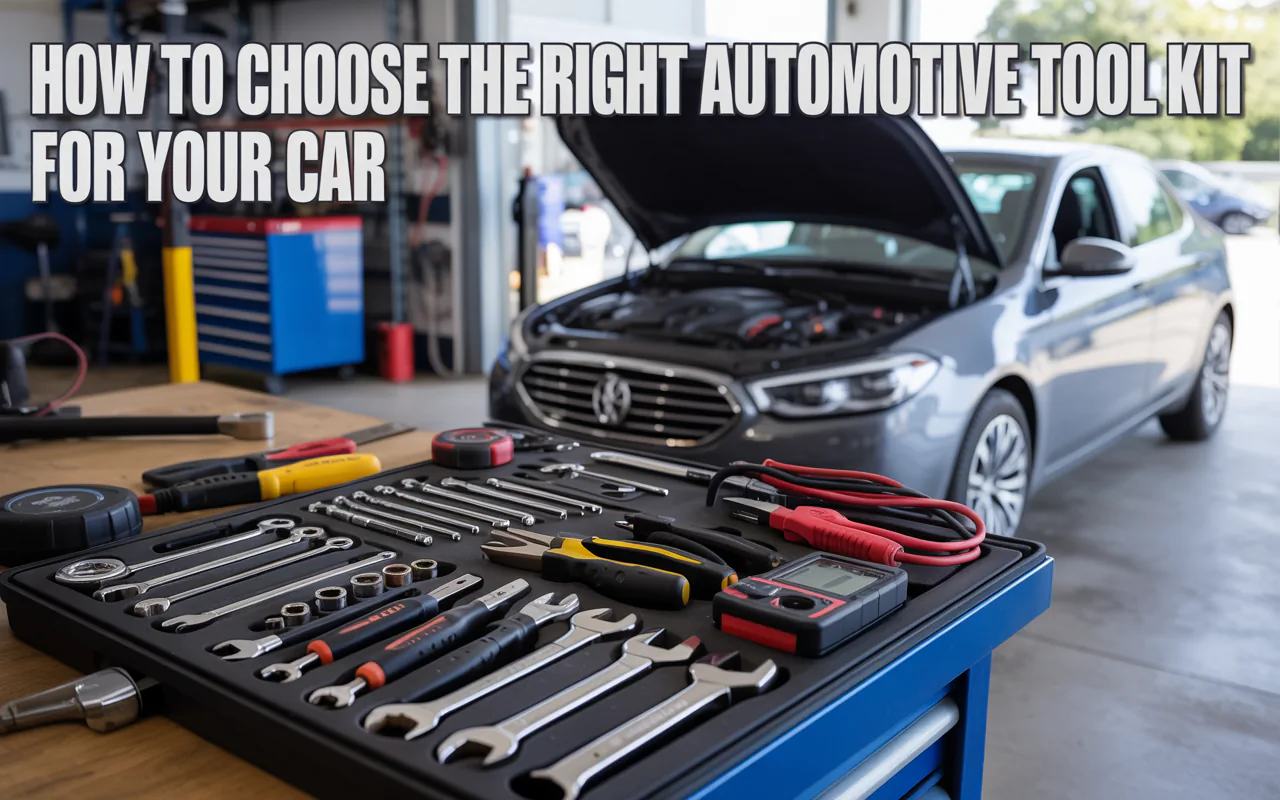
Want to know how to choose the right automotive tool kit for your car? This guide explains tool types, sizes, and must-have items for every driver, from beginner to pro.
You pop the hood, see a loose battery cable or a hissing hose, and realize you have no tools to fix it. We have all been there. Having a good set of tools in your trunk or garage can save you time, money, and stress. But with so many options, it is hard to know what to buy. This guide will help you choose the right automotive tool kit for your car without any confusion. You will learn exactly what to look for, what to avoid, and how to match the kit to your skill level.
Let me be honest with you. I have owned old trucks and new sedans. I have broken down on highways and in my own driveway. The one thing that made each situation better was having the correct tool close by. I am writing this to share real, simple advice so you never feel stuck again.
Why You Need a Proper Tool Kit in Your Car
A proper tool kit does more than fix flat tires. It helps you tighten a loose mirror, change a dead battery, or replace a broken light bulb. Many new cars come with a basic jack and a wrench, but that is not enough. You want a kit that covers small emergencies and basic maintenance.
Carroll Shelby, a famous racer and designer, once said, “The best car safety device is a rear-view mirror with a well-prepared driver behind it.” Being prepared starts with the right tools. When you choose the right automotive tool kit for your car, you gain confidence. You can help yourself or help a friend on the road.
What to Look for Before You Buy
Before you spend money, ask yourself three simple questions.
| Question | Why It Matters |
|---|---|
| How old is my car? | Older cars need more tools for repairs. Newer cars may need special computer-safe tools. |
| What is my skill level? | Beginners need basic kits. Experts can buy advanced sets with more pieces. |
| Where will I keep the kit? | A trunk kit must be compact. A garage kit can be larger and heavier. |
These answers will guide your choice. Do not buy a 200-piece kit if you only know how to check oil. Start small and grow your set over time.
Types of Automotive Tool Kits
There are three main types of kits. Each one serves a different purpose.
1. Basic Emergency Kits
These are small kits for roadside fixes. They usually include a screwdriver, pliers, an adjustable wrench, and a tire repair tool. Some come with a flashlight and zip ties. This is perfect for a new driver or someone who only wants to handle simple issues like a loose belt or a broken tail light.
2. Intermediate DIY Kits
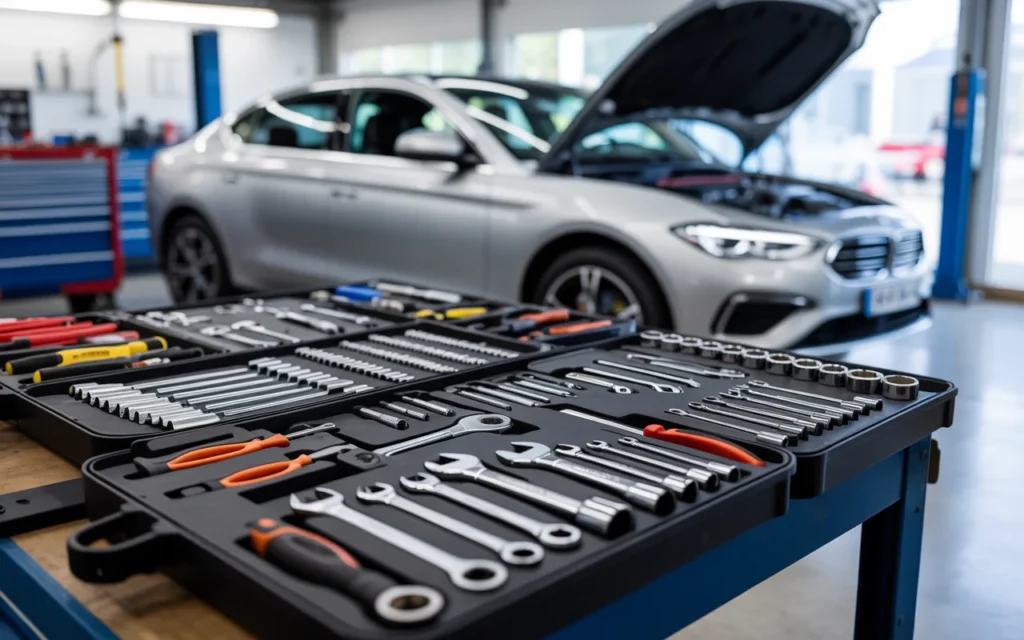
These have 50 to 100 pieces. You get a ratchet and socket set, combination wrenches, hex keys, wire cutters, and a few specialty items like a spark plug socket. If you like changing your own oil, swapping air filters, or replacing brake pads, this is your kit.
3. Professional or Advanced Kits
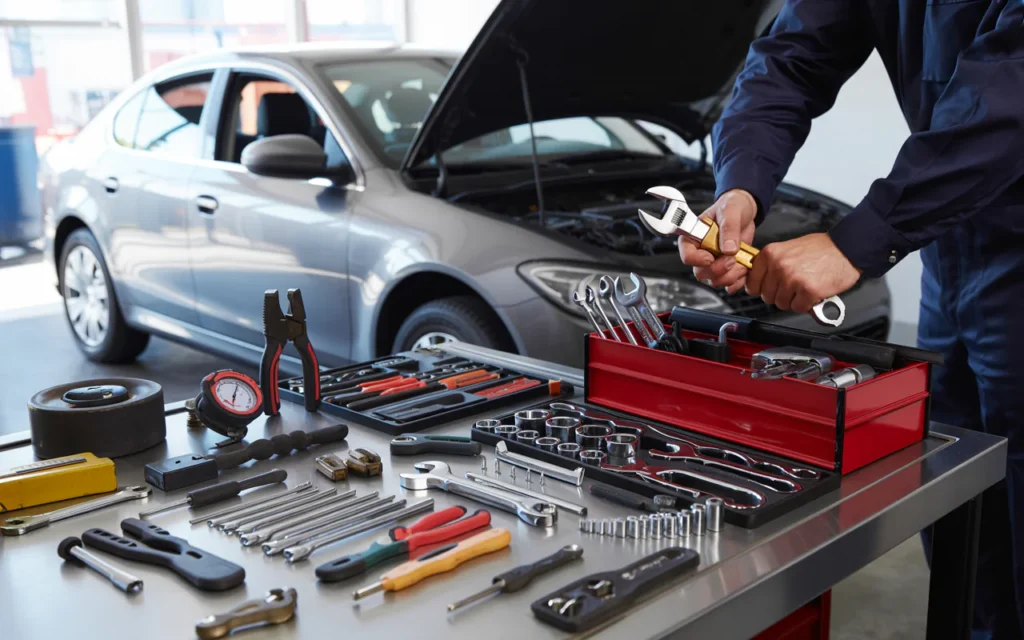
These have over 150 pieces. They include deep sockets, torque wrenches, breaker bars, multimeters, and many driver bits. Mechanics and serious home repair fans use these. They cost more but last for decades.
To choose the right automotive tool kit for your car, pick the type that fits your daily needs. Do not overbuy. A heavy kit in your trunk wastes gas and space.
Essential Tools That Every Kit Must Have
Some tools are non negotiable. Here is a short list of what every good car tool kit should include.
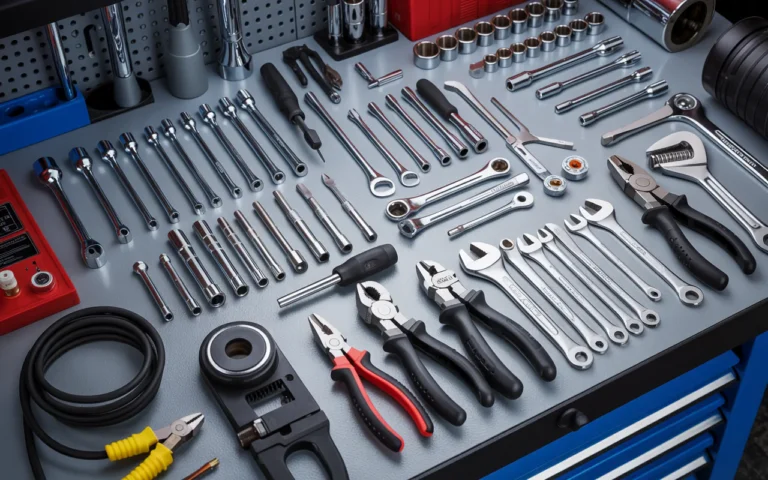
- Ratchet and socket set (metric and SAE): Most modern cars use metric. Check your car manual. A set from 8mm to 19mm covers most bolts.
- Combination wrenches: These have an open end and a box end. Great for tight spaces.
- Screwdrivers: Get both flathead and Phillips in several sizes.
- Pliers: Needle-nose and slip-joint pliers handle hoses, clips, and wires.
- Adjustable wrench: A 6-inch or 8-inch size works for many nuts and bolts.
- Tire pressure gauge: Underrated but very important. Check your tires once a month.
- Flashlight or headlamp: You will always work in the dark. Trust me.
- Zip ties and duct tape: These two items fix many temporary problems.
Floyd Clymer, an automotive writer and publisher, said, “The fellow who never makes a mistake never makes anything.” Having these tools lets you try small fixes. You will learn as you go, and that is a good thing.
Metric vs. SAE: Which One Do You Need?
This confuses many people. Let me make it simple.
| Measurement System | Used By | Common Sizes |
|---|---|---|
| Metric (mm) | All modern cars from Japan, Korea, Germany, and the US after 2000 | 10mm, 12mm, 14mm, 15mm, 17mm, 19mm |
| SAE (inches) | Older American cars (before 1995) and some trucks | 3/8″, 7/16″, 1/2″, 9/16″, 5/8″ |
If you drive a car made after 2000, buy a metric kit. The 10mm socket is famous for getting lost. Buy two if you can. If you have an old classic car or a mix of vehicles, get a kit that includes both systems. When you choose the right automotive tool kit for your car, always check your car’s bolt sizes first. Look under the hood or in the owner’s manual.
Material Quality and Build
Cheap tools break. Broken tools strip bolts and hurt your hands. Look for these marks of quality.
- Chrome vanadium steel (Cr-V): This is strong and resists rust.
- Chrome molybdenum steel (Cr-Mo): Even stronger. Used in high-end impact sockets.
- Polished or satin finish: This helps you clean the tools and see them in a dark engine bay.
- Clear size markings: You want to read the size even after years of use.
Avoid tools that feel light or have rough edges. Good tools have a small weight to them. They fit snugly on bolts. They do not slip or bend.
Case and Storage: Do Not Ignore This
A good case keeps your tools organized. When you break down at night, you do not want to dump a bag of mixed tools on the ground. Look for these features.
- Molded plastic cases with labeled spots for each tool.
- Latches that close tightly so tools do not fall out in your trunk.
- A handle that feels strong and comfortable.
- A case that fits in your spare tire well or under a seat.
Some people like soft roll-up bags for wrenches. Others prefer hard cases for sockets. Pick what feels easy for you. The best tool is the one you can find fast.
How to Choose the Right Automotive Tool Kit for Your Car Based on Your Skill Level
Let us match the kit to you.
Beginner (I just want to be safe on the road)
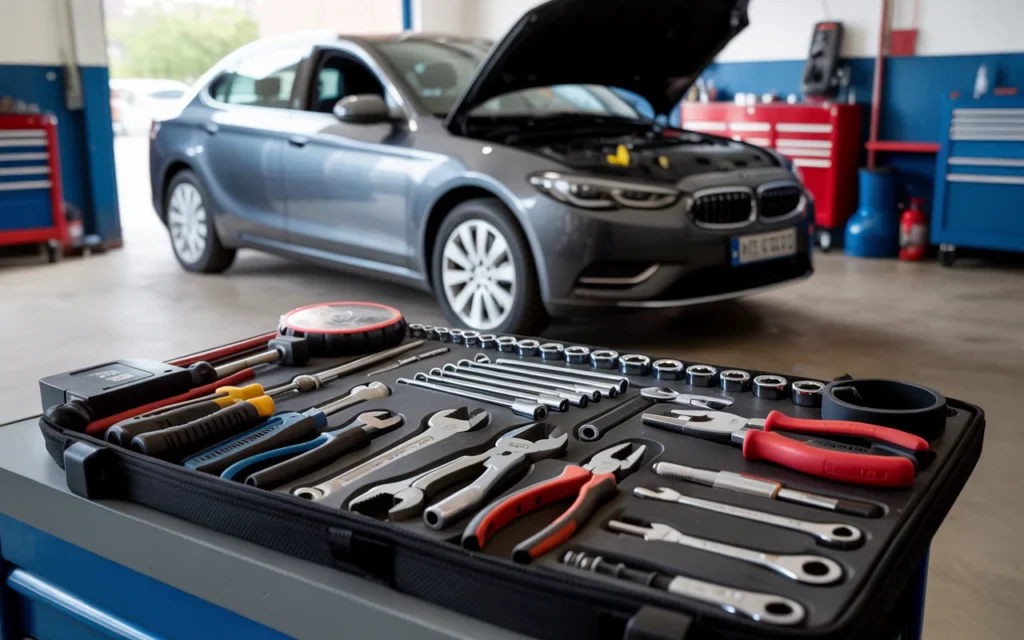
Buy a 30- to 50-piece emergency kit. Look for one with a ratchet, 8-10 sockets, two screwdrivers, pliers, and a tire gauge. Cost: 20 to 40 dollars. Keep it in your trunk at all times.
Intermediate (I change oil and air filters myself)
Get a 70- to 120-piece mechanics tool set. It should have deep and shallow sockets, combination wrenches, hex keys, and a spark plug socket. Cost: 50 to 120 dollars. Keep one in your garage and a smaller kit in your car.
Advanced (I replace alternators, brakes, and belts)
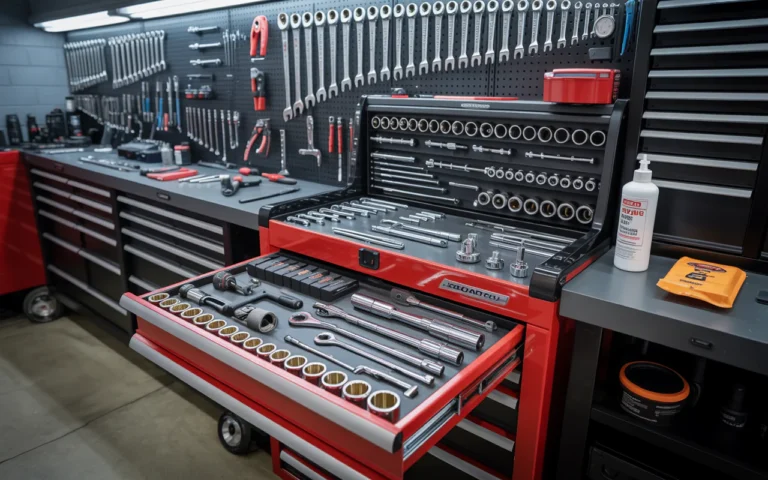
Buy a 150- to 250-piece set with a torque wrench, breaker bar, multimeter, and many specialty bits. Look for a brand with a lifetime warranty. Cost: 150 to 350 dollars. Keep this in your garage and take what you need for each job.
A wise mechanic named John Muir once wrote, “You can do almost anything with a simple set of tools and the desire to learn.” That desire is what matters most. Start where you are. Grow as you learn.
Top 5 Brands You Can Trust
Brand reputation matters. Here are five brands that real mechanics and home users trust.
- Craftsman: Good balance of price and quality. Lifetime warranty at many stores.
- Stanley: Affordable and widely available. Great for beginner kits.
- GearWrench: Known for excellent ratchets and specialty tools.
- DEWALT: Strong and durable. Good for heavy use.
- Husky (Home Depot): Easy warranty returns. Solid for intermediate users.
Do not chase the most expensive brand. A mid-range kit from any of these names will serve you well for years. When you choose the right automotive tool kit for your car, brand is less important than having the correct sizes and good case design.
Mistakes to Avoid When Buying a Tool Kit
Many people waste money on the wrong set. Do not make these errors.
- Buying a kit with too many bits: 200 pieces sounds great, but half of them are tiny hex bits you will never use.
- Ignoring the case quality: A broken case means lost sockets. Lost sockets mean you cannot finish a job.
- Buying SAE for a new car: You will not use 1/2 inch sockets on a 2020 Honda.
- Forgetting about a tire repair kit: Many auto tool kits do not include a plug kit or an air compressor. Buy these separately.
- Choosing based on price alone: A 15 dollar kit from a discount store will break the first time you use it.
How to Maintain Your Tool Kit
Tools last a lifetime with basic care. Follow these simple steps.
- Wipe each tool with a dry rag after use. Oil and dirt cause rust.
- Spray a little WD-40 or light oil on moving parts like ratchet gears once a year.
- Check your kit every six months. Replace any missing or broken pieces.
- Keep the case dry. Do not store it on a wet garage floor.
A clean, organized kit makes you want to use it. That is the whole point.
What to Add to a Basic Kit to Make It Better
Even a small kit can be improved with a few extra items. Here is what I add to every basic set.
- Mechanics gloves: Save your knuckles from scrapes.
- Small magnet on a stick: Pick up dropped nuts and bolts from tight spots.
- Headlamp: Both hands free to work.
- Electrical tape and wire connectors: Fix a broken wire in minutes.
- Small first aid kit: Because cuts happen.
These extras do not cost much but they make every repair easier and safer.
Frequently Asked Questions
1. Can I just buy a complete set from an auto parts store?
Yes. Most auto parts stores sell good starter sets. Look for the brands listed above. Avoid no-name brands with very low prices.
2. How much should I spend on my first car tool kit?
Spend between 30 and 60 dollars for a beginner kit. Spend 80 to 150 dollars for a good intermediate set that will last ten years.
3. Do I need a torque wrench?
Not for basic repairs. But if you plan to change wheels, spark plugs, or engine parts, yes. A torque wrench helps you tighten bolts to the correct spec so nothing breaks.
4. What is the single most important tool in a car kit?
A 10mm socket and ratchet. Most car repairs use this size. Buy an extra one because it will vanish.
5. How do I know if a tool kit is good quality?
Read customer reviews from real buyers. Look for complaints about broken ratchets or stripped sockets. Good brands offer a warranty without asking many questions.
6. Can I use a household tool kit for my car?
Household kits have tools for furniture and electronics. Car kits have stronger sockets and wrenches for tight bolts. Use the right tool for the job. Do not mix them.
7. Should I buy a kit with a hard case or a soft bag?
Hard case for your garage. Soft bag for your trunk. Soft bags fit into odd spaces better. Hard cases protect tools from heavy items in your trunk.
8. How often should I check my car tool kit?
Check it every time you check your tire pressure or oil level. That means once a month. Make sure nothing is missing or rusty.
Final Thoughts on Choosing Your Kit
You do not need a full garage to start. You need one small, honest kit that covers the basics. Open your car’s hood. Look at the bolts and clamps. Note the sizes. Then go buy a set that matches those sizes. That is how you choose the right automotive tool kit for your car with confidence.
Start simple. Add tools as you learn new skills. Keep your kit clean and organized. And remember, every expert was once a beginner who just tried. You have this.
A good tool kit does not just fix cars. It gives you freedom. Freedom to help yourself. Freedom to learn. Freedom to drive without fear of small problems ruining your day. Go get your kit today. Your future self will thank you when you are back on the road in twenty minutes instead of waiting two hours for a tow truck.
Stay safe. Drive smart. Keep your tools close.