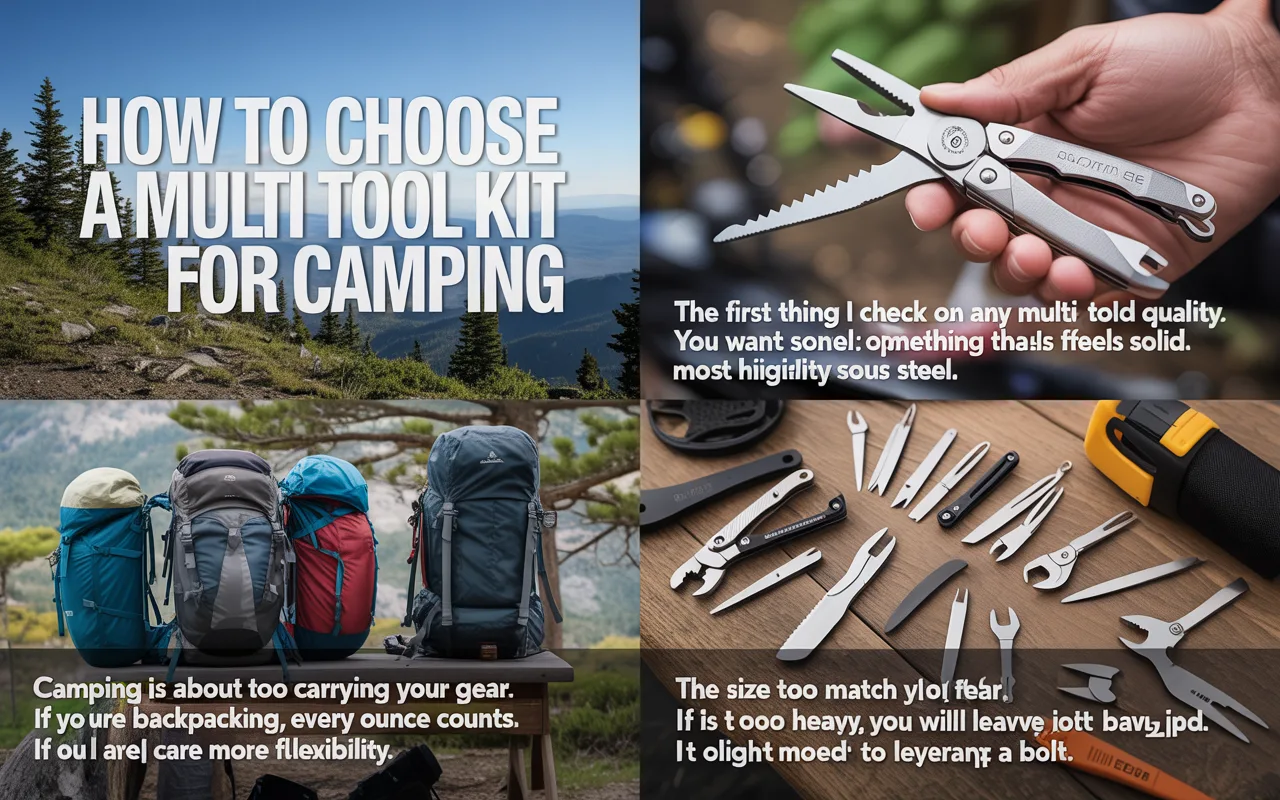
If you are trying to choose a multi tool kit for camping, focus on the blade quality, plier strength, and portability. This guide explains what features matter most for outdoor reliability.
There is something special about packing for a camping trip. You check the tent, the sleeping bag, the stove, and then you stop to think about the small tools. One piece of gear often becomes the star of the show: your multi tool. When you are out in the woods, having the right tool on your belt or in your pack can make all the difference between a smooth trip and a frustrating one. I have spent many years under the stars, and I can tell you that the decision of how to choose a multi tool kit for camping is more important than many new campers realize.
A multi tool is not just a gadget. It is a portable workshop that fits in your pocket. It can fix a broken tent pole, cut fishing line, open a can of beans, or tighten a screw on your camping stove. With so many brands and models on the market, the selection process can feel a bit overwhelming. But do not worry. I am here to walk you through the process step by step. We will look at the features that matter, the mistakes to avoid, and how to match the tool to your specific camping style. Let us get started on finding the perfect companion for your next adventure.
Build Quality and Materials
The first thing I check on any multi tool is the build quality. You want something that feels solid. Most high-quality tools use stainless steel. There are different grades of stainless steel, and this affects how long the tool stays sharp and how well it resists rust. Since you will be using this outdoors, rust resistance is critical. A tool that starts to rust after one rainy trip is not a good investment.
Look for a tool made from 420HC stainless steel or something similar. These materials offer a good balance of hardness and corrosion resistance. Also, pay attention to how the tool opens and closes. It should feel smooth but not loose. If the tool has any wobble in the handles when you open the pliers, it is a sign of poor construction. A well-built multi tool should feel like a single, solid piece of engineering. As a general rule, if it feels cheap in the store, it will fail you in the field.
“The best tool is the one you have with you when something breaks. In the outdoors, quality materials are not a luxury; they are a safety necessity.” – Mike Clelland, author of “Ultralight Backpackin’ Tips”
The Tools You Actually Need
When you choose a multi tool kit for camping, it is easy to get excited by tools that have 30 different functions. But more tools do not always mean a better experience. Some tools include items you will never use, like a corkscrew or a specific type of file. Extra tools add weight and bulk.
For camping, focus on the essentials:
- Pliers: Strong pliers with a wire cutter. These are great for pulling tent stakes, fixing zippers, or cutting wire.
- Knife Blade: A plain edge blade is best for general cutting. You need this for food prep, cutting rope, and whittling kindling.
- Saw: A good saw is invaluable for cutting small branches for firewood or clearing a campsite.
- Screwdrivers: A flathead and a Phillips head. Many camping gear items use these, like stoves, lanterns, and camera tripods.
- Can/Bottle Opener: This is a non-negotiable for camp cooking.
If you can find a tool that includes these five core functions with high quality, you are in good shape. Extra tools like scissors, rulers, or serrated blades are nice to have, but they should not be the main reason you buy the tool.
Size, Weight, and Portability
Camping is about carrying your gear. If you are backpacking, every ounce counts. If you are car camping, you have more flexibility. This is a big factor in how to choose a multi tool kit for camping.
I keep two different multi tools. One is a full-size tool for car camping. It is heavy but has large pliers and long blades that can handle heavy work. The other is a lightweight version for backpacking. It is smaller, but it still has the core functions I need.
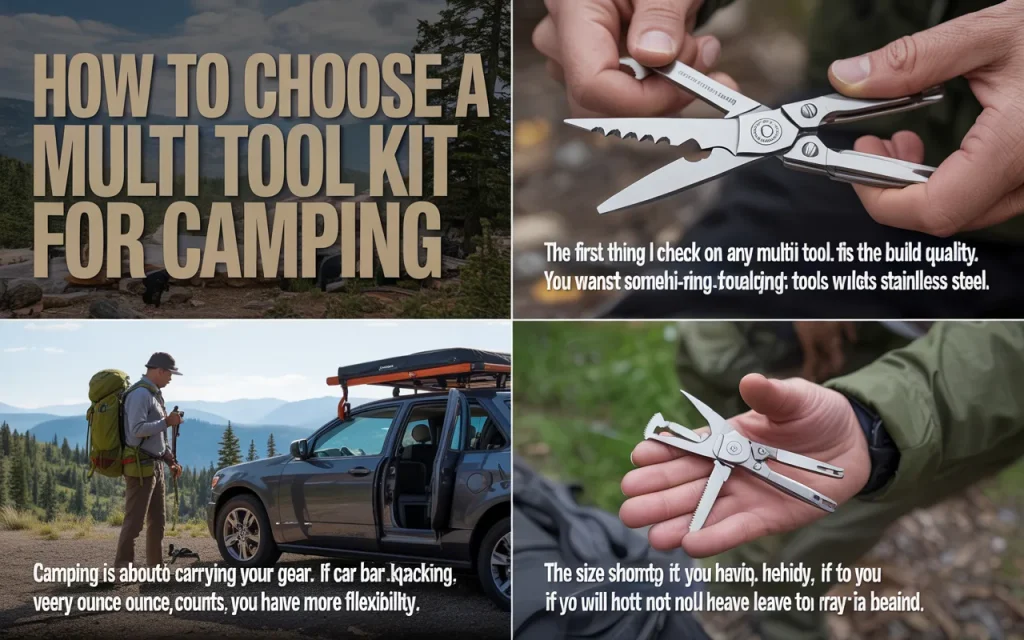
To help you decide, here is a comparison of tool sizes based on camping style:
| Camping Style | Recommended Size | Average Weight | Key Feature Focus |
|---|---|---|---|
| Backpacking / Ultralight | Small to Medium | 4 oz – 6 oz | Minimalist tools, wire cutters, small blade |
| Car Camping / Overlanding | Medium to Large | 7 oz – 10 oz | Full-size pliers, sturdy saw, multiple drivers |
| Kayak / Bike Camping | Medium | 5 oz – 7 oz | Corrosion resistance, locking tools, ease of use |
Think about where you will carry the tool. Will it be in a hip belt pocket? In a glovebox? On a belt sheath? The size should match your carry method. If it is too heavy, you will leave it behind. If it is too small, it might not have the leverage you need to tighten a bolt.
Locking Mechanisms and Safety
Safety is a huge part of using any outdoor tool. When you use a multi tool, the tools inside the handle can sometimes close on your fingers if they do not lock. This is painful and can lead to injuries in the middle of nowhere.
Why Locking Tools Matter
I strongly suggest choosing a multi tool where the blades and tools lock into place. A locking mechanism keeps the blade open while you are cutting a tough piece of rope or a branch. It prevents the tool from folding back onto your fingers. There are a few types of locks:
- Liner Locks: These are common and easy to use with one hand.
- Frame Locks: Very strong and secure, often found on higher-end models.
- Button Locks: Simple and quick, but you need to ensure they are durable.
If you are camping with kids or beginners, locking tools are even more important. You want everyone to feel safe while using the equipment. A tool that does not lock is fine for light tasks, but for the unpredictable tasks of camping, a lock is a standard safety feature.
One-Handed Operation
Another thing to consider is how easy it is to open the tool. Many modern multi tools allow you to open the pliers or the main blade with one hand. This is very useful. Imagine you are holding a branch with one hand and need to cut it with the other. Or you are balancing on a rock and need to fix a strap. Being able to operate the tool with one hand is a huge plus.
When you look at a multi tool, check the nail nicks (the groove for your fingernail) on the blades. Are they easy to access? Some tools have thumb studs or holes in the blade for easier opening. If you often wear gloves while camping, make sure the tool is glove-friendly.
Handle Design and Ergonomics
A multi tool might look great on paper, but if it hurts your hand to use, you will not enjoy it. Ergonomics are often overlooked when people choose a multi tool kit for camping, but they are vital.
Handle Shape and Grip
The handles should fit comfortably in your palm. When you squeeze the pliers, the handles should not dig into your skin. Many tools have rounded edges or textured scales to improve grip. If you camp in cold or wet conditions, a tool with a textured grip is much safer. A slippery tool is hard to control.
Also, consider the handle material. Metal handles are durable but can get very cold in winter. Some tools incorporate rubber or polymer inserts to make them more comfortable and to provide insulation from the cold.
Balance and Leverage
A good multi tool should feel balanced when you hold it. The weight should not be too heavy in the head or the handle. When you use the pliers to grip a stuck tent stake, you want good leverage. Longer handles provide more leverage, but they add weight. Shorter handles are lighter but require more strength to grip tight objects.
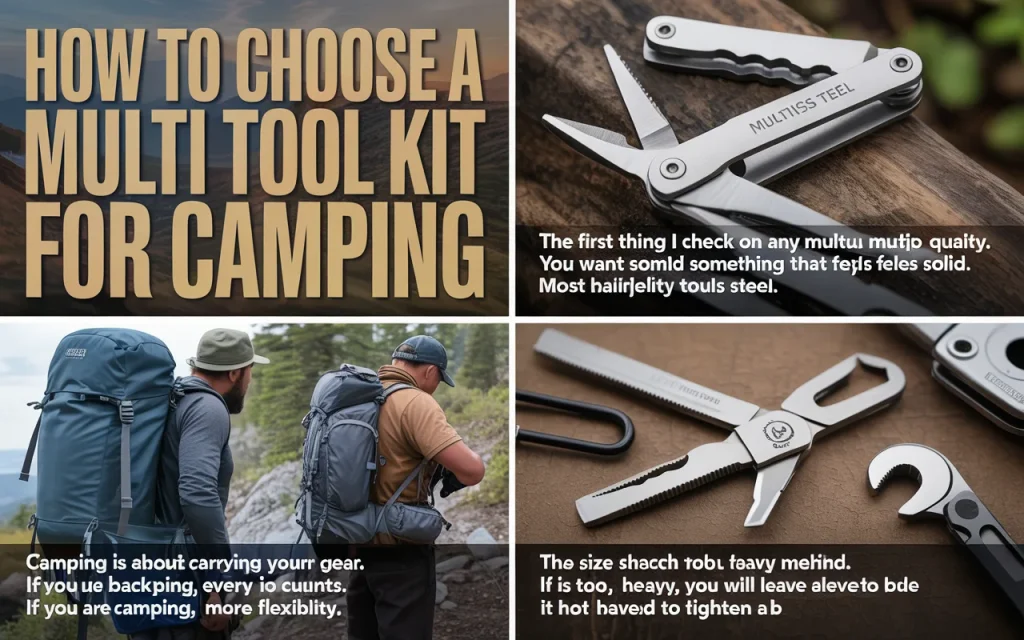
Here is a quick guide to how handle length affects performance:
| Handle Length | Leverage Level | Best Use Scenario |
|---|---|---|
| Short (Under 4 inches) | Low | Light tasks, backpacking, small hands |
| Medium (4 – 4.5 inches) | Medium | General camping, all-around use |
| Long (4.5 inches and up) | High | Heavy gripping, car camping, repairs |
Maintenance and Sheaths
A multi tool is a piece of mechanical equipment. It requires care. When you learn how to choose a multi tool kit for camping, you should also think about how you will maintain it and carry it.
Corrosion Resistance and Cleaning
Camping environments are tough. Sand, mud, saltwater, and moisture get into the joints. If your multi tool gets dirty, you need to be able to clean it. Stainless steel is good, but not all stainless steel is the same. Look for tools that have a smooth finish without too many crevices where dirt can hide.
After a camping trip, I wash my multi tool with warm soapy water, dry it thoroughly, and apply a drop of oil to the hinges. This keeps the tool opening smoothly and prevents rust. If you camp near the ocean, saltwater is very corrosive. In that case, you might want a tool with a special coating, like a black oxide finish, which offers extra protection.
Sheath Quality and Carry Options
The sheath is the home for your tool when you are not using it. A good sheath keeps the tool secure and accessible. Most multi tools come with a nylon or leather sheath. I prefer nylon because it dries faster and is lighter. However, leather looks nice and can be very durable.
Look for a sheath that has a secure snap or Velcro closure. You do not want the tool to fall out while you are hiking. Some sheaths also have a secondary pocket where you can store the bit kit or a small flashlight. This is a nice bonus. Think about where you will attach the sheath. A belt loop is standard, but some people prefer to carry the tool in a pocket or in a backpack strap using a clip.
“Your tools should be accessible within ten seconds. If you have to dig through your pack to find your multi tool, you are less likely to use it for small problems before they become big ones.” – Andrew Skurka, Adventurer and Guide
Brand Reputation and Warranty
When you invest in a tool that you will rely on outdoors, the brand matters. There are a few big names in the multi tool industry. They have earned their reputations through years of making durable products.
Trusted Brands
Leatherman is often the first name that comes to mind. They have a solid reputation and a great warranty. Gerber is another popular brand known for innovative designs and one-handed opening mechanisms. Victorinox, the maker of Swiss Army knives, also produces high-quality multi tools, though they often focus more on knives than heavy-duty pliers.
Do some research. Read reviews from campers and backpackers who have used the tool in the field. Look for comments about the tool breaking under stress or the warranty service being easy to use. A good warranty shows that the company stands behind its product.
“I always tell people to buy the best tool they can afford. Cheap tools fail, and when you are ten miles from the trailhead, a failure can ruin a trip.” – Dave Canterbury, Survivalist and Author
Budget Considerations
You do not need to spend a fortune to get a good camping multi tool. However, price often reflects the quality of steel, the complexity of the locking mechanism, and the warranty.
Price Ranges
- Under $40: You can find decent tools in this range. They are often made in China and use lower-grade steel. They are fine for light car camping or as a backup tool. Just be aware that the blade may dull quickly and the pliers may not be very strong.
- $40 – $80: This is the sweet spot for most campers. You get good quality stainless steel, reliable locks, and a comfortable design. Most mid-range multi tools from major brands fall here.
- Over $80: These are premium tools. They often feature higher-grade steel, better fit and finish, and unique features like replaceable wire cutters or a full set of interchangeable bits. If you camp frequently or rely on your tool for work, this is worth the investment.
Think about your usage. If you camp twice a year, a mid-range tool is perfect. If you are a guide, a bushcraft enthusiast, or you camp every month, the premium tool will pay for itself over time.
Frequently Asked Questions
Q: What is the difference between a multi tool and a Swiss Army knife?
A: A multi tool typically has pliers as the main handle, while a Swiss Army knife focuses on knife blades and other tools inside the handle. For camping, a multi tool with pliers is usually more versatile for fixing gear and handling tougher tasks.
Q: Can I bring a multi tool on a plane?
A: No. Multi tools with blades are not allowed in carry-on luggage. If you are flying to a camping destination, you must pack your multi tool in your checked baggage. Always check the local regulations before traveling.
Q: How do I sharpen the blade on my multi tool?
A: You can use a small sharpening stone or a rod sharpener. The blade steel is usually hard, so it takes a few passes. Do not use a powered grinder, as it can ruin the heat treatment of the steel.
Q: Is it better to have a multi tool with a saw or without?
A: If you plan to build a fire or clear small branches, the saw is very useful. For simple car camping where you have an axe, you might not need it. When you choose a multi tool kit for camping, think about whether you will process wood for fires.
Q: What is the best way to clean a multi tool after a camping trip?
A: Open all the tools and wash them with warm soapy water. Use an old toothbrush to scrub the joints. Dry everything completely, then apply a light lubricant like mineral oil or a specific multi tool oil to the hinges and locking mechanisms.
Conclusion
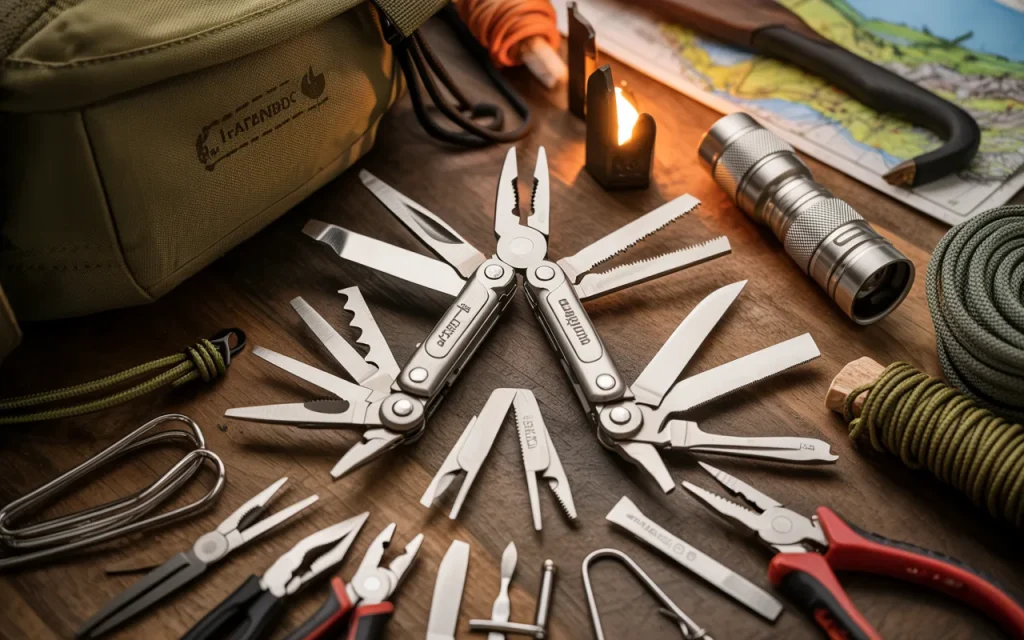
Finding the right gear is part of the joy of camping. When you take the time to choose a multi tool kit for camping, you are investing in your own peace of mind. I have been on trips where a simple screwdriver on my multi tool fixed a broken stove, saving us from a cold dinner. I have used the pliers to pull a fish hook out of a friend’s finger. These tools become extensions of our hands out in the wild.
To wrap it up, focus on the build quality. Make sure the steel is rust-resistant. Pick a size that fits your camping style, whether you are a lightweight backpacker or a car camper with a truck full of gear. Do not forget safety; get a tool with locking blades. And finally, take care of it. A little cleaning and oil go a long way.
Your multi tool is not just a gadget. It is a helper. It is the thing you reach for when the camp chair wobbles, when the tent zipper sticks, or when you need to open a bottle to celebrate a beautiful sunset. Choose wisely, and it will be with you on many adventures to come. Happy camping.