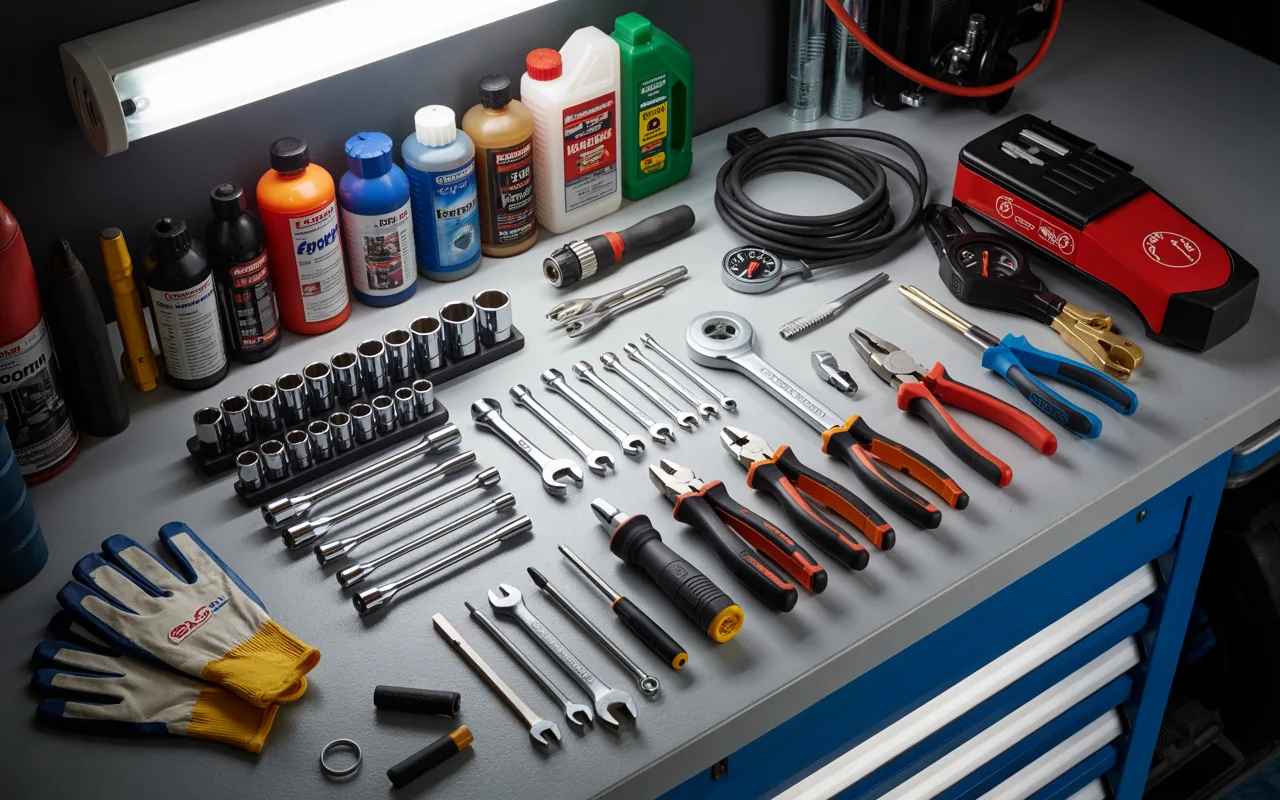
A well-prepared car emergency tool kit can help you handle breakdowns, flat tires, and roadside problems. Learn what should be in a car emergency tool kit to stay safe and ready for unexpected situations.
Every driver hopes their car will run smoothly every day. Yet unexpected problems can happen at any time. A flat tire, dead battery, or sudden breakdown can leave you stuck on the road.
That is why every driver should keep a car emergency tool kit in their vehicle.
A good emergency kit helps you handle small problems safely until help arrives. It also keeps you prepared during long trips, bad weather, or remote driving areas.
Many drivers assume they will never need it. But the moment something goes wrong, having the right tools can make a big difference.
This guide explains exactly what should be in a car emergency tool kit, why each item matters, and how to build one that keeps you safe on the road.
Why Every Driver Needs a Car Emergency Tool Kit
Car problems often appear when you least expect them.
You may get a flat tire late at night. Your battery might die in a parking lot. You might even run out of fuel on a quiet road.
A car emergency tool kit prepares you for these moments.
It helps you:
- Fix simple problems quickly
- Stay safe while waiting for help
- Avoid long delays during travel
- Handle emergencies in bad weather
- Assist other drivers if needed
Road safety expert Mark Davidson explains it well:
“Drivers often underestimate how small tools can solve big roadside problems. A simple emergency kit can turn a stressful situation into a manageable one.”
Even if you rarely drive far, keeping a car emergency tool kit in your trunk gives you peace of mind.
Basic Categories Every Emergency Kit Should Cover
A well-prepared kit usually includes items from several categories.
| Category | Purpose |
|---|---|
| Safety tools | Protect you and other drivers |
| Repair tools | Fix simple vehicle problems |
| Visibility items | Help others see your car |
| Survival supplies | Useful during long delays |
| Communication tools | Help contact assistance |
These categories help drivers understand what should be in a car emergency tool kit without forgetting important items.
Essential Tools for a Car Emergency Tool Kit
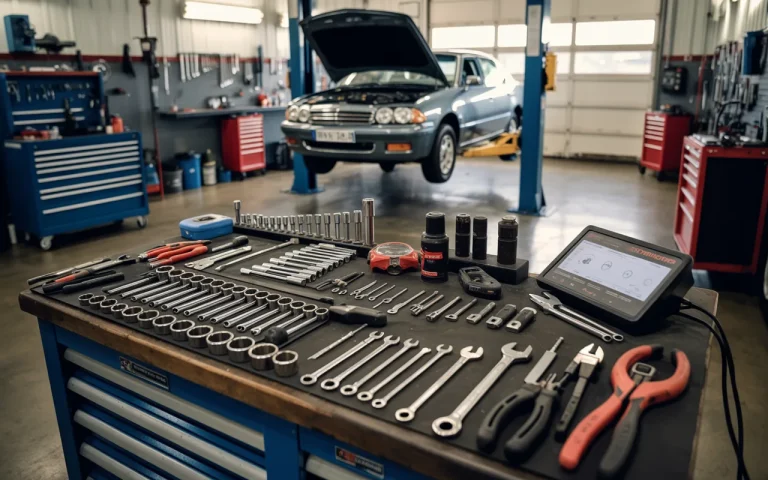
The core of any emergency kit includes tools that help solve common vehicle issues.
1. Jumper Cables
Dead batteries are one of the most common roadside problems.
A set of jumper cables lets you start your car using another vehicle’s battery.
Choose cables that are:
- At least 10 to 12 feet long
- Made with thick insulated wires
- Equipped with strong clamps
Many drivers also prefer portable battery jump starters because they do not require another car.
2. Tire Repair Tools
Flat tires can happen anywhere.
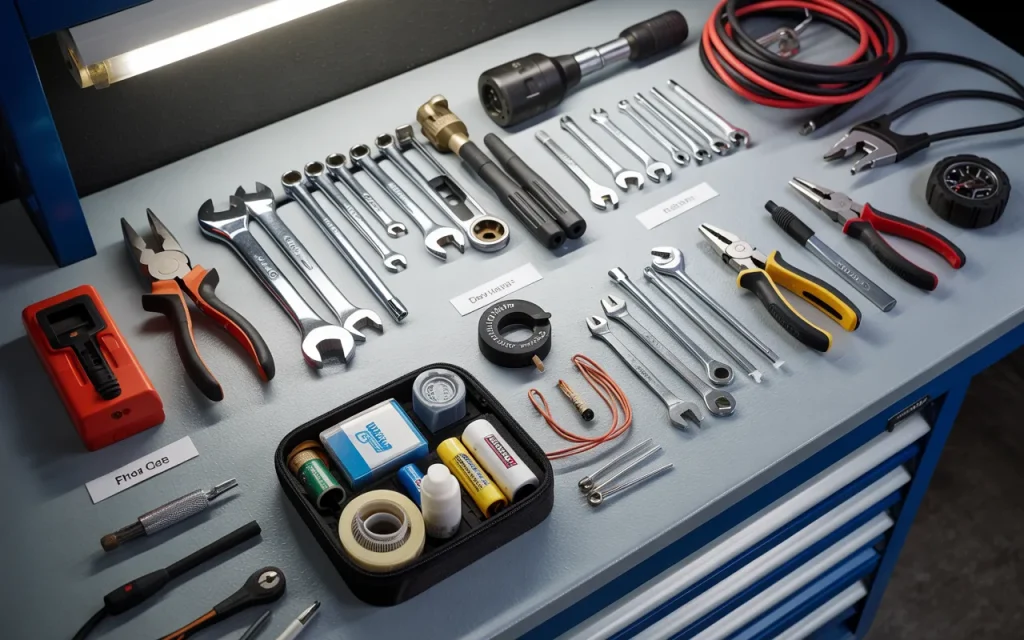
Your car emergency tool kit should include tools to handle tire problems quickly.
Essential tire tools include:
- Tire pressure gauge
- Tire repair plug kit
- Portable air compressor
- Lug wrench
- Car jack
These tools help you fix or replace a damaged tire safely.
Automotive writer Chris Riley once said:
“A tire problem is the most common roadside issue drivers face. The right tire tools can save hours of waiting.”
3. Flashlight With Extra Batteries
A flashlight is critical if your car breaks down at night.
It helps you:
- Check engine problems
- Change a tire safely
- Signal for help
- Inspect damage
LED flashlights are a good choice because they are bright and energy efficient.
Keeping extra batteries inside your car emergency tool kit ensures the light works when needed.
4. Reflective Warning Triangles or Road Flares
Visibility is vital during roadside emergencies.
Reflective triangles warn approaching drivers that your car has stopped.
Place them several meters behind your vehicle to give drivers time to slow down.
Many drivers include three reflective triangles in their car emergency tool kit.
This improves safety, especially on highways or dark roads.
5. First Aid Kit
Minor injuries can happen during accidents or repairs.
A basic first aid kit should include:
- Bandages
- Antiseptic wipes
- Medical tape
- Pain relievers
- Gloves
- Gauze pads
Having medical supplies inside your car emergency tool kit allows you to treat small injuries quickly.
Safety Supplies Every Driver Should Carry
Emergency tools fix problems. Safety supplies protect you.
6. Reflective Safety Vest
A reflective vest helps drivers see you while you work near the road.
It is especially important during:
- Night breakdowns
- Rain or fog
- Busy highways
Many roadside safety organizations recommend every driver keep a reflective vest in their car emergency tool kit.
7. Emergency Blanket
Cold weather can make roadside situations dangerous.
An emergency blanket helps maintain body heat while waiting for help.
These blankets are small and lightweight but provide valuable warmth.
Winter drivers should always add one to their car emergency tool kit.
8. Drinking Water and Non Perishable Snacks
Long delays may leave you stuck for hours.
Keeping water and simple snacks helps prevent dehydration and fatigue.
Good snack options include:
- Energy bars
- Nuts
- Dried fruit
- Crackers
This is especially important during long road trips.
9. Phone Charger or Power Bank
Your phone may be your most important emergency tool.
A power bank or car charger ensures you can:
- Call roadside assistance
- Contact family
- Use navigation
- Check weather updates
Keeping a charger inside your car emergency tool kit ensures your phone stays powered.
Multi Purpose Tools That Save Space
Compact tools make your kit more practical.
10. Multi Tool
A multi tool combines several tools into one device.
Most include:
- Knife
- Screwdrivers
- Pliers
- Bottle opener
- Small saw
These tools are useful for quick repairs.
11. Duct Tape
Duct tape can solve many temporary problems.
Drivers often use it to:
- Secure loose parts
- Patch hoses
- Fix mirrors
- Seal small leaks
It is simple yet extremely useful in any car emergency tool kit.
12. Work Gloves
Working on a car can be messy and dangerous.
Durable gloves protect your hands from:
- Sharp metal edges
- Hot engine parts
- Dirt and grease
They also improve grip when handling tools.
Seasonal Items to Add to Your Kit
Some tools depend on weather and climate.
Drivers in cold regions may need different supplies than drivers in warm areas.
| Season | Useful Items |
|---|---|
| Winter | Ice scraper, shovel, blanket |
| Summer | Extra water, sun protection |
| Rainy weather | Rain poncho, waterproof flashlight |
| Long road trips | Extra snacks, fuel container |
Adjusting your car emergency tool kit for seasons ensures better preparation.
Road safety educator Laura Simmons shares this advice:
“Drivers should review their emergency kits twice a year. Weather conditions change what supplies you may need.”
How to Store Your Emergency Tool Kit Properly
Even the best tools will not help if they are disorganized or damaged.
Follow these simple storage tips.
Use a Durable Storage Bag
Choose a strong bag or box that keeps items secure.
Water resistant containers work best.
Keep the Kit in the Trunk
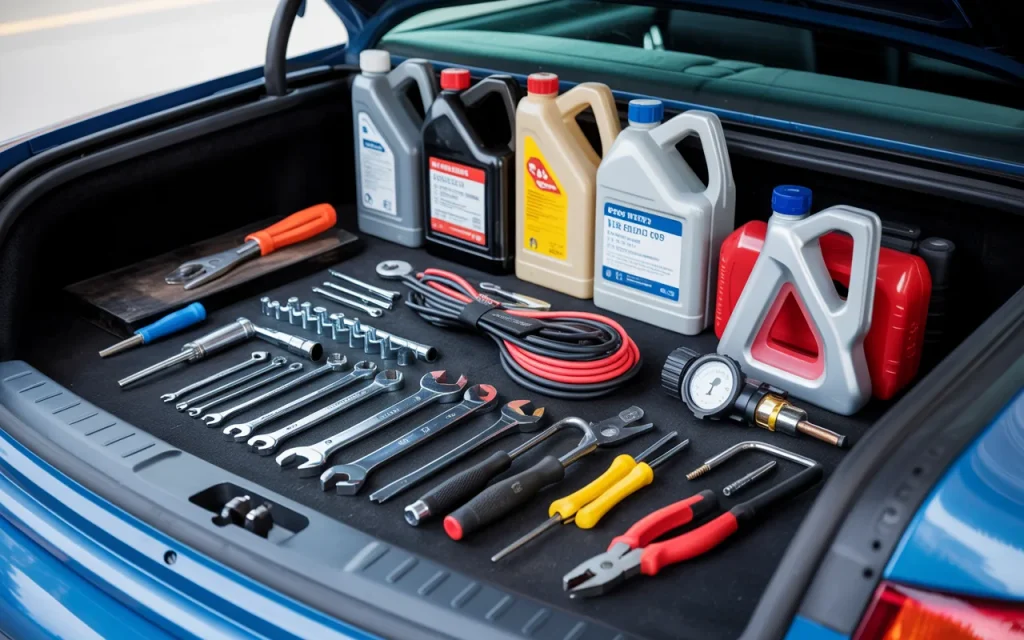
Most drivers store their car emergency tool kit in the trunk.
This keeps tools out of the cabin but easy to access.
Check Items Every Few Months
Supplies may expire or stop working.
Inspect your kit regularly for:
- Dead flashlight batteries
- Expired food
- Low first aid supplies
- Missing tools
Keeping your car emergency tool kit updated ensures it works when needed.
Common Mistakes Drivers Make With Emergency Kits
Many drivers build a kit once and forget about it.
Here are some common mistakes.
Missing Basic Tools
Some kits only include survival items but lack repair tools.
A balanced car emergency tool kit includes both.
Buying Cheap Tools
Low quality tools may fail during emergencies.
Invest in durable tools that will last.
Forgetting Personal Needs
Drivers with children, pets, or medical conditions should include extra supplies.
For example:
- Baby supplies
- Pet water bowls
- Medication
Personalizing your car emergency tool kit makes it more useful.
How to Build Your Own Emergency Kit Step by Step
Creating your own kit is simple.
Follow this checklist.
Step 1
Choose a storage bag or toolbox.
Step 2
Add essential repair tools like jumper cables and tire tools.
Step 3
Include safety items such as reflective triangles and a vest.
Step 4
Add survival supplies like water and snacks.
Step 5
Store everything neatly in your vehicle.
Once finished, your car emergency tool kit will help you handle most roadside situations with confidence.
Frequently Asked Questions
What should be in a car emergency tool kit for winter?
Winter kits should include extra warmth and snow tools.
Important winter items include:
- Ice scraper
- Small shovel
- Thermal blanket
- Hand warmers
- Extra gloves
These items help drivers stay safe in freezing conditions.
How often should I check my emergency kit?
It is best to inspect your kit every three to six months.
Check battery levels, food expiration dates, and missing tools.
This keeps your car emergency tool kit ready for use.
Should new drivers carry an emergency kit?
Yes. New drivers often face unexpected situations while learning road safety.
A car emergency tool kit helps them stay prepared and calm during problems.
Is a portable jump starter better than jumper cables?
Both options are useful.
Jumper cables require another vehicle. Portable jump starters allow you to start your car without outside help.
Many drivers include both in their emergency kit.
Where should I keep my emergency kit in the car?
Most drivers store their kit in the trunk.
However, the kit should remain easy to reach if your vehicle stops suddenly.
Some drivers keep smaller emergency items in the glove box.
Conclusion
Unexpected vehicle problems can happen to any driver.
A flat tire, dead battery, or sudden breakdown may leave you stranded if you are unprepared.
That is why every vehicle should carry a car emergency tool kit.
A good kit includes repair tools, safety equipment, and basic survival supplies. Items like jumper cables, a flashlight, reflective triangles, tire tools, and a first aid kit can make a huge difference during roadside situations.
Keeping your car emergency tool kit organized, updated, and easy to access ensures it works when you need it most.
Take a few minutes today to build or review your emergency kit. The small effort you make now can save time, reduce stress, and keep you safer on the road.
Prepared drivers handle problems better. And a well stocked car emergency tool kit is one of the smartest ways to stay ready for whatever the road brings.