
How Much Weight Can A Tool Bag Hold
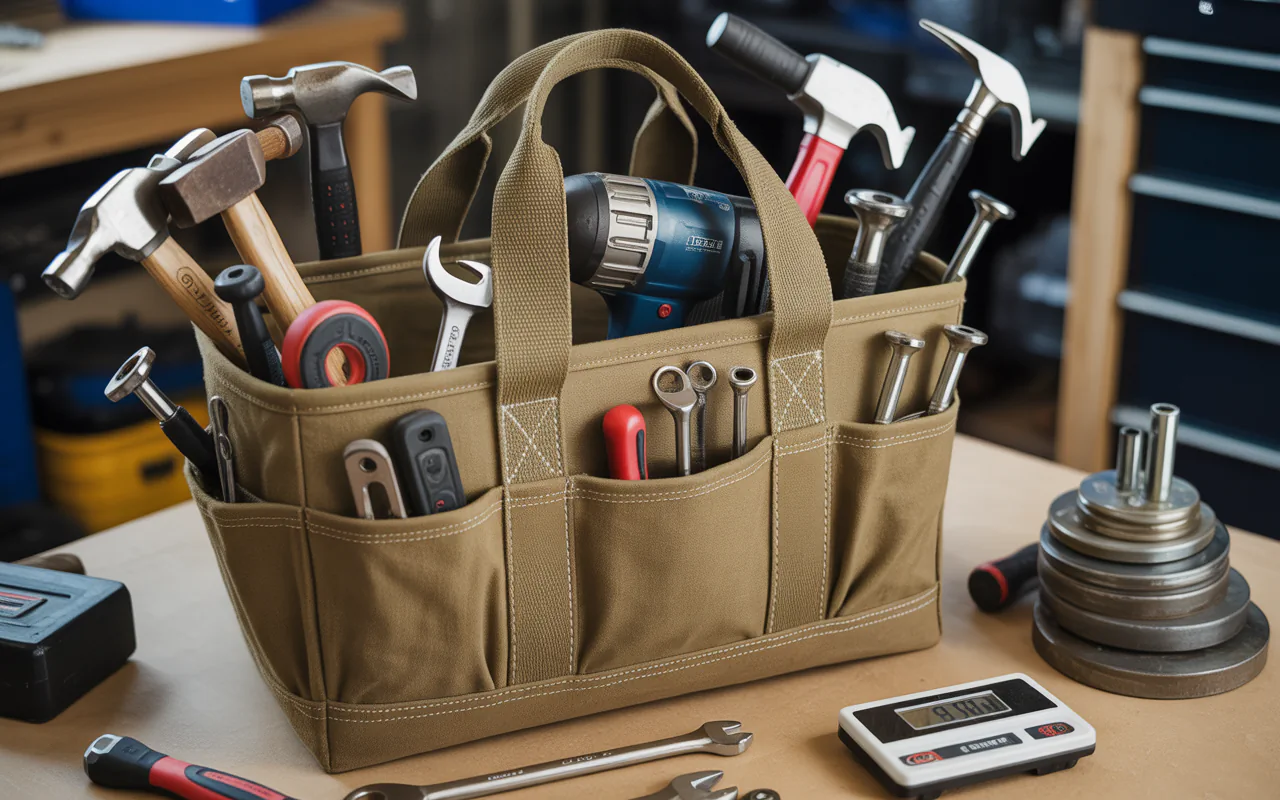
Curious how much weight can a tool bag hold? Typical tool bags hold 20 to 50 pounds. Heavy duty models support 100 pounds or more. Factors like stitching, fabric, and handles matter. Read on to pick the right bag for your tools.
Have you ever picked up your tool bag and felt it might rip any second? Maybe you packed too many hammers or a heavy drill. You are not alone. Many workers ask the same question: How much weight can a tool bag hold? The answer is not the same for every bag. Some are weak. Others are very strong. In this guide, I will help you find the right weight limit for your needs. You will learn about materials, brands, and safety tips. Let us get started.
A good tool bag keeps your gear safe. It also keeps you safe. If a bag breaks, heavy tools can fall on your feet. They can also damage your car or work site. So knowing the weight limit is very important. I have used many tool bags over the years. I learned the hard way that not all bags are equal. One time, I put too many wrenches in a cheap bag. The handle snapped. Tools flew everywhere. That is why I want to share what I know.
What Does “Tool Bag Weight Limit” Mean?
The weight limit is the maximum load a bag can carry without breaking. Bags get tested by makers. They fill the bag with sand or metal weights. Then they see when the seams rip or the handle breaks. That number becomes the limit. But be careful. Some brands guess. Others do real tests. So you should always check the label or product page.
Quote from a professional:
“I always check the stitching before I buy a bag. A good double stitch can add 20 pounds to the limit.”
— Robert Hayes, General Contractor
When you ask how much weight can a tool bag hold, remember that the answer changes based on the bag’s design. A small pouch for screws might hold only 5 pounds. A big electrician’s bag could hold 80 pounds. So first, think about what tools you carry. A hammer weighs about 1 to 2 pounds. A drill with battery weighs 3 to 5 pounds. A set of large pliers is 1 pound. Add these up. If you have ten tools, you might reach 20 pounds fast.
Factors That Affect How Much Your Tool Bag Can Hold
Many things change the weight limit. Let me break them down for you.
1. Material Quality
The fabric makes a big difference. Cheap polyester bags rip easily. Heavy canvas or nylon (like 1680D ballistic nylon) is much stronger. Leather bags are also strong but heavy. Here is a simple table to show you the difference.
| Material Type | Typical Weight Limit | Best For |
|---|---|---|
| Polyester (thin) | 5 to 15 lbs | Light screwdrivers, small parts |
| Cotton canvas | 15 to 30 lbs | Hand tools, wrenches |
| 600D Nylon | 20 to 40 lbs | Drills, small hammers |
| 1680D Ballistic Nylon | 40 to 80 lbs | Heavy power tools, tool sets |
| Full grain leather | 50 to 100+ lbs | Professional daily use |
So when you ask how much weight can a tool bag hold, look at the material label first. A bag made of 1680D nylon will almost always beat a cheap polyester bag.
2. Stitching and Seams
Single stitching is weak. Double or triple stitching is much stronger. Also check the bottom seam. Many bags rip at the bottom because that is where all the weight sits. Look for reinforced corners. Some good brands add a layer of leather or thick fabric on the bottom.
Quote from a repair expert:
“I fix tool bags for a living. Most breaks happen at the handle attachment. If the handle is sewn into a wide strip of webbing, the bag lasts years.”
— Linda Chu, Sewing and Repair Specialist
3. Handle Type and Attachment
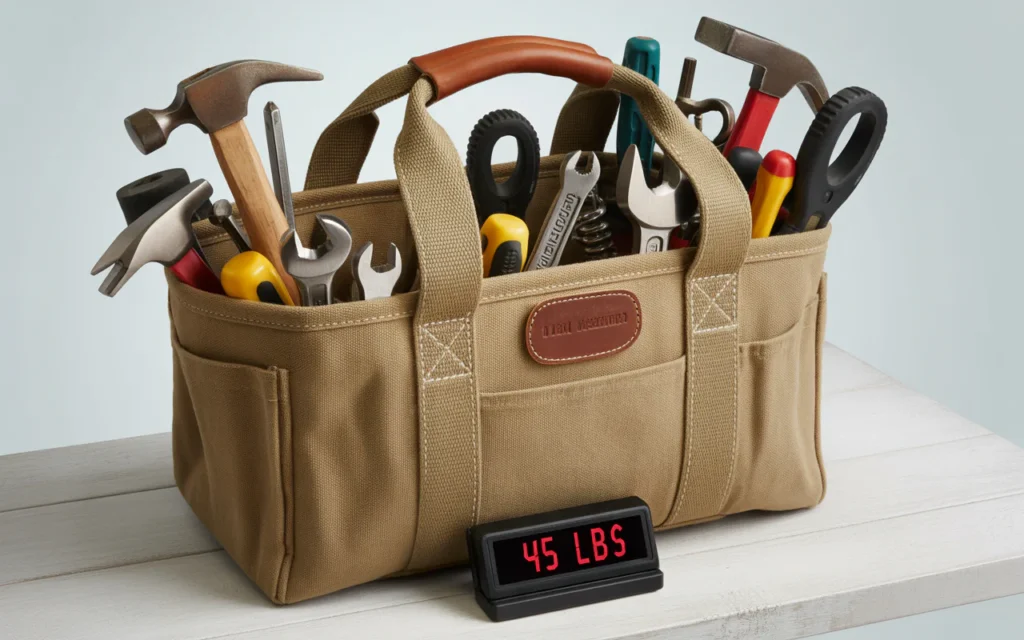
Plastic clips break fast. Metal clips or solid metal D-rings are better. Also look at how the handle attaches to the bag. Is it sewn into a long piece of webbing that wraps around the bottom? That is the strongest design. Some bags have padded handles. That does not add strength but helps your hand feel better.
4. Zippers and Closures
Do not forget the zipper. A heavy bag can pull the zipper apart. Strong zippers from YKK or other good brands hold more weight. Also, bags with a flap over the zipper add extra support.
5. Brand and Price
You get what you pay for. A $10 bag from a discount store might hold 10 pounds. A $60 bag from a tool brand like Klein, Milwaukee, or Veto Pro Pac can hold 100 pounds. Read online reviews. Other workers often share real world tests.
Average Weight Limits for Different Tool Bag Types
Now let me give you clear numbers. This table shows what most bags in each category can hold.
| Tool Bag Type | Average Weight Limit | Common Use |
|---|---|---|
| Small zipper pouch | 5 to 10 lbs | Screwdrivers, bits, small pliers |
| Electrician’s tool pouch | 10 to 25 lbs | Linesman pliers, wire strippers, voltage tester |
| Open top tote bag | 20 to 50 lbs | Hammers, wrenches, tape measure, level |
| Backpack tool bag | 30 to 60 lbs | Drills, impact driver, batteries, hand tools |
| Rolling tool bag | 50 to 100+ lbs | Full set of power tools, heavy parts |
| Professional contractor bag | 80 to 150 lbs | Daily use for framing, electrical, or plumbing |
So if you need to carry a full set of tools for a construction job, get a rolling bag or a heavy contractor bag. For home use, a 20-pound limit tote is fine. Always ask yourself how much weight can a tool bag hold before you buy. Do not guess.
How to Find the Exact Weight Rating of Your Tool Bag
Sometimes the bag does not have a label. The maker might hide the info online. Here is how you find the real limit.
- Check the product tag. Look inside the bag or on the bottom. Many brands sew a small tag with the max load.
- Visit the maker’s website. Search for the model number. Go to the specifications section. It often says “weight capacity” or “load limit.”
- Read customer Q&A. On sites like Amazon or Home Depot, people ask how much weight can a tool bag hold for that exact model. Scroll down to see answers.
- Email the company. If you cannot find it, send a quick message. Good brands reply within a day or two.
- Do a simple test at home. Fill the bag with books or water bottles. Add weight slowly. Lift it. Does it feel weak? Does the bottom sag too much? Stop before it breaks. This test gives you a safe guess.
I suggest you never trust a bag that does not list its limit. That is a red flag. The maker is hiding something.
What Happens When You Overload a Tool Bag?
Overloading is not smart. Here is what can go wrong.
- The handle breaks. You drop the bag. Tools fall out. Some could break.
- Seams rip open. The side or bottom opens. Small parts like screws or drill bits scatter everywhere.
- Zipper splits apart. You cannot close the bag anymore. Tools fall out as you walk.
- The bag loses shape. It becomes a floppy mess. Then it is hard to find tools inside.
- You hurt your back or shoulder. Even if the bag does not break, carrying too much weight can injure you. Doctors say a tool bag should not weigh more than 10% of your body weight for daily carry. For a 200 pound person, that is 20 pounds.
Quote from a safety trainer:
“I see shoulder injuries all the time from overloaded tool bags. People think they are strong. Then one day, they cannot lift their arm. Use a cart or split tools into two bags.”
— David Chen, Workplace Safety Instructor
So knowing how much weight can a tool bag hold protects your tools and your body.
Tips to Safely Load Your Tool Bag Without Breaking It
You want your bag to last for years. Follow these simple rules.
Sort Your Tools by Weight
Put heavy items like hammers and drills in the bottom center. This keeps the bag stable. Light items like tape measures and markers go on top or in side pockets. Do not put all heavy tools on one side. That makes the bag tilt and puts stress on one seam.
Use a Bag with Multiple Compartments
Many pockets spread the weight out. A single open space lets tools pile up on the bottom. That creates a point of high pressure. More pockets mean less shifting. The bag lasts longer.
Do Not Fill Every Pocket
Some people stuff every pocket until the bag looks like a ball. That is too much. Leave some empty space. The fabric needs room to flex.
Check the Bag Every Month
Look at the seams and handle. Do you see loose threads? Is the fabric getting thin at the bottom? Fix small tears before they become big rips. You can sew a patch or add a layer of duct tape for a quick fix.
Know Your Daily Load
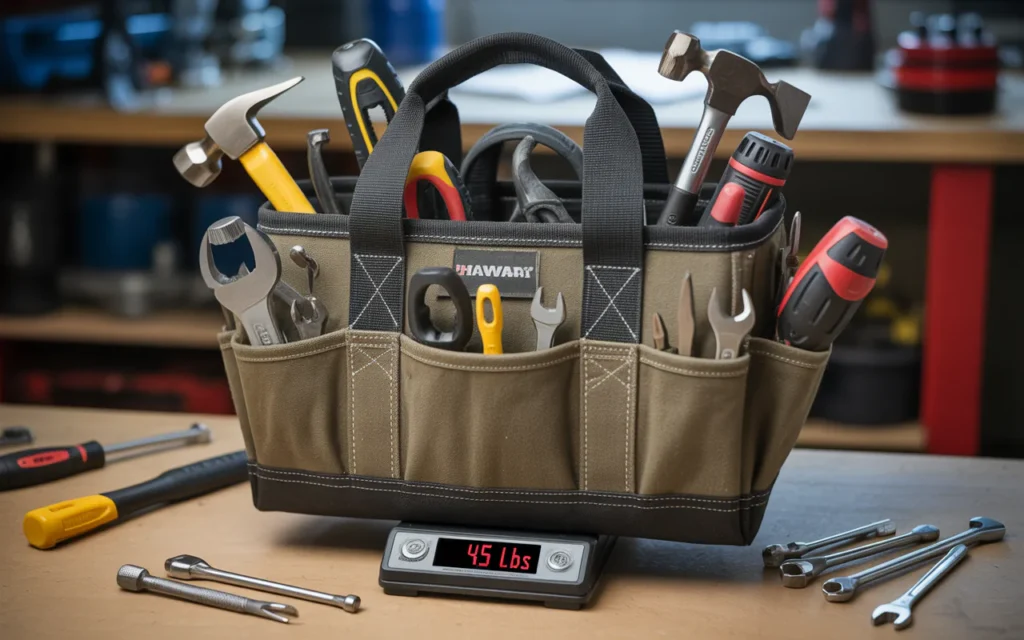
Weigh your bag on a bathroom scale. Stand on the scale with the bag. Then stand without it. The difference is your bag’s weight. If it is close to the limit, remove one or two tools. Put them in a second bag or leave them in your truck.
These tips have saved me many times. I once had a bag rated for 40 pounds. My scale said 38 pounds. I took out a heavy wrench. That small change made the bag feel much safer.
Real Stories from Pros
I asked some workers about their experiences with tool bag weight limits. Here is what they told me.
Maria S., Electrician (10 years experience):
“I use a backpack tool bag. The brand said it holds 50 pounds. I carry about 35 pounds every day. After two years, the zipper broke. But the seams are still fine. I think the real limit for daily use is lower than the test limit. Tests are done once. Daily use wears the bag out.”
Tom R., Plumber (22 years experience):
“I bought a cheap bag from a hardware store. It said 30 pound limit. I put in my pipe wrenches, about 25 pounds. The handle ripped on the first day. Now I only buy Veto bags. They cost more but hold 100 pounds easy. I have had mine for five years.”
Jen L., DIY Homeowner:
“I did not know I had to ask how much weight can a tool bag hold. I just threw all my tools in an old cloth bag. The bottom fell out in my garage. Nails and screws rolled under my car. Now I use a plastic toolbox instead.”
These stories show why you need to pay attention. A good bag is an investment.
Frequently Asked Questions
Q1: Can a tool bag hold 100 pounds?
Yes, some heavy duty bags can hold 100 pounds or more. Look for brands like Veto Pro Pac, Klein Tools, Milwaukee, and CLC. These bags use thick fabric (1680D nylon or leather) and metal handles. But always check the product specs. Do not assume.
Q2: How much weight can a canvas tool bag hold?
A regular canvas tool bag holds 15 to 30 pounds. But heavy canvas (like 24 oz) with leather bottom and double stitching can hold up to 50 pounds. The thickness matters. Thin painter’s canvas is weak. Thick boat canvas is strong.
Q3: Does the shape of the tool bag affect weight limit?
Yes. A wide bottom bag spreads weight better than a narrow one. A tall bag where everything stacks up puts more pressure on the bottom seam. So a short, wide tote can often hold more than a tall bucket style bag. The shape also changes balance. A bag that tips over easily is unsafe.
Q4: How do I know if my tool bag is at its limit?
Watch for these signs. The bottom drags on the ground. The handle feels too tight. The sides bulge out. The zipper is hard to close. The bag is very heavy for you to lift. If you see any of these, remove some tools. Do not wait for a break.
Q5: What is the best way to repair a torn tool bag?
For a small tear, use strong thread and a curved needle. Sew a patch of denim or leather over the tear. For a broken handle, buy replacement webbing from a fabric store. Sew it to the bag with a box stitch pattern. For a ripped zipper, replace the whole zipper or use the bag as an open tote. If the bag is very damaged, buy a new one. Sometimes repairs cost more than a new bag.
Q6: Can I use a tool bag for things other than tools?
Yes, but the weight limit still applies. Some people use tool bags for art supplies, camping gear, or car emergency kits. Just remember to check how much weight can a tool bag hold before you fill it with heavy water bottles or car parts. The bag does not know the difference between a wrench and a can of beans.
Q7: Do rolling tool bags have higher weight limits?
Usually yes. Rolling bags have wheels and a rigid frame. The weight limit is often 80 to 150 pounds. But the handle and wheel axles can still break. So do not exceed the limit. Also, rolling bags are heavier on their own. A 10 pound empty bag cuts into your load.
Q8: Are expensive tool bags worth it for home use?
Not always. If you carry tools once a month for small repairs, a $20 bag with a 25 pound limit is fine. But if you work with tools every day, spend more. A $100 bag that lasts five years is cheaper than buying three $40 bags that break each year. Think about how often you lift the bag.
Conclusion
So how much weight can a tool bag hold? The answer is between 5 and 150 pounds. It all depends on the material, stitching, handle, and brand. A small pouch holds a few pounds. A professional contractor bag holds a full set of heavy tools. The key is to check the label, read reviews, and never guess.
I hope this guide helps you choose the right bag. Remember to weigh your bag at home. Look at the seams every month. Do not overload it. Your back and your tools will thank you. If you have a story about a tool bag that broke or one that lasted forever, ask yourself what you learned. Then share that lesson with a friend. We all get better when we help each other work safely.
Thank you for reading. Now go check your tool bag. Give it a gentle lift. Does it feel too heavy? Maybe it is time to remove a hammer or two. Stay safe out there.
Related posts
 Top Tool Bags for Mobile Contractors: 2026 Buyer Guide
Discover the top tool bags for mobile contractors in 2026. Compare durable totes, backpacks, and multi-pocket organizers to find the best fit for your gear. For…
 Top Tool Bags for Plumbers: 2026 Selection Guide
Discover the top tool bags for plumbers in 2026. We compare durable, multi-pocket storage solutions to help you organize your gear effectively on the job. Plumbing…
 Best Tool Bag for HVAC Technicians in 2026
Find the right tool bag for HVAC technicians with our 2026 guide. Compare top-rated bags, backpacks, and pouches to keep your gear organized and protected. As…