
How To Keep Automotive Tools Rust Free And Organized
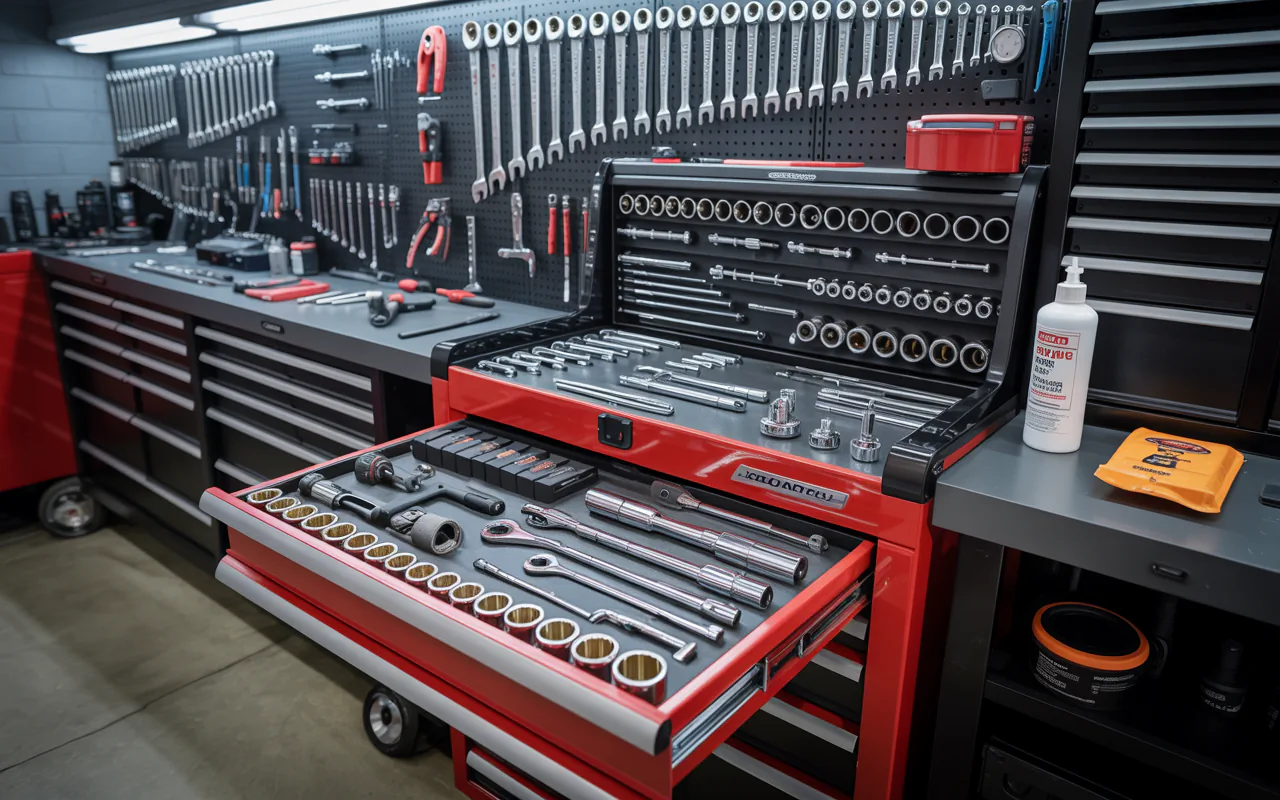
Learn how to keep automotive tools rust free and organized with simple daily habits, proper storage, and low cost rust prevention methods that actually work for any garage.
If you work on cars, trucks, or motorcycles, you know the feeling. You open your toolbox, and instead of shiny, ready to use tools, you see brown spots. Rust. It is a slow destroyer of sockets, wrenches, ratchets, and pliers. Worse than rust is the mess. You spend ten minutes searching for a 10mm socket that has rolled under a rag. Frustrating, right?
I have been there. My first tool set looked awful after one humid summer. But over the years, I learned simple, practical ways to keep automotive tools rust free and organized without spending a fortune. This guide shares those real world methods. No fancy jargon. Just honest advice from someone who uses tools every week.
Let me start with a truth from a professional.
“A rusty tool is a dangerous tool. It slips, it breaks, and it ruins your work. Keep your tools clean, and they will keep you safe.” – Sam Peterson, Auto Shop Owner (25 years experience)
That quote hits the main point. Rust is not just ugly. It makes tools weak. A rusted wrench can snap under pressure. An organized toolbox saves time and money. So let us fix both problems together.
Why Rust Attacks Your Automotive Tools
Rust happens when iron meets oxygen and water. Your garage air has moisture. Even on a dry day, humidity sits around. After you work on a hot engine, condensation forms on cold metal tools. Sweat from your hands leaves salt. Spilled brake fluid, coolant, or even water from a pressure washer speeds up rust.
Automotive tools face more abuse than regular home tools. They touch oil, grease, battery acid, and road salt. If you live near the coast, salty air makes rust worse. So the first step to keep automotive tools rust free and organized is understanding your enemy. The enemy is moisture, dirt, and neglect.
Common Rust Spots in Your Tool Collection
| Tool Type | Why It Rusts Fast | Early Warning Sign |
|---|---|---|
| Sockets (chrome) | Chrome chips, exposes bare steel | Tiny brown dots inside the square drive |
| Pliers (joint area) | Moisture trapped in pivot point | Stiff movement, orange dust around rivet |
| Screwdrivers (tips) | Touches acidic liquids | Black or brown discoloration on tip |
| Ratchets (inside) | Grease dries out, moisture enters | Gritty feeling when turning |
Step 1: Clean Tools Before Storage (No Exceptions)
This is rule number one. Never put away dirty tools. Grease and dirt trap moisture against the metal. I learned this after leaving oily rags on my wrenches for two weeks. The result was a mess of rust spots.
After every repair job, wipe each tool with a dry cotton cloth. For sticky grease, use a rag with a little mineral spirits or simple degreaser. Let the tool air dry for two minutes. Then give it a light wipe with an oily rag. You do not need special oil. A drop of motor oil on a cloth works fine.
Here is a simple routine:
- Wipe off mud, grease, or brake dust.
- Spray with quick detailer or WD-40 (light coat).
- Wipe again until the tool feels smooth, not wet.
- Air dry on a towel for five minutes.
Do this every time. It takes thirty seconds per tool. That small effort will help you keep automotive tools rust free and organized for decades.
“I have wrenches from 1987 that look new. The secret? Wipe them before they go back in the box. Every single time.” – Martha Reyes, Classic Car Restorer
Step 2: Control Moisture in Your Tool Storage
You can clean tools perfectly, but if you put them in a damp box, rust will return. Moisture control is half the battle. Many people ignore their toolbox environment. Do not be that person.
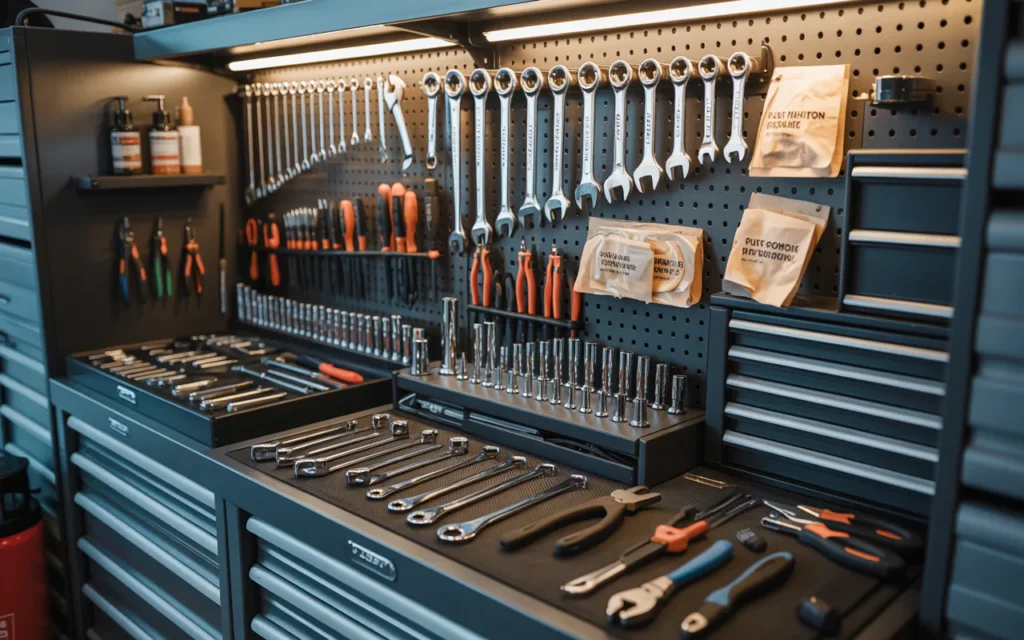
Use Desiccants and Vapor Corrosion Inhibitors (VCI)
Silica gel packs are your cheap friends. Save the little packets from shoe boxes or electronics. Put two or three packs in each drawer. When they change color (usually from orange to green or blue to pink), dry them in the oven at 200°F for two hours.
Better yet, buy reusable desiccant cans from a gun store. They last years. Place one in your main tool chest and one in your portable tool bag.
VCI emitter tabs are another option. These small discs release a vapor that settles on metal and blocks rust. No smell, no mess. Drop one in each drawer every six months.
Avoid Foam Liners That Hold Moisture
Many toolboxes come with foam liners. Cheap foam soaks up water like a sponge. If you spill water or live in high humidity, that foam stays wet for days. Your tools sitting on wet foam will rust overnight.
Instead, use:
- Perforated anti fatigue mat (holes let air flow)
- Rubber mesh mat (water falls through)
- Corrugated plastic board (no absorption)
- Thin cork sheets (natural moisture wicking)
I switched to cork sheets three years ago. Best decision. My drawer bottoms stay dry, and tools do not slide around.
Step 3: Organize by Frequency of Use
Organization and rust prevention work together. When tools are piled on top of each other, they trap moisture. They also scratch each other. Scratches remove chrome or coating, exposing bare steel to rust.
A well organized drawer lets air circulate. Each tool has its place. You see missing tools fast. You also clean faster because nothing is buried.
Here is a simple organization method.
Drawer Layout Table (Top to Bottom in a 7 Drawer Chest)
| Drawer Position | What Goes There | Organization Tool |
|---|---|---|
| Top shallow | Screwdrivers, picks, small wrenches | Magnetic strip or flat foam cutouts |
| Second shallow | Sockets (1/4″ drive), bits, hex keys | Socket rails with clips |
| Third medium | Combination wrenches (metric) | Wrench rolls or peg style holders |
| Fourth medium | Combination wrenches (SAE) | Same as above, color coded |
| Fifth deep | Pliers, cutters, adjustable wrenches | Vertical pliers racks |
| Sixth deep | Ratchets, torque wrenches, breaker bars | Hanging hooks or foam slots |
| Bottom deepest | Hammers, pry bars, specialty tools | Loose but separated by plastic dividers |
Notice no tool touches another. That is the goal. When you keep automotive tools rust free and organized, you separate them physically. Use plastic socket rails, magnetic strips, or even simple cardboard dividers (replace monthly).
Step 4: Choose the Right Rust Prevention Products
You do not need expensive products. Many garage items work perfectly. But some commercial products are worth the money. Let me break down what I actually use.
Everyday Rust Preventives (Cheap and Effective)
- WD-40 – Good for cleaning and short term protection (2 to 3 weeks). Not for long storage.
- Motor oil (5W-30 or 10W-40) – Wipe a thin film. Excellent protection. Smells like a garage.
- Vaseline or petroleum jelly – Great for pliers joints and ratchet internals. Stays put.
- Boiled linseed oil – Wipe on, let dry for one hour. Forms a polymer layer. Works for months.
Commercial Products Worth Buying
- Fluid Film – Lanolin based. Smells like sheep wool. Stops rust for six months. My top pick.
- Boeshield T-9 – Wax based. Dries to a clear film. Great for tools you store long term.
- CRC 3-36 – Thin, penetrates tight spots. Leaves no sticky residue.
- Ballistol – Non toxic, smells like licorice. Safe for skin and plastic handles.
Apply any of these once every two to three months if you use tools weekly. For tools stored in a garage without climate control, apply every six weeks.
“I tested ten rust preventives on bare steel plates left outside for a year. Fluid Film and Boeshield won. Cheap motor oil came third.” – James “The Tool Guy” Henderson, YouTube Tool Tester
Step 5: Smart Storage Solutions for Different Spaces
Not everyone has a big garage. Some people work in a shed, a basement, or even an apartment parking spot. Your storage must match your space.
For a Humid Garage (Most Common)
Get a dehumidifier. A small 30 pint unit runs for pennies a day. Set it to 45% humidity. Your tools will thank you. Also hang a moisture absorbing bucket (DampRid) inside your toolbox.
Keep your toolbox off the concrete floor. Concrete sweats. Use a pallet, rubber mats, or furniture risers to lift the chest two inches up.
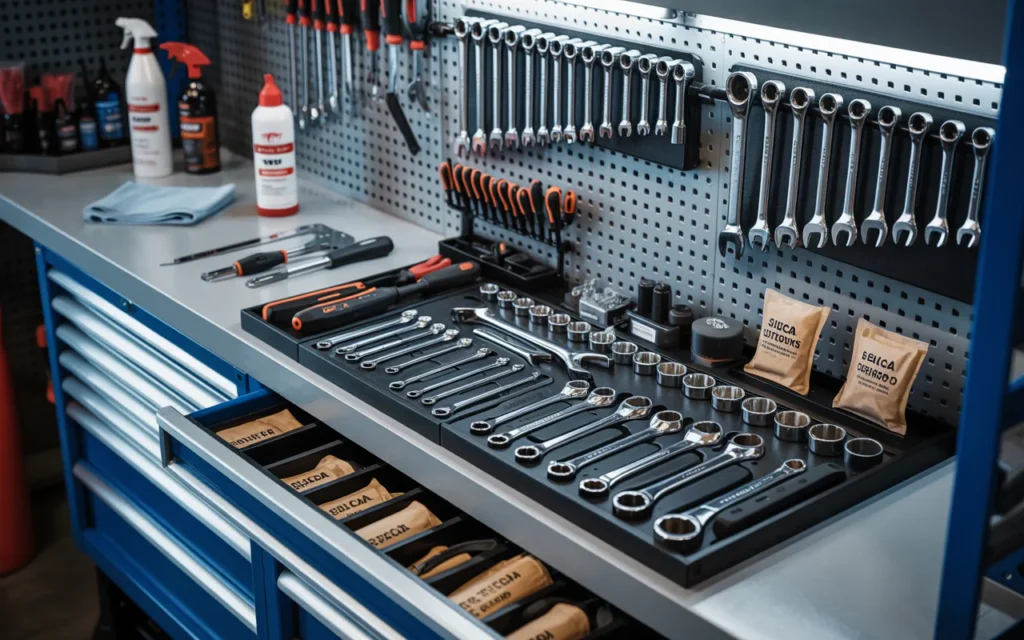
For a Portable Tool Bag (Mechanics on the go)
Tool bags trap moisture because fabric does not breathe. To keep automotive tools rust free and organized in a bag:
- Line the bottom with a VCI bag cut to size.
- Put a small desiccant pack in each pocket.
- Wipe every tool before it goes back in.
- Do not leave the bag in a car trunk overnight. Trunks get hot and humid.
For a Small Apartment Workshop
Use a plastic tool chest. Metal boxes rust from outside in if your apartment has humidity. Plastic boxes never rust. Add a rechargeable dehumidifier rod (Goldenrod brand) inside the chest. These rods warm the air slightly, stopping condensation.
Step 6: Daily and Weekly Habits That Work
Rust prevention is not a one time thing. It is a habit. But do not worry. These habits take almost no time.
After Each Use (30 seconds)
- Wipe the tool with a dry rag.
- Check for wet spots or dirt.
- Return tool to its exact spot.
Every Friday (5 minutes)
- Open all toolbox drawers.
- Spray a light mist of CRC 3-36 or WD-40 into each drawer (just a quick spray in the air).
- Close drawers. The vapor settles on tools.
- Check desiccant packs. Recharge if needed.
Every Season (15 minutes)
- Remove all tools from one drawer at a time.
- Wipe drawer liner with isopropyl alcohol (removes moisture and mold).
- Inspect each tool for early rust spots.
- Treat any rust with a brass brush (soft) and light oil.
- Reorganize if tools have shifted.
These small steps add up. After six months, you will notice zero new rust. Your tools will slide out smoothly. You will find what you need in seconds.
Frequently Asked Questions (FAQ)
1. Can I store automotive tools in a cold garage?
Yes, but cold alone does not cause rust. Condensation causes rust. When cold tools warm up, water forms on them. Keep your toolbox closed. Use a Goldenrod dehumidifier rod. Wipe tools before putting them away.
2. What is the fastest way to remove rust from old tools?
Soak in white vinegar for 12 to 24 hours. Scrub with a brass brush. Rinse with water. Dry immediately. Then oil the tool. For heavy rust, use Evapo Rust (non toxic, reusable).
3. Is WD-40 good for long term rust protection?
No. WD-40 is a solvent and water displacer. It protects for about two weeks. For long term, use Fluid Film, Boeshield T-9, or motor oil.
4. How do I keep my automotive tools rust free and organized if I work outdoors?
Use a sealed plastic tool box with a rubber gasket. Add VCI emitters. Wipe tools twice (before and after use). Keep the box under a shade or cover. Never leave tools on the ground overnight.
5. Should I use paper or fabric tool rolls?
Fabric rolls are fine if you oil tools lightly before rolling. Paper rolls absorb moisture and fall apart. Waxed canvas rolls are best. They repel water and stay stiff.
6. Does chrome plating stop rust completely?
No. Chrome is porous. Tiny pinholes let moisture reach the steel underneath. Once chrome chips, rust starts. Always oil chrome tools lightly.
7. Can I use rice as a desiccant in my toolbox?
No. Rice leaves dust and starch. It can attract bugs. Use proper silica gel or clay desiccant packs. They cost very little online.
8. How often should I reorganize my tool drawers?
Twice a year is enough. Do it when you change your car’s oil (easy to remember). Reorganizing helps you spot rust early and remove tools you never use.
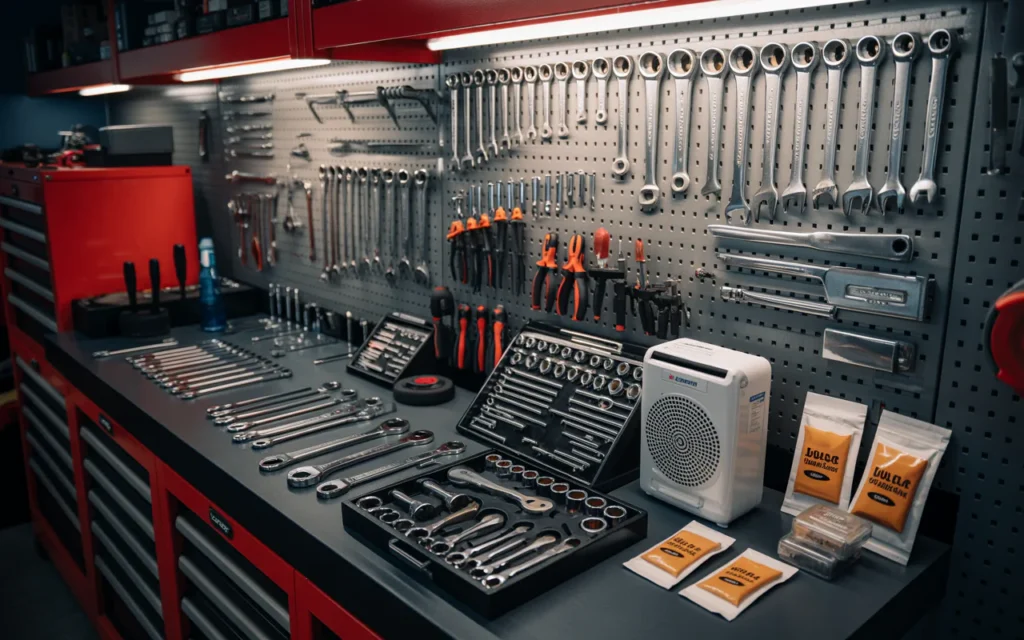
Quick Reference: Rust Prevention Methods
| Method | Cost | Protection Length | Best For |
|---|---|---|---|
| Wipe with motor oil | Free (scrap oil) | 1 to 2 months | Daily use tools |
| Fluid Film spray | $10 per can | 6 months | Humid garages |
| Silica gel packs | $5 for 50 packs | 1 month (reusable) | Closed toolboxes |
| VCI emitter tabs | $12 for 4 tabs | 12 months | Long term storage |
| Dehumidifier (garage) | $150 one time | Ongoing | Whole workshop |
Conclusion
You now have a clear, simple plan to keep automotive tools rust free and organized. Start with cleaning after every use. That is the most important habit. Then control moisture in your toolbox with desiccants or a dehumidifier. Organize your drawers so tools do not touch each other. Pick a rust preventive that fits your budget and apply it on a schedule.
Remember, you do not need a perfect, expensive garage. I have seen amazing tool collections in small sheds. The difference between rusty tools and clean tools is not money. It is consistency. Five minutes of care per week saves you hundreds of dollars in replacement tools.
Take action today. Open your toolbox. Pick three wrenches. Clean them. Oil them lightly. Put them back in their own spots. Feel how good that is. Then do the rest tomorrow. Your future self, working on a Saturday car repair, will thank you when every socket shines and every wrench is exactly where you left it.
Now go protect your tools. They work hard for you. Return the favor.
Related posts
 Top Starter Mechanic Tool Kits for Apprentices: Essential Sets for Your Trade
Explore top starter mechanic tool kits for apprentices. Compare sets for mechanics, electricians, and other trades to find your essential tools. Starting an apprenticeship is an…
 Automotive Tool Kits vs. Mechanic Tool Sets: What’s the Difference?
Understand the key differences between automotive tool kits vs. mechanic tool sets. Learn which is best for your car maintenance needs. When looking for tools to…
 Top Automotive Tool Kits for Garage Workshops: A Buyer’s Guide
Find the top automotive tool kits for garage workshop. Compare versatile sets for car maintenance, home repairs, and DIY projects to choose the best fit. Setting…