
How To Choose A Multi Tool Kit For Electricians
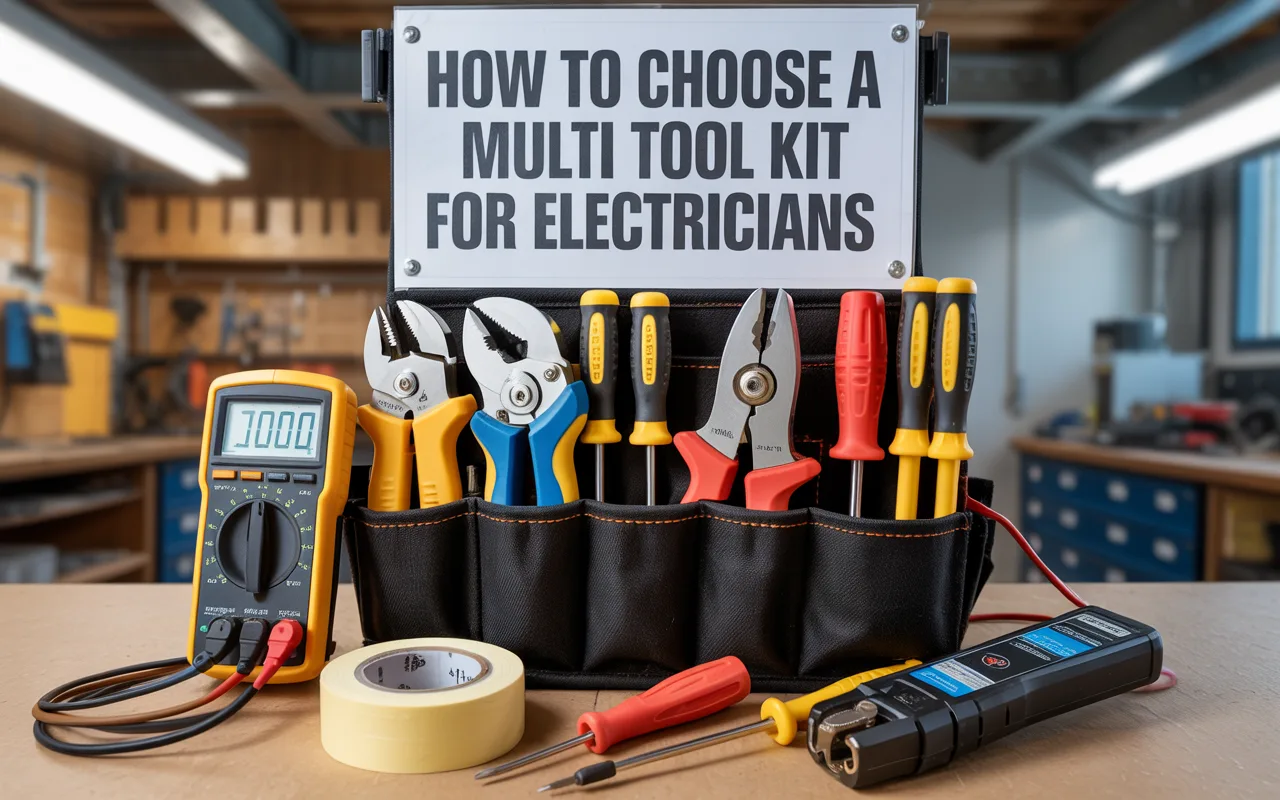
If you are an apprentice or a pro, knowing how to choose a multi tool kit for electricians saves time and money. This guide covers essential pliers, testers, and storage to get the job done right.
Walking onto a job site with the wrong tools is a bad feeling. You either spend the first hour borrowing gear or running to the supply house. For electricians, having the right tools close at hand is not just about convenience. It is about safety and efficiency. When you need to strip wire, cut conduit, or test voltage, you want the tool in your pocket or your pouch, not buried in a truck.
This is why learning how to choose a multi tool kit for electricians is such a big deal. A good kit does more than hold screwdrivers. It gives you confidence. You know you have the right size wire stripper for the job. You know your voltage tester is within reach. In this article, I will walk you through what to look for, what brands stand up to daily use, and how to avoid buying a kit that looks good in the store but falls apart in the field.
I have been around electrical work long enough to know that tools are an investment. You do not need the most expensive items on the shelf, but you need tools that fit your hands and handle the work you do. Whether you are doing residential service calls, commercial rough-ins, or industrial maintenance, your kit needs to match your specific tasks. Let us break it down so you can make a smart choice.
Why a Dedicated Kit Matters for Electricians
General tool kits are fine for home repairs, but they fall short for electrical work. Electricians need tools with specific insulation ratings, precise jaw shapes, and slim profiles to fit into tight electrical boxes. A standard multi tool set from a big box store might include a hammer and a tape measure, but it will likely lack the essential items like a non-contact voltage tester or a good pair of lineman’s pliers.
When you choose a multi tool kit for electricians, you are looking for a curated set. Manufacturers who specialize in electrical tools understand the workflow. They know that an electrician needs to cut, strip, twist, and test in a sequence. A well-designed kit groups these tools together. It saves you the time of hunting down individual pieces. It also ensures that the tools are compatible in terms of quality and durability. You do not want a cheap screwdriver snapping off inside a live panel because you tried to save a few dollars.
Key Factors to Consider When You Choose a Multi Tool Kit for Electricians
Before you buy, take a moment to think about your daily tasks. An electrician doing new construction has different needs than one doing service work. However, there are core factors that apply to everyone.
1. Tool Quality and Material
Look for tools made from high-carbon steel or chrome vanadium. These materials resist rust and stay sharp. Handles matter just as much. You want grips that are comfortable but also provide insulation. Many professional kits include tools with dual-layer grips that offer some protection against accidental contact. While you should always de-energize circuits, having tools rated for insulation adds a layer of safety.
2. Portability and Storage
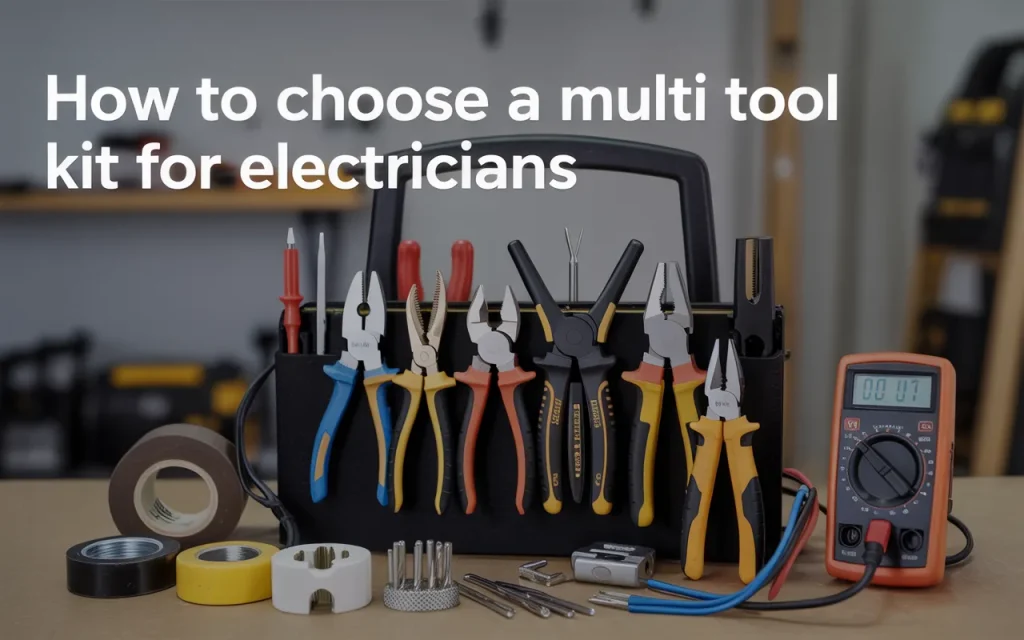
A kit is only useful if you can carry it. Some kits come in hard plastic cases with custom slots. Others come in heavy-duty canvas pouches or bags. Think about how you move around a job site. Do you prefer a tool belt with a pouch? Or do you like a small bag you can grab and go? A good kit should protect your tools from moisture and impact. If the case is flimsy or the zipper breaks, the kit becomes a liability.
3. Variety of Pliers and Cutters
Pliers are the backbone of an electrician’s toolkit. You need at least three types. Lineman’s pliers are for twisting wires and cutting. Needle-nose pliers help you work in tight spaces. Diagonal cutting pliers, or dikes, are for cutting wires flush. A quality kit will include all three. Check the joint of the pliers. It should move smoothly without being loose. The cutting edges should meet evenly.
4. Screwdrivers and Nut Drivers
Electrical work involves many different screw types. You need Phillips, slotted, and often square-drive (Robertson) or Torx. A good kit will include insulated screwdrivers or at least high-quality ones with magnetic tips. Nut drivers are also essential for working with conduit fittings and panel covers. Look for a kit that includes a few common sizes like 1/4-inch, 5/16-inch, and 3/8-inch.
5. Test and Measurement Tools
No electrician should work without a way to verify that circuits are dead. A non-contact voltage tester is a must. Many kits include one. Some higher-end kits also include a multimeter. When you choose a multi tool kit for electricians, check if it includes testing tools. If it does not, you will need to add them separately, which adds to your total cost.
6. Wire Strippers
Wire strippers vary widely. Some are simple, like a standard stripper with pre-sized holes. Others are self-adjusting or have built-in cutters and crimpers. Consider the gauge of wire you work with most often. If you do residential work, you need a stripper that handles 12 and 14 AWG wire. If you do commercial work, you may need one that goes down to 22 AWG.
Comparison of Common Kit Types
To help you narrow down your options, here is a simple table showing the different types of multi-tool kits available for electricians.
| Kit Type | Best For | Typical Contents |
|---|---|---|
| Basic Pouch Kit | Apprentices, home use, light maintenance | 4-6 screwdrivers, wire strippers, linesman pliers, voltage tester |
| Full-Size Tool Bag Kit | Journeyman electricians, new construction | 10+ tools including pliers, nut drivers, hacksaw frame, level, tape measure, multiple testers |
| Insulated Tool Kit | Live work (with proper safety procedures), industrial electricians | VDE-certified insulated screwdrivers, pliers, and cutters rated for 1000V |
| Compact Travel Kit | Service technicians, troubleshooting | Small pouch with basic pliers, strippers, screwdriver set, and a non-contact tester |
Top Features to Look for in Individual Tools
Once you decide on the type of kit, you need to examine the individual tools inside. A kit is only as good as its weakest tool. Here are features I look for in the key pieces.
Lineman’s Pliers
These are the workhorse. They should have a crimping die behind the pivot. The cutting edge should be induction-hardened. This keeps the edge sharp even after cutting many wires. The grip should be comfortable for long periods. Some brands offer high-leverage designs that reduce the effort needed to cut thick cables.
Wire Strippers
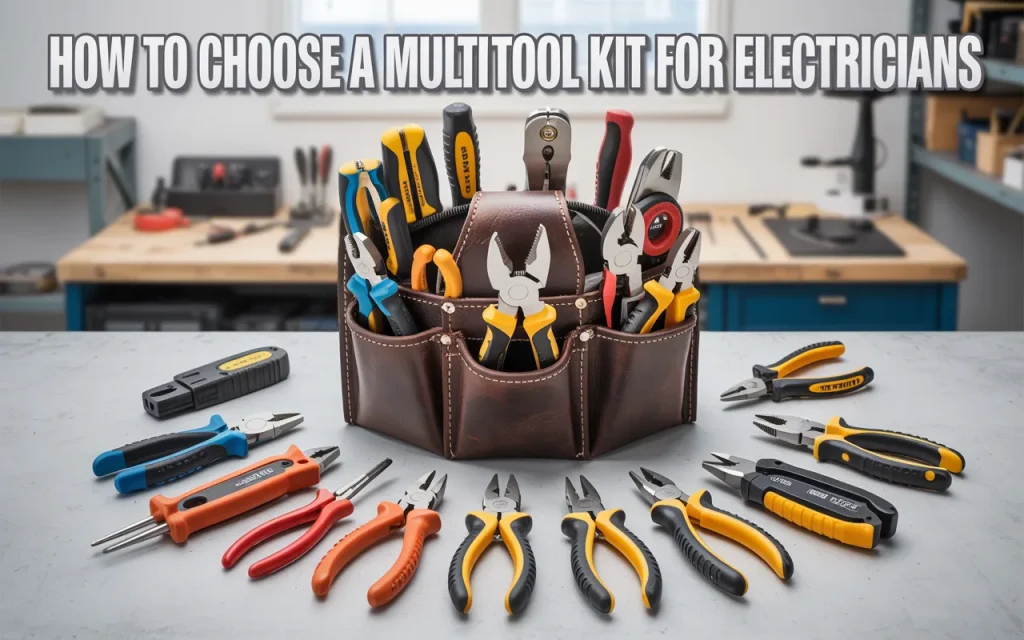
I prefer wire strippers with a spring-loaded action and a locking mechanism. The spring helps reduce hand fatigue. The lock keeps them closed in your pouch. Look for clearly marked gauge sizes. Some strippers also have a built-in plier nose and screw shearing holes. That added versatility is helpful when you are working on a ladder and do not want to switch tools.
Screwdrivers
The handles should fit your grip. If the handles are too small or too large, you will struggle with torque. I look for handles that are oil and solvent resistant. In electrical work, you often handle wire pulling lubricant and other chemicals that can degrade cheap rubber. The tips should be precision-machined to fit screws tightly. A loose-fitting screwdriver strips screws and damages equipment.
Voltage Tester
A non-contact voltage tester is a lifesaver. It should have a bright LED light and an audible beep. Some models have a built-in flashlight, which is excellent for working in dark panels or attics. Always test the tester on a known live circuit before trusting it. A kit that includes a reliable tester is worth the extra cost.
How to Match the Kit to Your Work Environment
Every job site is different. Your work environment plays a big role in how you choose a multi tool kit for electricians. Let us look at three common settings.
Residential Electricians: You work in attics, crawlspaces, and finished homes. You need a kit that is portable and has a small footprint. A bag that is too large gets stuck in tight spaces. Focus on a pouch kit with a good selection of pliers and strippers. You will also need a drywall saw and a level, which are often not included in smaller kits.
Commercial Electricians: You work in conduit systems and drop ceilings. You need nut drivers for beam clamps and strut straps. You also need a larger variety of screwdrivers, including flatheads for large terminal lugs. A tool bag with multiple pockets works well because it allows you to organize different types of fasteners and connectors alongside your tools.
Industrial Electricians: You work with high voltages and complex control systems. You need insulated tools. Safety is the top priority. When you choose a multi tool kit for electricians in an industrial setting, look for VDE certification. These tools are tested to 10,000 volts. You also need a quality multimeter and possibly a clamp meter.
“The difference between a good electrician and a great one is often just the tools they keep on their belt. If you have to walk back to the truck for every little thing, you lose time and focus.” – Mike Holt, Electrical Educator and Author
Budget vs. Long-Term Value
It is tempting to buy the cheapest kit. I understand that when you are starting out, money is tight. However, tools are how you make a living. Cheap tools break. They round off screws. They slip and cause injuries. I suggest looking at mid-range professional brands. They cost more upfront but last years longer.
When you evaluate a kit, look at the warranty. Many professional tool brands offer a lifetime warranty. If a tool breaks under normal use, you can replace it. This is a huge benefit. You are not just buying tools. You are buying peace of mind. Also, consider whether you can replace individual tools in the kit. If the kit uses proprietary designs, you may have trouble finding a replacement if one tool gets lost.
Here is a quick breakdown of what to expect at different price points.
| Price Range | Quality Level | Typical Lifespan | Warranty |
|---|---|---|---|
| Under $50 | Entry-level, good for home use or students | 1-2 years with light use | Usually limited |
| $50 – $150 | Professional mid-range, durable materials | 3-5 years with daily use | Often limited or no hassle |
| Over $150 | Premium professional, insulated options, ergonomic designs | 5-10+ years | Often lifetime |
The Importance of Ergonomics and Fit
I have spent many long days with a screwdriver in my hand. When the handle is poorly shaped, your hand starts to cramp by noon. Ergonomics is not a luxury. It is a necessity for staying healthy in this trade. When you choose a multi tool kit for electricians, pay attention to the handle shapes.
Some brands use soft-grip materials that absorb shock and reduce pressure points. Others use hard handles with textured grips. Neither is wrong. It depends on your preference. If possible, hold the tools before buying. See how they feel. If you are ordering online, look for reviews that mention hand fatigue. Electricians often leave reviews that talk about how tools feel after a full day of work.
The weight of the kit also matters. A heavy bag strains your shoulders and back. Look for a kit that balances durability with weight. You want strong tools, but you do not want to carry a bag that feels like a bucket of concrete.
“I tell my apprentices to buy the best tool bag they can afford and then fill it slowly. A heavy bag will make you hate the job before you even start working.” – Tom Henry, Master Electrician and Author
How to Organize Your Kit for Maximum Efficiency
Once you have the kit, organization is key. A messy bag slows you down. I use a simple system. The tools I use most often go in the front pockets or in a separate pouch on my belt. Less frequently used items stay in the main compartment.
Many kits come with molded cases. These are great for keeping tools organized, but they take up space. If you work out of a van or truck, a hard case works fine. If you carry your tools onto a job site, a soft bag is easier to manage. Some electricians prefer a hybrid approach. They have a large bag for the truck and a small pouch for the tools they carry on their person.
Labeling your tools is also a good idea. On busy job sites, tools get mixed up. A bit of colored tape or engraving helps you spot your tools quickly. It also discourages them from walking off.
Common Mistakes to Avoid When Buying a Kit
I have made mistakes buying tools, and I have seen others make them too. Here are a few pitfalls to avoid.
Buying a kit with too many filler tools. Some manufacturers add cheap tools to make the count look high. You might get a pair of scissors or a cheap wood saw that you will never use. Focus on the core tools. If half the kit is filler, keep looking.
Ignoring insulation ratings. If you ever work near live circuits, you need insulated tools. Do not assume that a black handle means insulated. Look for the official VDE or IEC 60900 rating.
Forgetting about storage space. The kit might have great tools, but if the case is bulky, you will hate carrying it. Think about where you will store the kit in your vehicle and how you will carry it on the job.
Not checking the warranty. Before you buy, read the warranty details. Some brands require you to mail in the tool with a receipt. Others allow you to swap it out at a local distributor. Know what you are getting into.
“Your tools are your partners. They need to be reliable because when you are 30 feet in the air on a lift, you cannot afford a tool failure.” – James Stallcup, Electrical Code Expert
Maintaining Your Multi Tool Kit
Tools last longer when you care for them. After a day in the rain, dry your tools before putting them away. If you work in coastal areas or humid environments, a light coat of oil on the plier joints prevents rust.
Keep cutting edges sharp. Dull cutters crush wire instead of cutting it cleanly. That leads to nicked conductors and poor connections. Some tool manufacturers offer sharpening services, but you can also use a fine file to maintain the edge.
Check your voltage tester regularly. Batteries die. Testers fail. A quick test on a known live source takes two seconds and can save your life. If the tester does not work properly, replace it immediately.
Frequently Asked Questions
What is the most important tool in an electrician’s multi tool kit?
The most important tool is often the non-contact voltage tester. It is your first line of defense against live circuits. Next to that, a good pair of lineman’s pliers and wire strippers form the core of most electrical work.
How many tools should a basic electrician kit have?
A good starter kit usually has between 8 and 12 tools. This includes screwdrivers, pliers, wire strippers, a voltage tester, and a level. As you gain experience, you will add specialized tools based on your work.
Are insulated tools necessary if I always turn off the power?
Yes. Even when you turn off a breaker, you cannot always be sure the circuit is dead. Someone could turn it back on, or there could be a second feed. Insulated tools provide a critical layer of protection against accidental contact.
Can I use a general mechanic’s tool set for electrical work?
You can, but it is not ideal. Mechanic’s tools are often not insulated. They also lack the specific wire strippers and voltage testers that electricians need. It is better to choose a multi tool kit for electricians specifically designed for the trade.
How often should I replace my tools?
Replace tools when they show signs of wear. If plier joints become loose or cutting edges become dull, replace them. Voltage testers should be tested daily and replaced if they fail. Screwdrivers with worn tips should be replaced to prevent damaging equipment.
Conclusion
Choosing the right tools is a personal decision. There is no single kit that works for every electrician. Your specific work, your budget, and your physical preferences all play a part. The key is to focus on quality, safety, and efficiency. When you choose a multi tool kit for electricians, look for durable materials, comfortable grips, and the essential tools for your specific tasks. Do not be swayed by high tool counts or low prices if the quality is not there.
Invest in tools that will last. Take care of them. Organize them so you can work quickly and safely. Your tools are an extension of your skills. With the right kit in your hands, every job becomes easier. You spend less time searching for tools and more time doing quality work. Whether you are just starting your apprenticeship or you are a seasoned journeyman, the right multi tool kit makes all the difference in your day-to-day work. Take your time, do your research, and choose a kit that fits you. You will thank yourself every time you open your bag and find exactly what you need.
Related posts
 Top Tool Bags for Apprentices and Trainees in 2026
Discover the top tool bags for apprentices and trainees in 2026. Compare durable, portable, and organized storage solutions to keep your gear ready for the job.…
 Top Tool Bags for DIY Homeowners in 2026
Discover the top tool bags for DIY homeowners in 2026. Compare durable organizers, backpacks, and storage solutions to keep your home repair gear ready. Keeping your…
 Top Tool Bags for Apprentices and Trainees 2026
Discover the top tool bags for apprentices and trainees in 2026. Compare durable, portable, and organized storage solutions to help you start your trade right. Starting…