
How To Choose A Multi Tool Kit For Survival
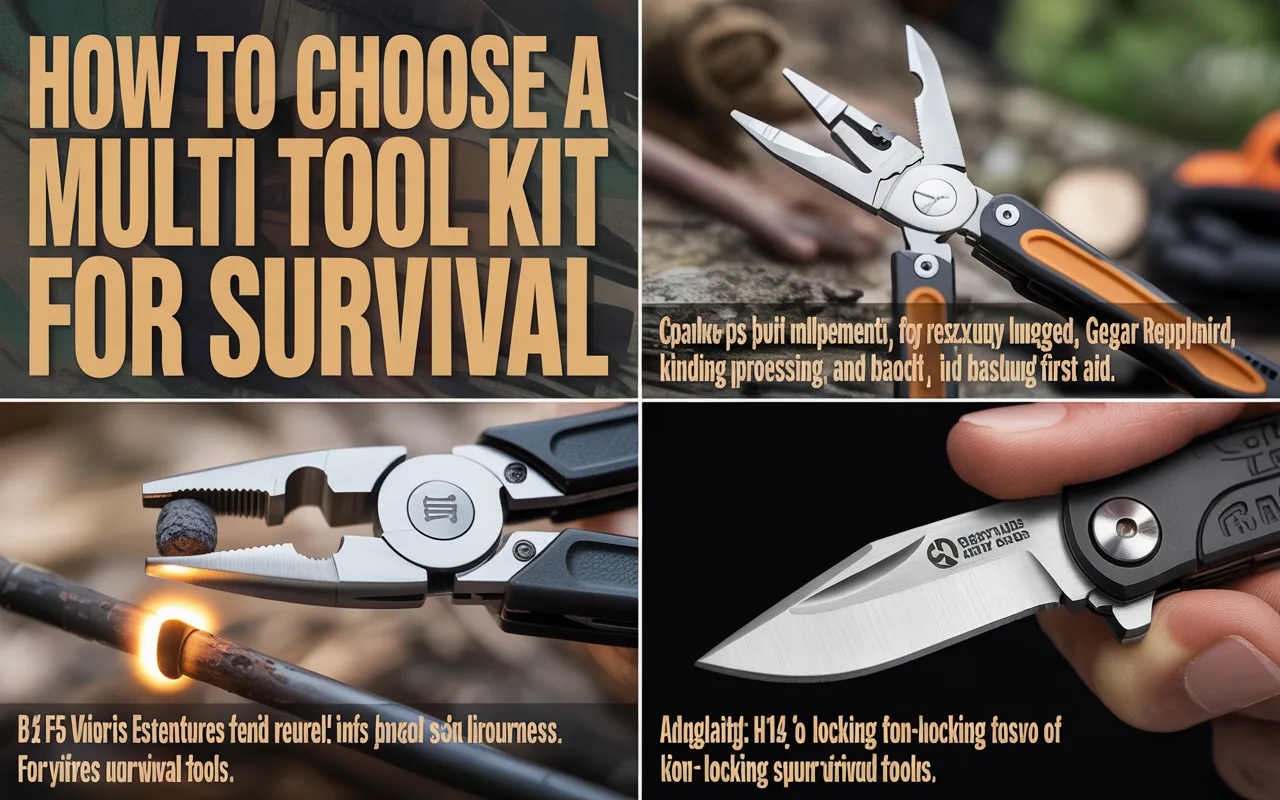
If you want to choose a multi tool kit for survival that actually performs when it matters, focus on build quality, tool selection, and ease of access. This guide breaks down the specific features that separate reliable gear from useless pocket clutter.
When you are out in the woods or facing an unexpected breakdown, having the right tool on your hip can mean the difference between a minor inconvenience and a serious problem. I have spent a lot of time testing gear in the backcountry, and I can tell you that not all multi-tools are created equal. If you want to choose a multi tool kit for survival, you need to look past the shiny marketing and focus on what actually works when your hands are cold, wet, and tired. A survival situation is not the time to discover that your pliers are flimsy or that the screwdriver bit snapped on the first try.
I remember a trip a few years ago where my buddy brought a cheap multi-tool he got as a gift. The first time he tried to cut a piece of paracord, the blade folded on his finger. That was a wake-up call for all of us. After that day, I made it my mission to understand exactly what separates a reliable tool from a paperweight. This guide is built on that experience, combined with feedback from search and rescue friends and professional guides who use these tools daily. The goal is simple: help you choose a multi tool kit for survival that you can trust with your safety.
Understanding Your Survival Needs Before You Buy
Before you start looking at steel types and locking mechanisms, you have to ask yourself a simple question: where will you use this? The multi-tool you keep in your car for roadside repairs will look very different from the one you carry in your backpack for a week-long hiking trip. Your environment dictates your needs. If you are in a humid, coastal area, you need corrosion-resistant materials. If you are in a cold climate, you need a tool that works well with gloves.
I often tell people to think of their multi-tool as a backup to their primary tools, not a replacement. In a survival scenario, you are not building a house. You are repairing gear, processing small kindling, cutting cordage, and maybe performing some basic first aid like cutting tape or fabric. The moment you choose a multi tool kit for survival, you are essentially choosing a compact emergency room for your equipment and your immediate needs. It should cover the basics without adding unnecessary weight to your pack.
The Core Tools You Absolutely Need
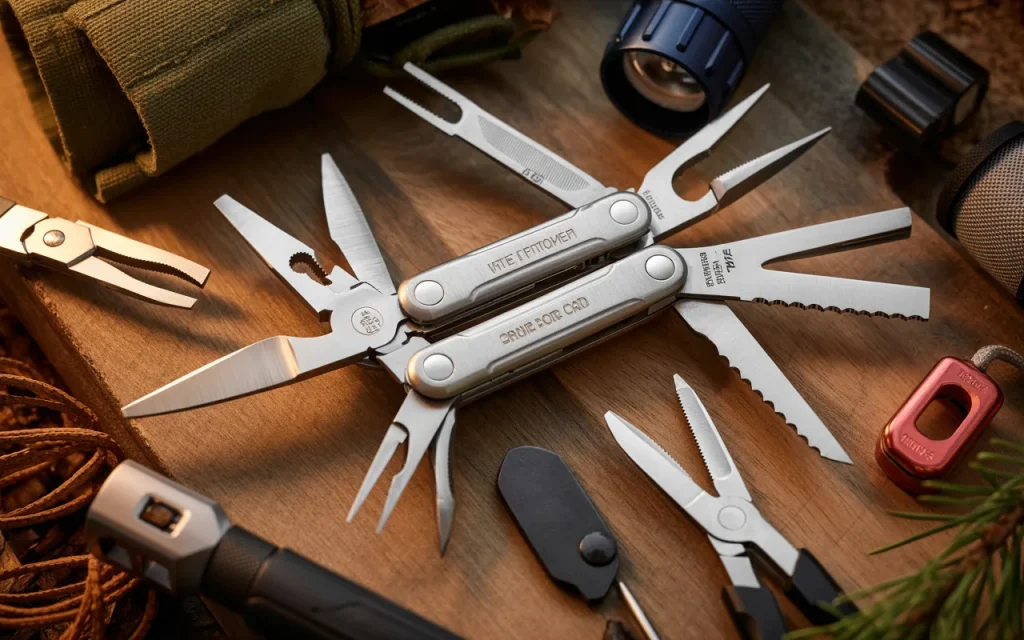
Not every tool on a multi-tool is useful. Some companies add tools just to inflate the count on the packaging. When I look at a tool for survival, I ignore the “40-in-1” marketing and look for four or five key components that I know I will use.
| Core Tool | Why It Matters for Survival |
|---|---|
| Needle-Nose Pliers | For grabbing hot pots, removing splinters, twisting wire, or handling small parts that fingers cannot manage. |
| Straight Edge Blade | A sharp, plain edge blade is best for precise cutting of rope, fabric, or food preparation. |
| Saw | Essential for cutting small branches for shelter building or processing firewood when you lack a full-sized saw. |
| Flathead & Phillips Drivers | For repairing gear like stoves, optics, or any equipment with screws that might come loose. |
| Bottle/Can Opener | In a survival situation, accessing sealed food or water sources without damaging the container is critical. |
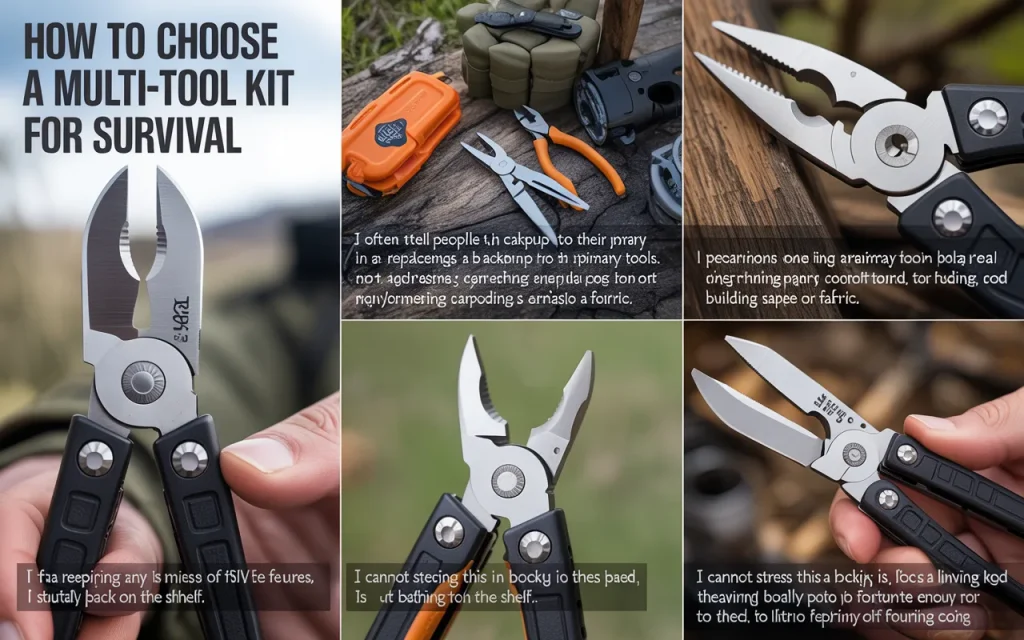
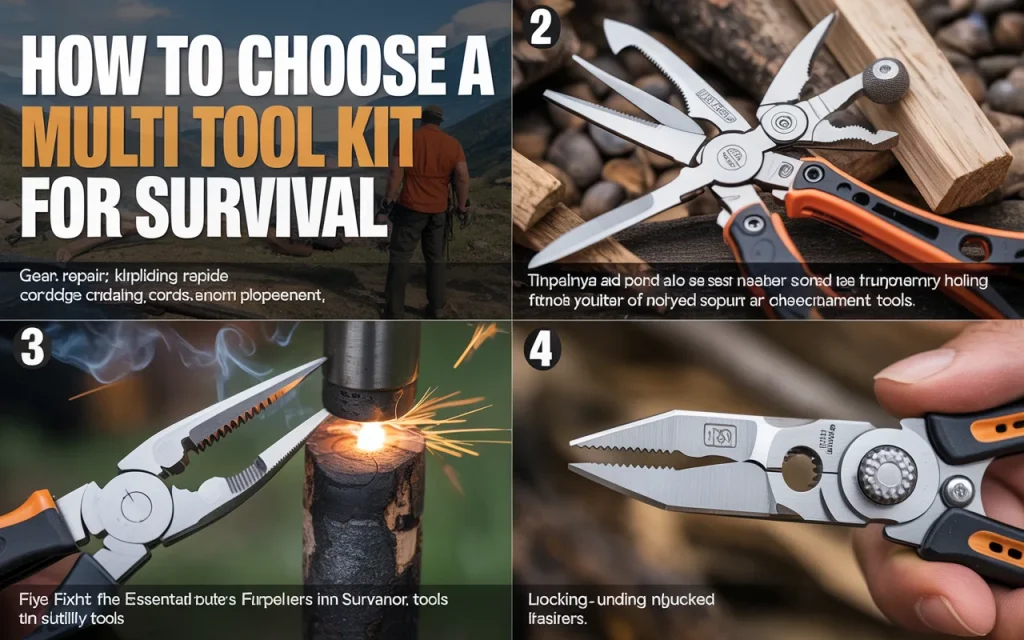
If a tool is missing any of these five features, I usually put it back on the shelf. The pliers need to be sturdy enough to hold a hot metal rod or bend fencing. The saw needs actual teeth that bite into wood, not just a serrated edge on the side of a file. When you choose a multi tool kit for survival, prioritize function over fancy gadgets. You do not need a corkscrew or a fish scaler if you are trying to build a shelter.
Steel Quality and Build Construction
This is where many people go wrong. They see a low price and think, “It looks the same.” It is not the same. The steel used in the tool determines whether it rusts after one sweaty day in your pocket and whether the blades hold an edge when you need to cut a seatbelt or tough webbing.
“The quality of a tool is often invisible until you need it most. Cheap steel doesn’t just dull; it fails. In survival, a failure isn’t an inconvenience; it’s a reset button on your safety.” — David Canterbury, Survival Instructor and Author
Most high-end multi-tools use stainless steel. However, there are different grades. Look for terms like “420HC” (high carbon) or “154CM.” These steels offer a good balance between hardness (holding an edge) and toughness (not snapping). If you are working around saltwater or very humid environments, you might want to look for tools with a “Cerakote” coating or titanium handles to prevent rust.
Locking Mechanisms
I cannot stress this enough: a folding tool that does not lock is a liability in a survival situation. If you are applying pressure to cut a branch or pry something open, the last thing you want is the blade or tool closing on your fingers. A reliable locking mechanism keeps the tool rigid.
When you choose a multi tool kit for survival, ensure every component locks into place. There are different lock styles: liner locks, frame locks, and the more common sliding bar locks found on Leatherman tools. Test the lock. If you can make it disengage by squeezing the handle hard, it is not safe. The lock should feel solid with zero wobble.
Handle Ergonomics and Grip
How does the tool feel in your hand? This seems obvious, but it is often overlooked. When you are using the pliers to grip something slippery or using the saw for an extended period, the handles can create pressure points. Some multi-tools have sharp edges on the inside of the handle that dig into your palm.
I prefer tools with rounded handles or ones that offer an ergonomic grip. If you plan to use it in winter, consider if you can operate it with gloves on. The handles should not be too narrow, because if they are too thin, applying force with the pliers becomes painful. A good survival tool should feel like an extension of your hand, not like you are squeezing a metal ruler.
Weight, Portability, and Carry Methods
There is a common joke among outdoor enthusiasts: “Lightweight, strong, cheap. Pick two.” The same applies to multi-tools. If you buy a massive, heavy-duty tool, you might leave it at home because it drags your pants down. If you buy a tiny keychain tool, it might lack the leverage to actually perform a critical task.
Finding the Sweet Spot
For survival, I recommend a “full-size” multi-tool. This usually means the tool is about 4 inches long when closed. It provides enough leverage for the pliers and a long enough saw blade to cut through branches. It might weigh around 8 to 10 ounces. Is that heavy? A little. But that weight is functional.
If you are a backpacker obsessed with grams, consider a “mid-size” tool, but be aware that you are sacrificing leverage. Alternatively, if you are keeping this in a bug-out bag or vehicle, weight is less of a concern, and you can go for the heavy-duty models with replaceable wire cutters.
| Carry Method | Pros | Cons |
|---|---|---|
| Pocket Clip | Fast access, always on you, easy to deploy. | Can be heavy on the pocket; may wear holes in pants over time. |
| Sheath (Belt) | Comfortable weight distribution; can carry extra bit kits. | Less discreet; requires a belt; can snag on seatbelts. |
| Bag/Pack | Best for survival kits; distributes weight well. | Slower access; if you get separated from your bag, you lose your tool. |
If you want to choose a multi tool kit for survival, I strongly suggest you get one with a pocket clip. The tool is most useful when it is physically on your body. If it is buried at the bottom of your backpack, you will not have it when you need to quickly cut a tangle of fishing line or fix a stove valve.
Comparing Multi-Tool Brands for Reliability
You do not need to buy the most expensive tool on the market, but you should stick to brands with a proven track record. In my experience, the multi-tool market is dominated by a few key players for a reason. They have warranties that stand behind their products, and they have been field-tested by military personnel, first responders, and outdoorsmen for decades.
Leatherman
This is the gold standard for most survivalists. Leatherman offers a 25-year warranty, and they are known for their robust build quality. The Wave Plus is often considered the best all-around survival tool because it offers outside-accessible tools (you do not have to open the pliers to get the knife), a good saw, and excellent pliers. If you want to choose a multi tool kit for survival, Leatherman is the safe bet.
Victorinox (Swiss Army Knife)
Many people dismiss Victorinox as just a pocket knife, but their “SwissTool” line is a full-size multi-tool that rivals Leatherman in quality. The steel is exceptional, and the fit and finish are flawless. However, most Victorinox multi-tools do not have outside-accessible blades, meaning you have to open the pliers to get to the knife. That extra step can be annoying if you need a blade quickly. Their standard Swiss Army Knives, like the “RangerGrip” or “Hunter,” are excellent for survival if you do not need pliers.
Gerber
Gerber is famous for its “Suspension” and “Center-Drive” models. The unique selling point for Gerber is often the one-handed opening pliers. You can flick the tool open with one hand, which is a huge advantage if you are hanging off a rock or holding something with your other hand. However, some users find that the quality control on Gerber is slightly less consistent than Leatherman. Still, the Center-Drive model features a full-size, real screwdriver that is far superior to the small bits found on other tools.
Specialized Features for Survival Scenarios
Beyond the basics, some multi-tools offer specialized features that can be incredibly helpful depending on your skill level and the environment. When you choose a multi tool kit for survival, consider whether these extras are worth the weight and cost for your specific situation.
Replaceable Wire Cutters
This is a feature I now consider essential. Many multi-tools have hardened wire cutters built into the pliers. If you cut a hard wire, like a coat hanger or fencing, you can chip or dull those cutters. On tools with replaceable cutters, you can simply swap them out when they wear down. If you damage the cutters on a standard tool, the pliers are essentially damaged forever. For survival, where you might be cutting random scraps of metal, this is a huge plus.
The Bit Driver vs. Dedicated Drivers
Some tools have a proprietary bit system where you can swap out small double-ended bits. This allows you to carry a variety of screwdriver heads (Torx, Allen, etc.) in a small sleeve. Other tools have dedicated flathead and Phillips drivers built into the handle.
For survival, the bit driver is more versatile. If you are trying to repair a firearm scope, a lantern, or a vehicle, you need the right head. However, bit drivers can be a weakness because the bits are small and easy to lose. If you go this route, make sure the bit holder locks securely and that you keep the extra bits in a secure place in your kit.
“Versatility is survival. A tool that does ten things okay is better than a tool that does one thing perfectly if you don’t have room for the perfect tool. But make sure those ten things are the ten things you actually need.” — Creek Stewart, Survival Expert and Author
Maintenance and Care for Longevity
You bought a great tool. Now you need to keep it great. A rusty, gritty multi-tool is frustrating to use and dangerous if the locking mechanism gets gummed up. Maintenance is simple but critical.
After every trip, especially if you were in saltwater or mud, wash the tool with warm soapy water. Open all the tools and let it dry thoroughly. Then, apply a light lubricant, like mineral oil or a silicone spray, to the pivots. Work the tools back and forth to get the oil into the joints. If you are storing the tool for a long time, keep it in a dry place. If it has a leather sheath, do not store the tool in the leather long-term, as leather can retain moisture and cause rust.
If you choose a multi tool kit for survival, you are investing in a piece of gear that should last you decades. I have a Leatherman from 2003 that still functions perfectly because I clean it regularly. A well-maintained tool becomes a trusted companion, not just a piece of equipment.
Budget Considerations Without Sacrificing Safety
You do not have to spend $150 to get a reliable survival tool. However, if you spend $20 on a no-name tool from a gas station, you are gambling with your safety. The price usually reflects the steel quality and the precision of the manufacturing.
If your budget is tight, look for models like the Leatherman Rev or the Gerber Suspension-NXT. These are entry-level full-size tools that offer the essential functions without the premium price of titanium handles or advanced blade steels. They are usually priced between $40 and $60.
When I help people choose a multi tool kit for survival on a budget, I tell them to prioritize the pliers and the blade. If those two things are solid, you can live without the fancy bit kit or the diamond-coated file. You can also look at the used market. Multi-tools are durable, and buying a used high-end model is often better than buying a new cheap model.
“A tool doesn’t need to be expensive to be effective, but it must be dependable. Dependability comes from honest materials and thoughtful design, not from a high price tag.” — Les Stroud, Survivorman
Frequently Asked Questions
Q: Is a multi-tool better than a fixed blade knife for survival?
No, not better, but different. A fixed blade knife is generally superior for heavy wood processing, batoning, and self-defense. A multi-tool is better as a secondary tool. Ideally, you carry both. The multi-tool gives you pliers, screwdrivers, and saw options that a fixed blade cannot offer. For a minimalist survival kit, a quality multi-tool paired with a small fixed blade is the perfect combination.
Q: Can I fly with a multi-tool in my carry-on?
No. Multi-tools are strictly prohibited in carry-on luggage by the TSA and most international aviation authorities. If you are traveling, you must pack your multi-tool in your checked baggage. If you forget it is in your pocket, you will lose it at security.
Q: How often should I sharpen the blade on my survival multi-tool?
You should sharpen it whenever you notice it is not cutting cleanly. Dull blades are dangerous because they require more force to use, increasing the risk of slipping. If you use the tool frequently, a quick pass on a sharpening stone every month is a good habit. Keep the blade at the factory angle, which is usually about 20 degrees per side.
Q: What is the difference between stainless steel and carbon steel?
Stainless steel is resistant to rust and requires less maintenance, making it the standard for most multi-tools. Carbon steel holds a sharper edge and is easier to sharpen in the field, but it rusts very easily. If you live in a dry climate, carbon steel is great. If you live near water or sweat a lot, stick with stainless.
Q: How do I choose a multi tool kit for survival if I have small hands?
Look for models labeled as “compact” or “mid-size.” The Leatherman Skeletool is a popular choice because it is lightweight, has a pocket clip, and features a comfortable grip for smaller hands. You should also look for tools where the plier handles are not too wide when opened, as wide handles can be hard to grip if your hands are smaller.
Conclusion
Choosing the right tool is a personal decision. What works for a construction worker might not work for a trail runner. The most important thing is that you choose a multi tool kit for survival that fits your environment, your hand size, and your realistic needs. Do not get distracted by tools that have 30 features you will never use. Focus on a solid build, a reliable locking mechanism, and the core tools: pliers, knife, saw, and drivers.
Take your time, go to a store if you can, and hold the tool in your hand. Feel the weight. Open and close it a few times. Imagine using it with cold, wet hands. Once you buy it, practice with it. Learn how to deploy the blade without looking. Use it to cook a meal or fix a piece of gear. A tool is only as good as your familiarity with it. By making a thoughtful choice now, you are ensuring that when a challenge arises, you have a reliable partner in your pocket or on your belt ready to help you get through it safely.
Related posts
 Top Tool Bags for Apprentices and Trainees in 2026
Discover the top tool bags for apprentices and trainees in 2026. Compare durable, portable, and organized storage solutions to keep your gear ready for the job.…
 Top Tool Bags for DIY Homeowners in 2026
Discover the top tool bags for DIY homeowners in 2026. Compare durable organizers, backpacks, and storage solutions to keep your home repair gear ready. Keeping your…
 Top Tool Bags for Apprentices and Trainees 2026
Discover the top tool bags for apprentices and trainees in 2026. Compare durable, portable, and organized storage solutions to help you start your trade right. Starting…