
What Should I Look for in a Home Tool Kit?
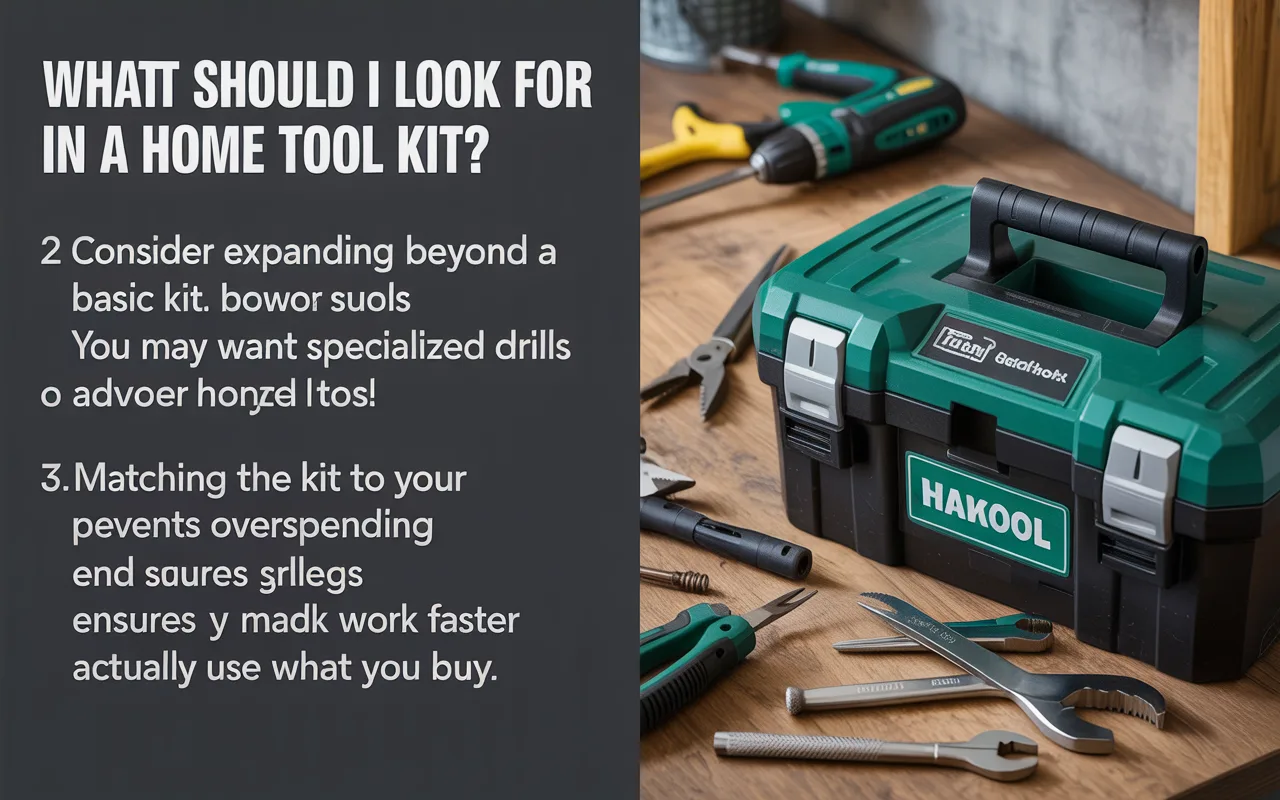
What should I look for in a home tool kit? Learn the must-have tools, features, and tips to choose a reliable kit for everyday home repairs.
A good home tool kit helps you handle everyday fixes without stress or delay. If you are wondering what should I look for in a home tool kit, the answer comes down to quality, versatility, and practicality. The right kit should cover common household tasks like tightening screws, assembling furniture, and making small repairs without being overly complicated or filled with items you will never use.
This guide explains exactly what matters when choosing a home tool kit. It covers essential tools, how to judge quality, what beginners often overlook, and how to match a kit to your needs. By the end, you will know how to choose a tool kit that actually works for your home and saves you time in the long run.
Who Needs a Home Tool Kit and Why It Matters
A home tool kit is useful for almost anyone who lives in a house or apartment. Whether you are a homeowner, renter, or student, small issues come up regularly. Loose cabinet handles, picture frames that need hanging, or minor repairs should not require calling a professional every time.
For beginners, a simple tool kit provides confidence. You can fix basic problems quickly without waiting for help. For more experienced users, a well-organized kit saves time and keeps essential tools within reach.
A reliable kit also helps you avoid damage. Using the right tool reduces the risk of stripping screws, cracking surfaces, or making a repair worse. That is why choosing the right tools matters more than just having many tools.
Essential Tools Every Home Tool Kit Should Include
A good home tool kit does not need to be huge. It should include a core set of tools that cover most everyday tasks.
Basic must-have tools
- Hammer for nails and small adjustments
- Screwdrivers with multiple heads or a set of flathead and Phillips
- Adjustable wrench for nuts and bolts
- Pliers for gripping and bending
- Tape measure for accurate measurements
- Utility knife for cutting
- Allen keys for furniture assembly
Useful additions
- Level for hanging items straight
- Flashlight or work light
- Small hand saw
- Electrical tape
- Basic socket set
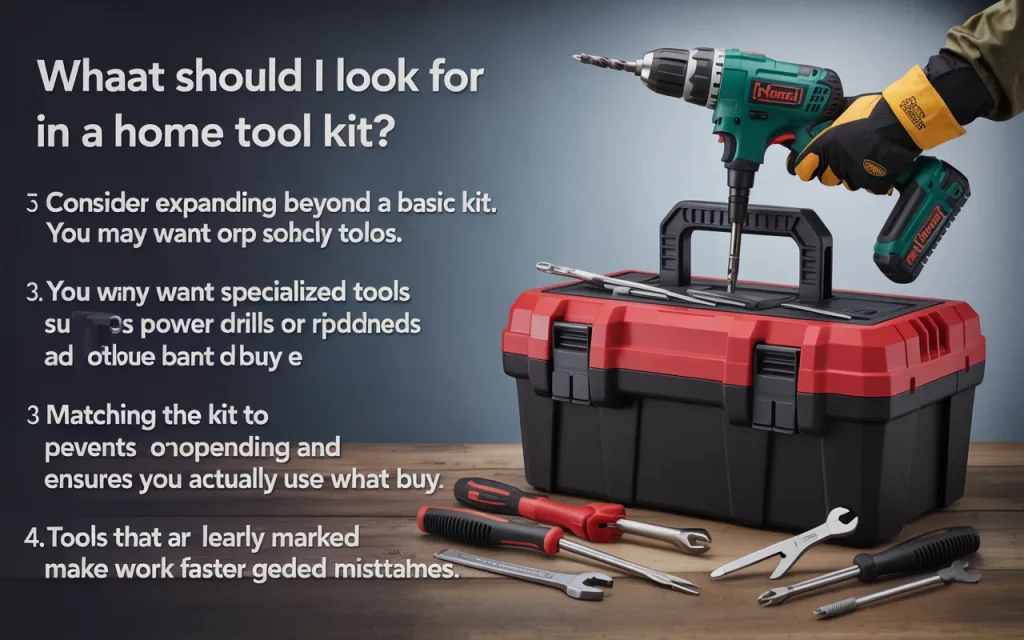
Below is a simple checklist to guide you:
| Tool | Purpose | Why It Matters |
|---|---|---|
| Hammer | Driving nails | Essential for wall hanging and repairs |
| Screwdriver set | Tightening screws | Used in almost every household task |
| Adjustable wrench | Loosening bolts | Works with different sizes |
| Pliers | Gripping objects | Useful for small fixes |
| Tape measure | Measuring space | Prevents mistakes in fitting |
| Utility knife | Cutting materials | Handy for packaging and repairs |
Focus on tools you will actually use. A compact, well-chosen kit is often better than a large one filled with rarely used items.
Quality vs Quantity: What Really Matters
One common mistake is choosing a tool kit based on how many pieces it includes. A kit with 150 tools may sound impressive, but many of those tools might be unnecessary or low quality.
Instead, look for:
Durable materials
Tools made from hardened steel or chrome vanadium tend to last longer. They resist rust and wear better than cheaper materials.
Comfortable grip
Handles should feel secure in your hand. Rubber or ergonomic grips help reduce strain and improve control.
Solid construction
Check for loose parts or weak joints. A screwdriver should not bend easily, and pliers should open and close smoothly.
Balanced selection
A smaller kit with reliable tools is far more useful than a large set with poor quality items.
Choosing quality tools saves money over time because you will not need to replace them often.
How to Choose the Right Tool Kit for Your Needs
Not every home requires the same type of tool kit. Your choice should depend on your living situation and how often you plan to use the tools.
For beginners
A basic kit with essential tools is enough. Look for simplicity and ease of use.
For renters
Choose a compact kit. You will likely need tools for assembling furniture, hanging items, and small fixes.
For homeowners
A more complete kit makes sense. You may need additional tools for maintenance tasks like fixing fixtures or minor repairs.
For DIY enthusiasts
Consider expanding beyond a basic kit. You may want specialized tools such as power drills or advanced hand tools.
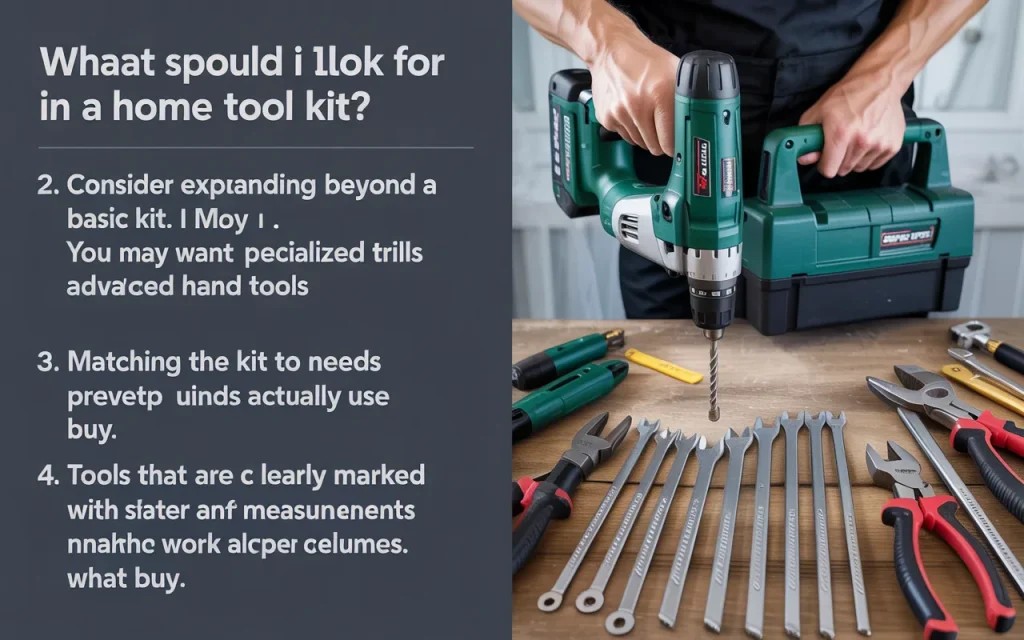
Here is a quick comparison:
| User Type | Recommended Kit Size | Key Focus |
|---|---|---|
| Beginner | Small | Essential tools only |
| Renter | Compact | Portability and versatility |
| Homeowner | Medium | Wider range of tools |
| DIY user | Large | Advanced and specialized tools |
Matching the kit to your needs prevents overspending and ensures you actually use what you buy.
Important Features to Look for in a Tool Kit
Beyond the tools themselves, certain features make a tool kit easier to use and maintain.
Storage case
A sturdy case keeps tools organized and protected. Look for labeled slots or compartments so you can quickly find what you need.
Portability
If you move often or work in different areas of your home, a lightweight and compact case is helpful.
Tool compatibility
Some kits include interchangeable bits or multi-use tools. These can save space while still covering many tasks.
Clear labeling
Tools that are clearly marked with sizes or measurements make work faster and reduce mistakes.
Safety considerations
Basic safety features matter. Insulated handles can help when working around electrical fixtures. A good grip reduces slipping.
Common Mistakes to Avoid When Buying a Home Tool Kit
Many people end up with the wrong kit because of simple mistakes. Avoid these common issues:
Buying too many tools
Large kits often include items you will never use. Focus on essentials first.
Ignoring quality
Cheap tools can break easily or perform poorly. This can make even simple tasks frustrating.
Overlooking comfort
Uncomfortable handles make tools harder to use, especially for longer tasks.
Not checking the case
A weak or poorly designed case can lead to lost tools and clutter.
Choosing based on price alone
A very cheap kit may seem appealing, but it often leads to replacement costs later.
Taking a few minutes to compare options can save both time and money.
When Should You Upgrade Your Tool Kit?
A basic home tool kit works for most situations, but there are times when upgrading makes sense.
You may need better tools if:
- You start doing more DIY projects
- Your current tools show signs of wear
- You need more precision for certain tasks
- You frequently borrow tools that you do not own
Upgrading does not mean replacing everything. You can gradually add better tools as your needs grow.
FAQ
What is the most important tool in a home tool kit?
A screwdriver set is often the most used tool because many household items rely on screws.
How much should I spend on a home tool kit?
Costs vary, but a mid-range kit with solid quality is usually a better choice than the cheapest option.
Do I need power tools in a basic kit?
No, basic hand tools are enough for most small repairs. Power tools can be added later if needed.
How do I maintain my tools?
Keep them clean, dry, and stored properly. Occasionally check for rust or damage.
Is a pre-made tool kit better than building one?
Pre-made kits are convenient for beginners. Building your own kit allows more customization.
How often should I replace tools?
Replace tools only when they show damage or no longer perform properly.
Conclusion
Choosing the right tools starts with understanding what should I look for in a home tool kit. Focus on essential tools, solid quality, and features that make everyday tasks easier. A well-chosen kit does not need to be large or expensive. It just needs to be reliable and suited to your needs.
Start with a simple kit and build from there as your confidence grows. If you want to learn more, consider reading related guides on home repairs or basic DIY skills to make the most of your tools.
Related posts
 Top Home Tool Kits for Housewarming Gifts: A Practical Buyer’s Guide
Find the perfect top home tool kits for housewarming gift. Compare versatile sets for daily fixes, DIY projects, and furniture setup, ensuring a thoughtful and practical…
 Top Home Tool Kits for Hanging Pictures and Shelves: Your Buyer’s Guide
Find the top home tool kits for hanging pictures and shelves. Compare features, included hardware, and specialized tools to choose the best kit for your projects.…
 Top Home Tool Kits for Basic Plumbing Repairs: Essential Picks for DIYers
Find top home tool kits for basic plumbing repairs. Compare versatile sets for everyday fixes, DIY projects, and essential household maintenance. Every home faces occasional drips,…