
How to Choose a Home Tool Kit
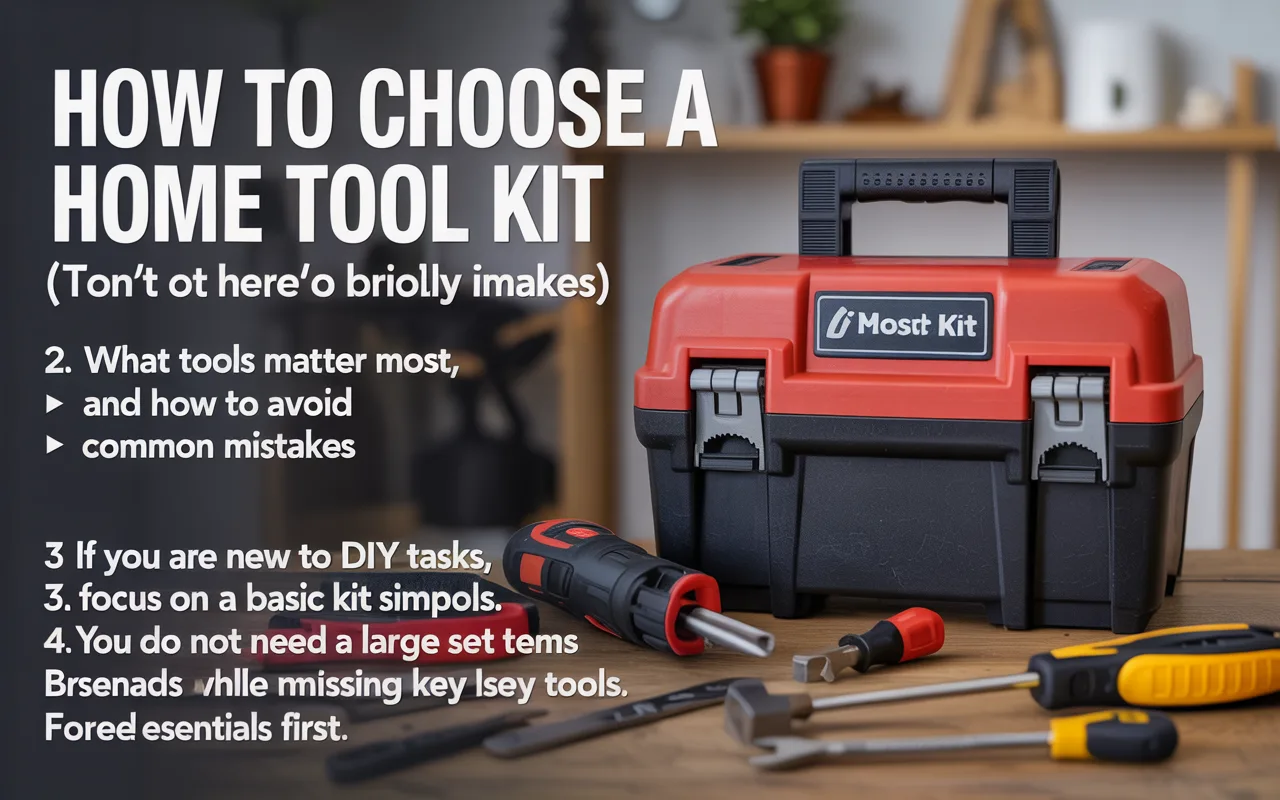
Learn how to choose a home tool kit with the right tools, quality, and budget. A simple guide to help beginners and homeowners make a smart choice.
Choosing the right set of tools for your home can save time, money, and frustration. If you are wondering how to choose a home tool kit, the answer comes down to understanding your needs, the quality of tools, and how often you plan to use them. A good tool kit helps with everyday repairs, furniture assembly, and small maintenance tasks without the need to call a professional.
This guide explains what to look for in a home tool kit, what tools matter most, and how to avoid common mistakes. Whether you are a beginner or upgrading your existing tools, you will find clear, practical steps to make a confident choice.
What Is a Home Tool Kit and Who Needs One
A home tool kit is a collection of essential hand tools designed for basic household tasks. These kits are usually compact and come in a case for easy storage.
Most homeowners, renters, and even students benefit from having a tool kit. You may not need it every day, but when something breaks or needs adjusting, having the right tool on hand makes a big difference.
Typical uses include:
- Hanging pictures or shelves
- Tightening loose screws
- Assembling furniture
- Fixing small plumbing issues
- Minor electrical work such as replacing switches
If you live in an apartment or house, a basic tool kit is a practical investment.
Start With Your Needs and Skill Level
Before buying anything, think about how you will use your tools. This is the most important step in choosing a home tool kit.
Beginner Needs
If you are new to DIY tasks, focus on a basic kit with simple tools. You do not need a large set with dozens of pieces.
Intermediate Users
If you often handle home repairs, you may need more specialized tools such as pliers, adjustable wrenches, or a utility knife.
Occasional vs Regular Use
- Occasional users can choose affordable kits with essential tools
- Regular users should invest in better quality tools that last longer
The goal is to match the tool kit to your actual use, not to buy the biggest set available.
Essential Tools Every Home Kit Should Include
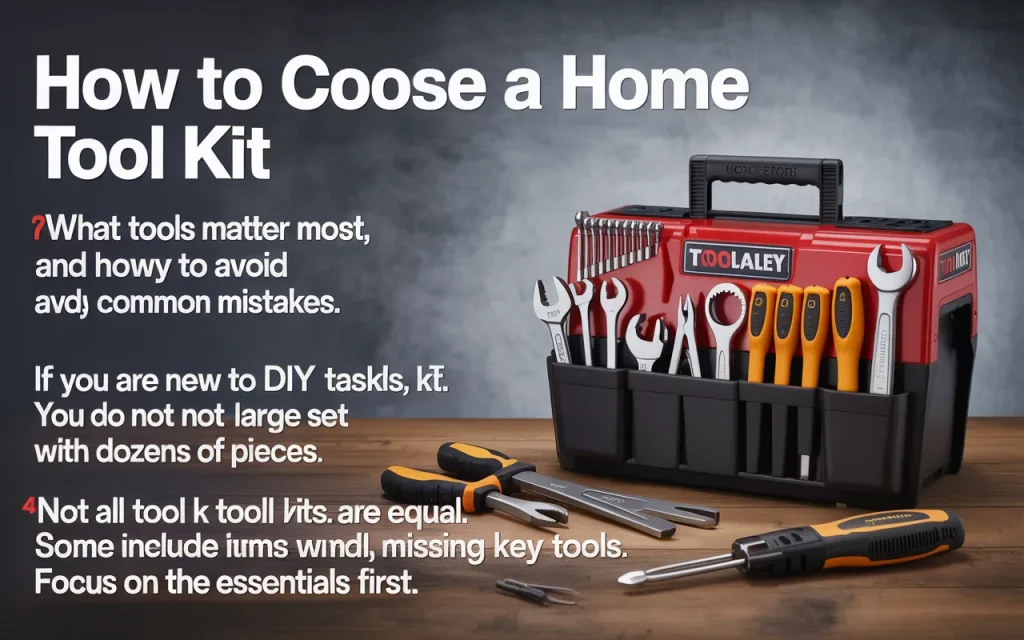
Not all tool kits are equal. Some include unnecessary items while missing key tools. Focus on the essentials first.
Must-Have Tools Checklist
| Tool | Purpose |
|---|---|
| Hammer | Driving nails, light demolition |
| Screwdrivers (flat and Phillips) | Tightening and loosening screws |
| Measuring tape | Accurate measurements |
| Adjustable wrench | Tightening nuts and bolts |
| Pliers | Gripping, bending, cutting wires |
| Utility knife | Cutting materials |
| Allen keys | Furniture assembly |
| Level | Ensuring straight alignment |
These tools cover most common household tasks. If a kit lacks several of these, it may not be a good choice.
How to Judge Tool Quality
Quality matters more than quantity. A smaller set of durable tools is better than a large set of weak ones.
Materials to Look For
- Steel construction for strength
- Rust-resistant coating
- Solid handles with a firm grip
Build and Feel
Hold the tools if possible. They should feel sturdy and comfortable, not flimsy or overly light.
Brand Reputation
Well-known brands often maintain better quality control. However, mid-range brands can also offer reliable tools at a reasonable price.
Warranty
A basic warranty is a good sign that the manufacturer stands behind the product.
Choosing Between Pre-Made Kits and Custom Kits
You have two main options when selecting a home tool kit.
Pre-Made Tool Kits
These come ready to use and are ideal for beginners.
Pros:
- Convenient and organized
- Often more affordable as a bundle
- Good for basic needs
Cons:
- May include tools you never use
- Quality can vary
Custom Tool Kits
You build your own set by buying individual tools.
Pros:
- Higher control over quality
- Only buy what you need
- Easier to upgrade over time
Cons:
- More expensive initially
- Requires more research
If you are just starting out, a pre-made kit is usually the best option.
How Many Pieces Do You Really Need
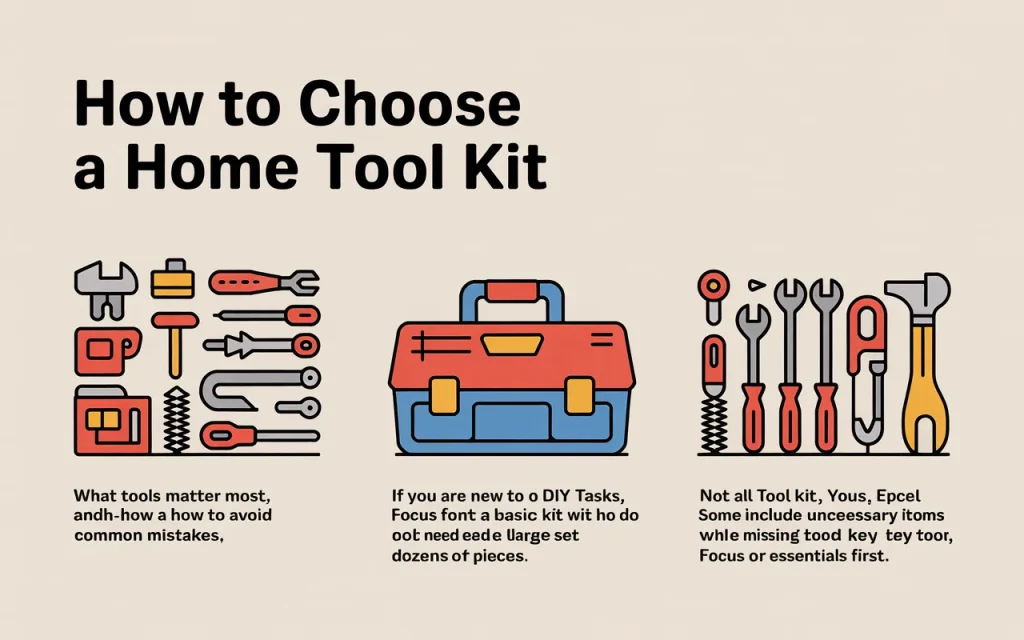
Tool kits are often marketed by the number of pieces they contain. Bigger numbers do not always mean better value.
Tool Kit Size Comparison
| Kit Size | Best For | What to Expect |
|---|---|---|
| 10 to 20 pieces | Beginners | Core tools only |
| 20 to 50 pieces | Most households | Balanced selection |
| 50+ pieces | Advanced users | Includes specialized tools |
A 20 to 50 piece kit is enough for most homes. Larger kits can be useful, but only if you actually need the extra tools.
Storage, Organization, and Portability
A good tool kit is not just about tools. Storage matters too.
What to Look For
- Durable case with secure latches
- Clearly organized compartments
- Lightweight and easy to carry
A well-organized kit saves time and prevents tools from getting lost.
If you have limited space, choose a compact kit that fits in a drawer or small cabinet.
Budget Considerations and Value
Tool kits come in a wide price range. You do not need to spend a lot to get started, but going too cheap can lead to poor quality tools.
Budget Tips
- Avoid extremely cheap kits with too many tools
- Focus on quality over quantity
- Upgrade individual tools later if needed
Price Ranges
- Low budget: Basic kits for occasional use
- Mid-range: Better durability and comfort
- High-end: Professional-grade tools
Most households are well served by a mid-range tool kit.
Common Mistakes to Avoid
Many people make simple mistakes when choosing a home tool kit. Avoid these to get better value.
Buying Based on Size Alone
More tools do not always mean more usefulness.
Ignoring Quality
Cheap tools can break easily and may even be unsafe.
Overbuying Specialized Tools
You may not need tools meant for advanced repairs.
Not Checking Contents
Always review what is included before buying.
When to Upgrade or Expand Your Tool Kit
Your needs may change over time. A basic kit can grow into a more complete setup.
Signs You Need More Tools
- You often borrow tools from others
- You handle more complex repairs
- Your current tools wear out quickly
Start with essentials, then add tools like a power drill, socket set, or stud finder as needed.
FAQ
What is the best home tool kit for beginners?
A simple kit with 20 to 30 pieces that includes a hammer, screwdrivers, pliers, and a measuring tape is a good starting point.
Is it better to buy tools individually or in a kit?
For beginners, a kit is more convenient and cost-effective. Individual tools are better if you want higher quality or specific items.
How much should I spend on a home tool kit?
A mid-range budget is usually enough for a reliable kit. Avoid very cheap options that may lack durability.
Do I need power tools in a home tool kit?
Not initially. Start with hand tools. Add power tools later if your projects require them.
How long should a good tool kit last?
With proper care, a quality tool kit can last many years. Durable tools often outlast cheaper alternatives.
Can a home tool kit handle all repairs?
No. A basic kit is meant for small tasks. Larger repairs may require specialized tools or professional help.
Conclusion
Understanding how to choose a home tool kit comes down to focusing on your needs, picking essential tools, and choosing quality over quantity. A well-selected kit helps you handle everyday tasks with confidence and reduces the need for outside help.
Start with a practical set that covers the basics, then expand over time as your skills and needs grow. If you are setting up your home or upgrading your tools, take a few minutes to review your options carefully before buying.
For more practical guides like this, explore related articles on home maintenance and DIY basics.
Related posts
 Top Home Tool Kits for Seniors: 2026 Practical Guide
Discover the top home tool kits for seniors in 2026. We compare compact, easy-to-use sets perfect for daily household repairs, furniture assembly, and DIY tasks. Finding…
 Top Home Tool Kits for Women: 2026 Buyer Guide
Discover the top home tool kits for women in 2026. Compare top-rated sets for DIY, furniture assembly, and household repairs to find your perfect match. Finding…
 Top Home Tool Kits for Basic Home Repairs 2026
Find the top home tool kits for basic home repairs in 2026. Compare top-rated sets for DIY projects, furniture assembly, and daily household maintenance. Every home…